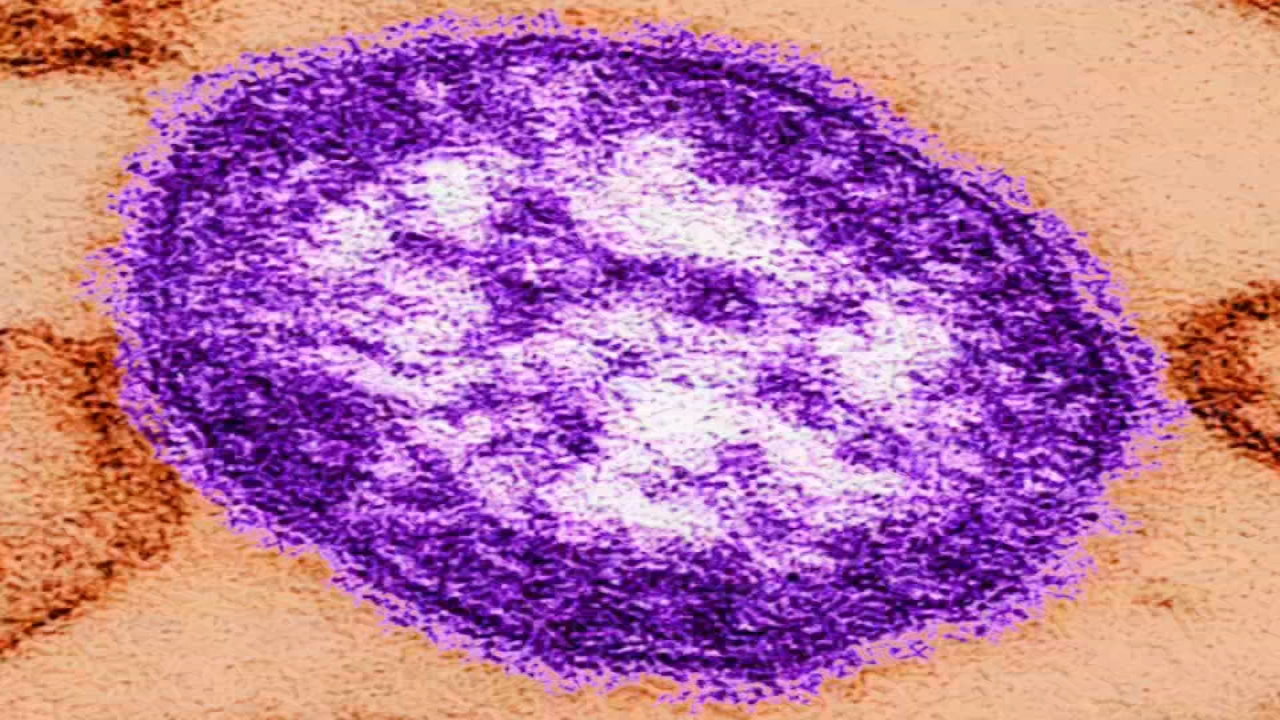
Measles outbreaks in individual counties in Vermont, Pennsylvania and Wisconsin are part of a broader picture: an infection the United States considered eliminated domestically in 2000 is spreading across the country again. Local authorities are working to curb transmission through targeted measures—tracing contacts, warning people of possible exposure and strengthening controls at medical facilities. But these measures cannot replace vaccination: declining immunization rates are creating conditions in which imported and local cases can grow into new outbreaks.
Fewer than five measles cases have been confirmed in Vermont’s Orleans County. The state Department of Health considers the risk to the general public low, but its investigation is ongoing. North Country Hospital in Newport began screening visitors after being notified of a possible case in the region. Officials have not released the patients’ names, citing medical privacy. Health Commissioner Rick Hildebrandt said the department is offering testing, vaccination and guidance, and coordinating with hospitals and medical professionals (WPTZ).
A case has been confirmed in Bucks County, Pennsylvania. The infected adult recently traveled to the central part of the state, where an outbreak is underway; their vaccination status is unknown. County officials said the person was no longer contagious by the time the case was reported, and that medical facilities they had visited were notifying patients who may have been exposed. Local authorities expect additional cases may occur in the county. The case comes amid more than 1,500 reported cases in Pennsylvania and six deaths, according to the article (6abc).
A case has also been confirmed in Shawano County, Wisconsin. The health department did not share information about the infected person or the suspected source of infection, but warned people who may have been in the emergency department at Marshfield Medical Center — Weston on November 5 between 1:30 and 3:30 p.m. Anyone who thinks they may have been exposed is advised to call a doctor first rather than show up unannounced. The article says the state had recorded 477 confirmed cases, not counting the new case in Shawano County; an infant who contracted measles had previously died there for the first time since 1990 (WBAY).
Taken together, these reports show how a national outbreak plays out locally. Pennsylvania and Wisconsin are reporting cases in states with hundreds and thousands of infections already recorded; in Vermont, a small cluster of linked cases has been identified, with the risk to the public still considered low. The scale of the incidents varies, but the authorities’ response is similar: identify possible contacts, warn people who may have been near an infected person, and prevent further transmission in hospitals and clinics.
It is particularly important that measles spreads through the air and is highly contagious. According to the Vermont Department of Health, one infected person can infect about 90% of susceptible people they come into contact with. That is why even a brief stay at a medical facility may require notifying visitors and patients. The advice to call a doctor ahead of time is not a formality: it allows the clinic to arrange an appointment without putting others in a shared waiting area at risk.
The 6abc article cites CDC data showing that more than 5,000 cases were reported in the United States in 2026, with infections identified in 45 states and the District of Columbia. About 96% of cases were among unvaccinated people or those whose vaccination status was unknown. About 2% of cases were among people who had received one dose, and another 2% among those who had received the recommended two doses. The article notes that vaccination does not guarantee complete protection against infection, but significantly reduces the risk: one dose of the MMR vaccine is about 93% effective against measles, and two doses are about 97% effective.
These figures help illustrate the connection between local outbreaks and vaccination coverage. In Vermont, about 94% of children entering daycare and school are fully vaccinated, while herd immunity is generally associated with coverage of around 95%. According to the CDC, 92.4% of U.S. kindergarteners received the MMR vaccine in the 2025–2026 school year, down from 95.2% in 2019–2020. A difference of a few percentage points may seem small, but for a highly contagious disease it means that more people remain in communities where the virus can spread.
Herd immunity is the indirect protection afforded to people who cannot be vaccinated or are not adequately protected, thanks to high levels of immunity around them. Measles requires very high vaccination coverage, which is why a rate close to 95% matters in practice: when it falls, a single imported case can more easily turn into a chain of infections. At the same time, local vaccination rates do not always reflect the situation in every group or neighborhood: average figures can hide communities with substantially lower coverage.
Measles should not be dismissed as a mild childhood illness. The 6abc article reports that at least 11% of recorded cases resulted in hospitalization, including more than one in ten infected children under five. Complications can include severe illness and death; reports from Wisconsin and Pennsylvania describe fatal cases, including the death of an infant. These figures underscore the practical importance of vaccination recommendations and promptly notifying people of possible exposure.
Symptoms usually appear 10–12 days after infection, though the interval can range from 7 to 21 days. They include a high fever, runny nose, cough, fatigue and red eyes. The characteristic red rash usually appears three to five days after symptoms begin, first along the hairline and then spreading over the body. Anyone who develops symptoms after possible exposure should stay home and call a medical facility ahead of time. Showing up without warning may expose other patients to the virus.
The main takeaway from these three reports is not that every local case signals a large outbreak, but that the nationwide resurgence of measles creates a persistent risk of new clusters. Controlling it depends both on a rapid public health response and on maintaining high vaccination coverage. Contact tracing and public alerts help contain transmission once it has begun; vaccination reduces the likelihood that it will continue. The more gaps there are in population immunity, the harder it is for local measures to stop the spread of infection.