The Ebola outbreak that began in the Democratic Republic of the Congo has become the largest and deadliest in the country’s history. The virus is spreading faster than health officials can trace chains of transmission, while staff shortages, mistrust and dangerous working conditions are hampering efforts to contain it where it began. At the same time, lessons from previous outbreaks are helping hospitals outside Africa prepare for a possible imported case—even though experts consider the risk of widespread transmission in the United States low.
According to figures cited in an Al Jazeera report, by the end of October the DRC had recorded 10,060 confirmed cases and 4,887 deaths. Nearly half of those infected have died. The outbreak, declared on May 15, has spread to 66 health zones in eight provinces, compared with just three where cases were recorded in its early days. Cases have also been detected outside the Congo, in Uganda, Kenya, Nigeria and France. In scale, the current epidemic is surpassed only by the West African outbreak of 2014–2016, when about 28,600 people were infected and more than 11,000 died.
The key problem is not just the number of people infected, but how quickly the virus is spreading beyond known chains of transmission. About 80% of new cases, according to Al Jazeera, are occurring outside the chains being tracked by health authorities. The Africa Centres for Disease Control and Prevention says that at least 95% of cases must occur among already identified contacts of infected people for an outbreak to be considered under control. The gap between the actual figure of 20% and the required 95% shows how difficult it is for epidemiologists to find every outbreak and interrupt transmission.
The difficulty is compounded by the pathogen itself. The current outbreak is caused by the Bundibugyo virus, a rare Ebola strain for which neither a vaccine nor a specific treatment has yet been approved. The World Health Organization has announced the launch of the first clinical trial of a vaccine, but that does not mean the vaccine is already available for widespread use. For now, the most important measures remain early detection, patient isolation, safe treatment and burial of the deceased, and monitoring people who have been in contact with those infected.
Putting these measures into practice is not easy. Medical centers are overwhelmed, and remote areas lack staff, transport and medicines. At least half of those who died never received treatment, Al Jazeera reports. Some families find it difficult to trust government authorities and medical teams, and efforts to take an ill person to a treatment center or arrange a safe burial can meet with resistance. Health workers have faced attacks: in Tshopo province, a health worker assisting with a suspected Ebola case was killed, and a colleague was seriously injured. Delays in payments are also disrupting services: in Ituri, staff suspended their work over unpaid bonuses.
The consequences extend beyond Ebola itself. The outbreak is disrupting routine health care: maternal deaths have doubled in some provinces, while routine childhood vaccination is at risk. This is an important, if less visible, effect of an epidemic: an overwhelmed health system can lead to additional deaths from illnesses and complications unrelated to the virus. The resilience of the health system is therefore not a secondary concern, but part of the outbreak response.
Cross-border spread has made the outbreak an international concern. Uganda has introduced a mandatory 21-day quarantine at their own expense for citizens returning from the DRC. According to the report, the country had previously recorded 20 cases, mostly imported, and two deaths; at the time of publication, it had no active cases. In Kenya, confirmed infections reached nine, with two deaths. Nigeria stepped up screening at airports after a woman who had fallen ill was diagnosed while traveling there. The patient was later evacuated to Switzerland. These travel routes show that monitoring must account not only for national borders, but also for people’s movements between regions and countries.
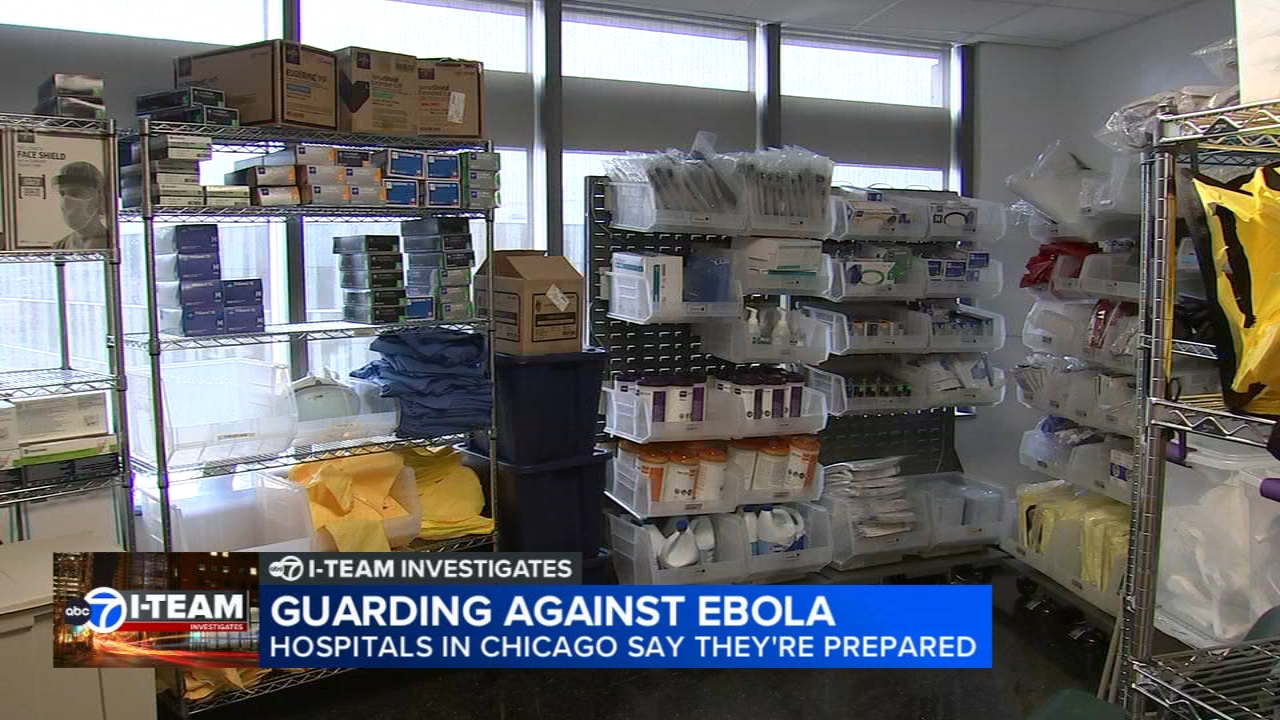
An ABC7 Chicago report shifts the focus from outbreak hotspots to the readiness of U.S. hospitals to receive a possible patient. In Chicago, Rush University Medical Center and Lurie Children’s Hospital are identified as specialized centers for treating highly dangerous infectious diseases. Rush can convert an intensive care unit into a negative-pressure ward, where air flows into the patient’s room rather than out into the corridor. This engineering control helps reduce the risk of infectious aerosols spreading beyond the isolation area.
Chicago specialists stress that international travel could theoretically allow an infected person to reach almost anywhere in the world, including a major transportation hub such as O’Hare International Airport. But the possibility of an imported case does not mean a large-scale epidemic is likely. In the ABC7 report, doctors say widespread Ebola transmission in the United States is unlikely, citing specialized wards, trained staff and experience gained over time. After the events of 2014, U.S. health care facilities built more appropriate infrastructure, while the COVID-19 pandemic taught health systems to coordinate better and overcome organizational divisions.
It is important to distinguish between being “ready to receive an individual case” and being “able to stop an outbreak where it begins.” A specialized unit with controlled airflow can reduce the risk of infection inside a hospital, but it cannot by itself solve the shortage of doctors in rural parts of the Congo, public mistrust or incomplete contact tracing. International preparedness matters, but it cannot replace funding and support for services at the outbreak’s epicenter.
The overall lesson from the two reports is that the quality of health systems’ day-to-day work matters just as much as medical technology. Vaccines and specialized centers can be important tools, but the effectiveness of the response depends on whether health workers can quickly identify cases, maintain community trust, keep staff safe and prevent routine health care from grinding to a halt. As long as most new cases remain outside known chains of transmission, the local outbreak retains the potential to spread further. Chicago’s experience shows how past crises can strengthen preparedness for imported cases; the situation in the Congo is a reminder that without a resilient system on the ground, even the most advanced infrastructure thousands of miles away will not stop an epidemic.