Across three pieces that at first glance seem unrelated, a single thread emerges: an erosion of trust in institutions and the systems that are supposed to provide security, stability and quality of life. Californians are voting with their feet, leaving Los Angeles; federal agencies in the U.S. are paralyzed by partisan conflict; one of the world’s best‑known athletes is seeking treatment abroad to avoid public pressure and leaks of personal information. These are different levels — city, federation, private life — but they share a sense of a “tipping point,” when familiar mechanisms stop working as citizens expect.
A Fox Business story about the mass exodus from Los Angeles says the county, once a symbol of the “American dream” and Hollywood glamour, has become the national leader in population loss: according to the U.S. Census Bureau, from July 1, 2024 to July 1, 2025, 53,421 people left the county, and total population fell from roughly 10 million to 9.7 million residents (Fox Business). Entrepreneurs and investors, like RIVANI founder Robert Rivani, who moved his company and clients, including Playboy, to Miami, describe this as a “tipping point,” where it’s not one or two negative factors but an intertwined bundle: high taxes, a sense of insecurity, bureaucratic red tape, and deteriorating city services. The crucial element isn’t only the migration numbers — it’s perception: Rivani says people feel the city “financially drains them,” while they get rising crime, reduced services and the sense that “everyone else is trying to leave, too.”
Realtor Chad Carroll, quoted in the same piece, adds a political dimension: in his view, “the whole political environment is destroying the state.” He talks about clients whose homes were burglarized twice in six months and links the departure of affluent residents to the feeling that California has become a place where “the state takes everything and gives little back — neither security, nor infrastructure, nor opportunities” (Fox Business). From an economist’s or urbanist’s perspective, this is a classic example of erosion of the “social contract” — the informal agreement between state and citizen: you pay taxes and follow rules, we provide infrastructure, security and predictability. When a significant portion of the population believes the balance is broken, mass outflow follows.
According to the same data, this outflow has clear destinations: Los Angeles residents are moving to cheaper, less regulated regions — within the state (Riverside and San Bernardino gained 21,131 people from the county) and beyond, notably to Las Vegas, which added more than 21,000 former Angelenos (Fox Business). A key concept here is the “Sunbelt” — the informal name for the southern U.S. states from California to Florida, where the climate is warmer, taxes have historically been lower, and, as proponents of relocation now argue, “money goes further.” Carroll calls what is happening a “historic redistribution of wealth,” which, he says, will shape the future of the U.S. housing market: the growth of finance and tech sectors in Miami and West Palm Beach makes the Sunbelt “the new frontier of American success.”
From the standpoint of municipal finance, this is not just migration statistics but an undermining of the tax base. Carroll points out bluntly: when the top 1% by income leave, so does the tax revenue that funds parks, police and schools. That triggers a “domino effect”: less money — worse services — even more people leave. Rivani adds a politico‑economic trap: when government responds to falling revenues by raising taxes on those who remain, it becomes a “vicious cycle.” The term describes a self‑reinforcing collapse: each short‑term fix worsens the long‑term problem. The entrepreneur draws a stark conclusion: Los Angeles “is no longer that Hollywood star, and is unlikely to regain its former shine,” because the reality that has formed “is unappealing to people, and reversing such a decline is extremely difficult.”
On another level, but driven by the same undermined trust, is the story of the shutdown of the U.S. Department of Homeland Security (DHS), reported by NBC News (NBC: DHS shutdown). The department, which includes TSA (Transportation Security Administration), FEMA (Federal Emergency Management Agency) and the Coast Guard, found itself in a kind of “system strike” — it went for more than a month without full funding, employees went weeks without pay, and airports experienced serious delays. The cause was partisan conflict over funding for immigration agencies ICE and CBP: Democrats refuse to support extra funding without reforms to immigration enforcement, while Republicans push for tougher measures and increased funding for those agencies.
In response, Republican leaders in the House and Senate — Speaker Mike Johnson and Majority Leader John Thune — announced a “two‑track plan” that they said would end the shutdown: on one track, the regular appropriations process would fund all of DHS except ICE and CBP; on the other, ICE and CBP funding would be advanced via a separate partisan “budget reconciliation” bill, which, because of Senate procedures, can be passed by simple majority and avoid a threatened filibuster by the minority (NBC: DHS shutdown). The term “budget reconciliation” matters here: it’s a procedure intended as a technical tool for budget adjustments but in practice has become a political workaround for bypassing the need to find bipartisan compromise.
The paradox is that the White House backed the Johnson‑Thune plan, and the Senate had previously voted unanimously for a similar bill. Nevertheless, intra‑party divisions within the Republican Party and dependence on former President Donald Trump’s position led the House initially to block that path, leaving DHS “switched off” for a time. Only after Trump publicly urged passage of the party bill by June 1 did Republican leaders signal willingness to return to a Senate compromise. Senate Democratic Leader Chuck Schumer accused Republicans of having “sabotaged a bipartisan deal,” forcing Americans to “pay the price for their dysfunction,” and House Democratic Leader Hakeem Jeffries said Democrats were ready to support the bill to “end the Trump‑style Republican DHS shutdown, restore pay for TSA employees, support FEMA, the Coast Guard and cyber specialists” (NBC: DHS shutdown).
This story illustrates another aspect of the trust crisis — distrust in federal political institutions. Where predictable, prioritized funding for the state’s basic functions — security, air traffic control, disaster response — is expected, partisan games and intra‑party splits make employees hostages of political conflict. As a result, citizens feel that even fundamental services can be used as bargaining chips, and the reliability of the state as a “provider of security” is called into question. The very term “shutdown” in the U.S. political lexicon is now firmly associated not with economic necessity but with managerial and political failure.
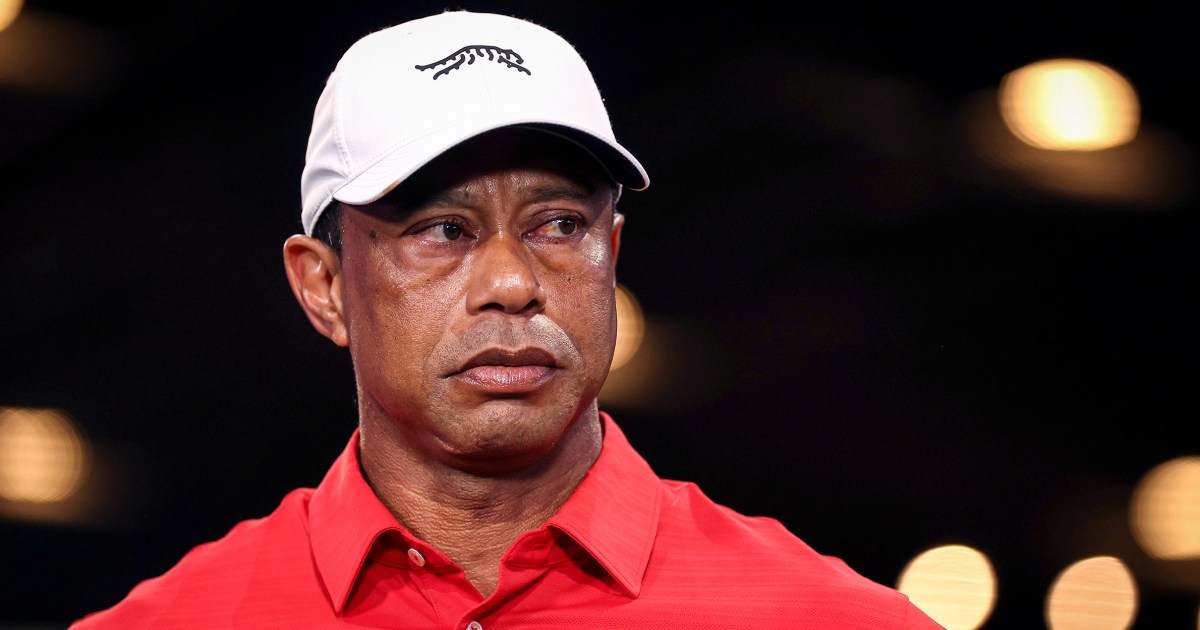
At a more personal and human level, but in the same field of distrust — this time toward the justice system and society as an environment — is the story of Tiger Woods, described in another NBC News piece (NBC: Tiger Woods). The famous golfer, involved in a Florida rollover crash and charged with driving under the influence (DUI), said he is “going away for treatment” to “prioritize his wellbeing and long‑term recovery.” A day after pleading not guilty at a hearing, a judge granted his request to undergo treatment outside the U.S.; Woods’s attorney argued this was justified by the athlete’s “repeatedly violated” privacy.
The context heightens the drama: police say Woods was speeding, tried to swerve away from a truck with a trailer, collided with it, climbed out of his vehicle through a window, had opioid painkillers in his possession and admitted taking them that morning (NBC: Tiger Woods). He refused a urine test (which has legal consequences) but agreed to a breath test. Against a backdrop of prior episodes — a 2017 DUI arrest in which five different substances were found in his system, and a severe 2021 California crash in which he was driving at roughly twice the speed limit though showing no sign of intoxication — the current incident looks like a continuation of a chronic crisis. Crucially, the center of the story becomes not only the alleged offense but the athlete’s attempt to escape American publicity and the judicial infrastructure, citing the system’s inability to ensure basic confidentiality.
Here the concept of privacy acquires legal and cultural dimensions. Formally, the U.S. judicial system declares the presumption of innocence and respect for personal life. In practice, cases involving public figures become media spectacles where document leaks, interpretations and public pressure can influence both the investigation and the defendant’s psychological state. The judge’s permission for treatment abroad, based on the argument that Woods’s privacy had been “repeatedly violated,” is a rare example of a court acknowledging the limits of its own system to protect the fundamental right to private life. For the broader public, this could send a signal: if even a superstar with an army of lawyers is forced to seek protection outside the country, how protected are ordinary citizens?
Bringing these three stories together produces an unflattering but revealing picture: at all levels — from the metropolis to the federation to the individual — people are losing faith that existing institutions work in their interest. Los Angeles residents doubt that the city and state fairly manage their taxes and protect them from crime; DHS, TSA and FEMA employees become hostages to partisan battles while travelers endure delays caused by budget “games”; and a famous athlete does not trust the system to ensure confidential treatment and fair proceedings without excessive publicity.
The key trends relate to fragmentation of the space of trust. First, geographical voting with one’s feet intensifies: people move to southern and more “friendly” jurisdictions from their point of view, as migration from California to Nevada and Florida shows in the Fox Business piece, which mentions capital flight, deals worth over $126 million from clients in California and New York within 60 days, and the motivating threat of one‑off and additional taxes on billionaires (Fox Business). Second, procedural cynicism at the federal level grows: tools like budget reconciliation become the norm rather than the exception, and basic agencies can be “switched off” due to tactical bets by party leaders, as the events around DHS illustrate in the NBC News coverage (NBC: DHS shutdown). Third, individual protective strategies sometimes involve leaving one’s institutional environment altogether — whether relocating a business, moving a family, or seeking treatment abroad, as in Tiger Woods’s case (NBC: Tiger Woods).
The consequences of these processes can be long‑term. For Los Angeles and California the risk is not only loss of tax revenue and weakening urban infrastructure but a changed political landscape: Fox Business authors already point to growing support for Republican gubernatorial candidates as an indicator of deep dissatisfaction with the status quo. For the federal political system, each new shutdown reinforces citizens’ belief that Congress and the parties cannot perform basic managerial functions without manufactured crises. For the justice system and law enforcement, cases like Woods’s raise questions about the balance between open justice and protection of private life, especially in an era of digital leaks and 24/7 news cycles.
All three stories, reported by Fox Business and NBC News, illustrate the same dilemma: when people lose trust in institutions, they begin to seek security, fairness and respect for themselves “outside the system” — in another city, another state, or even another country. And the stronger this trend becomes, the harder it is for institutions themselves to regain lost trust, because the outflow of people, capital or prominent figures further undermines their capacity to reform. This is a closed loop that can be broken only by a real improvement in the “quality of the deal” between state, city and citizen — more transparent governance, accountability for policy outcomes, and a genuine prioritization of the public interest over short‑term political or financial gains.