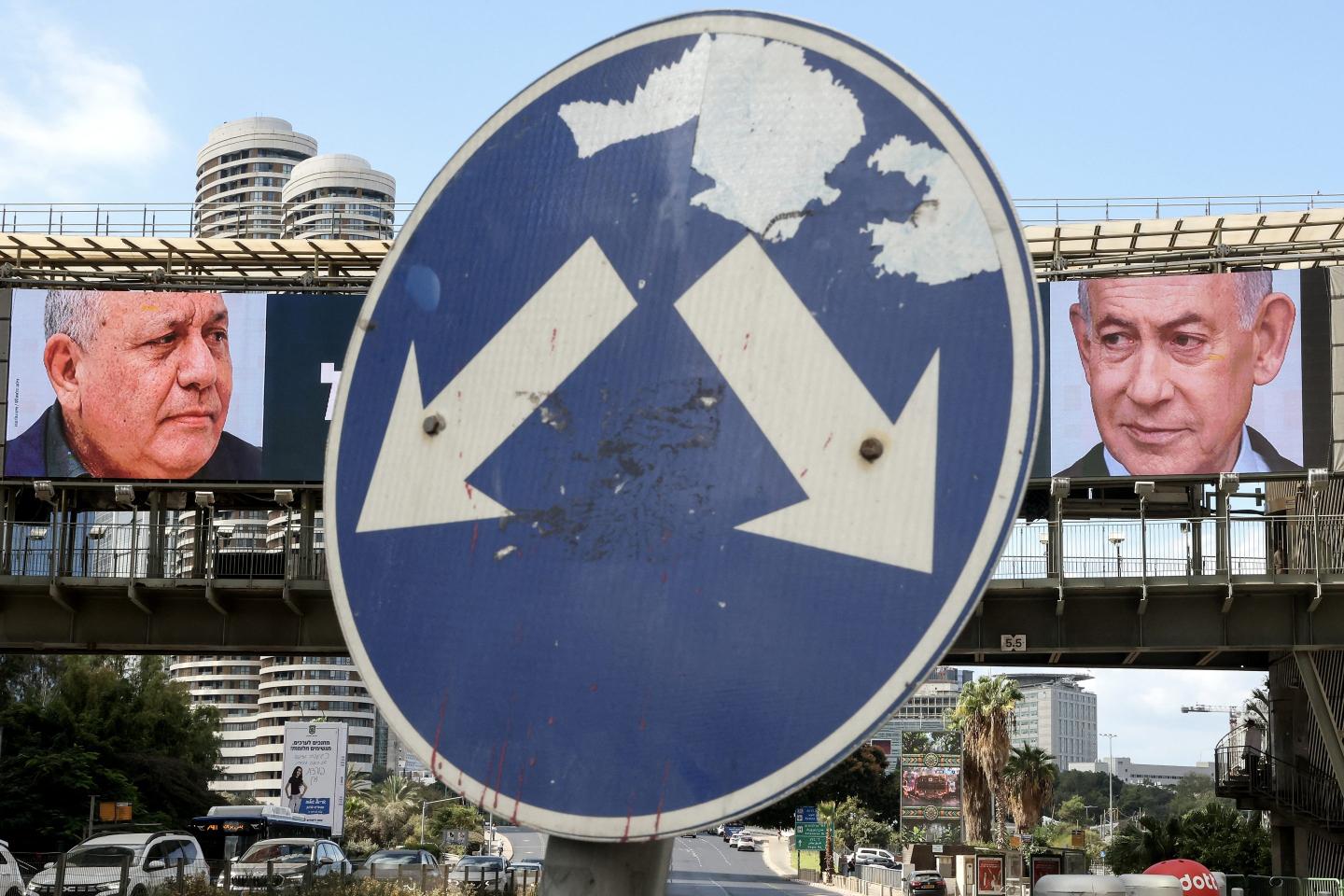
Israel’s election has become a test not only for Benjamin Netanyahu’s government, but also for a society transformed by trauma, prolonged war and international isolation since October 7, 2023. The campaign’s central question is whether war fatigue and anger over the security failure can bring about a change of government, or whether voters will prefer to continue the course of military deterrence. Challenger Gadi Eisenkot is offering a more pragmatic approach and a restoration of ties with allies, but his position on the Palestinian issue also remains tough. A change of government, then, would not necessarily mean that Israel had abandoned its current understanding of security.
In its report, NPR describes the election as a clash between two fears: that Israel will once again be left defenseless against external threats, and that continuing the war will cost it international support and undermine its democratic image. Netanyahu argues that after Hamas’s attack, Israel did not break but responded with force. Eisenkot, a former chief of staff of the Israel Defense Forces (IDF), is calling for a more realistic course, diplomacy and renewed trust in state institutions. But, as Fortune’s report shows, the election’s outcome depends on more than which party wins the most votes: Israel’s system requires the formation of a parliamentary coalition, and even an Eisenkot victory in seats would not guarantee him the premiership.
The October 7 attack remains Netanyahu’s central test. According to NPR, nearly 1,200 people were killed and another 251 were taken to Gaza. In the year leading up to the attack, Israeli security chiefs had warned of risks related to the domestic crisis. Mediator Soufian Abu Zayda says he conveyed to Israeli intelligence a Hamas threat of an impending “earthquake.” Netanyahu denies receiving warnings and has not accepted responsibility for the failure. He has also blocked the creation of an independent state commission of inquiry—a key demand of protesters.
For many Israelis, the inquiry is not just a question of the past; it is a test of whether those in power are accountable to the public. Families of the dead, including the parents of 23-year-old Bar Zoar, who was killed at the Nova festival, speak of anger and a sense that the state abandoned them. They say the government did not help them create a memorial and that Netanyahu did not offer his condolences. At the final rally against the prime minister, Fortune reports, calls for an investigation into the security failure were heard again. The election is thus a vote not only on future strategy, but on whether those in power should answer for what happened.
The war has sharpened the question of what it is being fought for and who bears its consequences. NPR reports that Israel’s offensive has killed more than 74,000 Palestinians and caused widespread destruction in Gaza. Israel rejects accusations of genocide, but the International Criminal Court has issued an arrest warrant for Netanyahu on charges of war crimes. This is not equivalent to a finding of guilt, but it reflects the gravity of the international legal conflict surrounding the war. Israeli soldiers who fought in Gaza may face the risk of arrest abroad.
The war’s consequences are also being felt inside Israel. According to NPR, around 19,000 service members have received new diagnoses of post-traumatic stress disorder or related conditions; about 300,000 reservists have been called away from civilian life and back into service. The story of one soldier who served for more than 500 days shows how combat trauma can coexist with deep bitterness. He says he feels no pity for Gaza’s residents, though he recalls a child who saw his father killed. This episode matters not as a portrayal of all Israelis, but as evidence of how war can narrow the boundaries of empathy and entrench the view of the enemy as a collective threat.
This shift is also reflected in public opinion and the media. NPR cites 2025 polling that found more than 67% of respondents said the suffering of Gaza’s residents concerned them little, while over 60% believed there were no innocent people in Gaza. Journalist Anat Sarguusti notes that Israeli media did little to verify or show audiences Palestinian reporters’ accounts of civilian deaths, displacement and hunger. According to analyst Amos Harel, Israeli society was consumed by its own grief and the fate of the hostages, leaving what was happening “on the other side” outside its focus. The war is therefore changing not only political preferences, but also the very lens through which society views the suffering of the other side.
At the same time, attitudes toward Palestinians do not amount to unanimous support for government policy. In NPR’s report, even former Israeli military and security officials express concern about settler violence and the expansion of settlements in the occupied West Bank. Netanyahu’s government has approved more than 100 new settlements there, and Minister Bezalel Smotrich has called what is happening a “historic revolution.” For critics, this is not a separate issue from the war, but part of a broader course that entrenches control over the territories and narrows the prospects for a future agreement. Eisenkot pledges to halt settlement expansion and violence, though he does not support the swift creation of a Palestinian state.
This is what limits the scope of any potential political change. Eisenkot is not a liberal candidate promising a rapid move toward a “two-state solution.” He leads a largely center-right camp, emphasizes security and supports drafting ultra-Orthodox Jews into the military—a step Netanyahu has resisted because of his reliance on religious coalition partners. Eisenkot says Israel should preserve the possibility of a future political settlement, but acknowledges that since October 7 society has not been ready to discuss Palestinian independence. His difference from Netanyahu lies above all in his view of governance, accountability and how the war should be conducted—not in a rejection of a hard-line approach to security.
This is especially clear in his appeals to the United States. The New York Post reports that Eisenkot emphasizes the two countries’ “deep bonds” and considers Israel a strategic ally of Washington, including in the fight against ISIS. He backed U.S. and Israeli strikes on Iran, voiced agreement with the principle of “peace through strength,” and at the same time promised that a future Israeli government would pursue a more realistic policy. Eisenkot also argues that Netanyahu delayed implementing Gaza agreements for political reasons and acted under pressure from his coalition partners.
His bid to restore ties with the United States comes amid a marked decline in American support for Israel: according to a Pew poll cited by the New York Post, 37% of Americans viewed Israel favorably in April, down from 55% four years earlier. Eisenkot promises to implement plans agreed with Washington for Gaza’s postwar governance, including a transfer of administration to a technocratic authority and a phased reconstruction. He also proposes moving toward normalizing relations with Arab states and even establishing a regional security system under U.S. leadership. But there is an internal contradiction here: Eisenkot supports the use of force against Iran and does not promise a swift withdrawal of troops from Gaza or Lebanon. His alternative to Netanyahu is not a renunciation of military force, but an attempt to combine it with diplomacy and respect for commitments to allies.
The election campaign is unfolding against a backdrop of regional escalation. A Fortune roundup describes mutual threats between Iran and the United States, the possibility of new strikes and negotiations that Tehran accuses Washington of derailing. It also reports Israeli arrests and demolitions in Hebron following an attack by Palestinian militants, as well as fighting and airstrikes in Yemen. These events show how difficult it is to separate the election from crises that may unfold regardless of its outcome. In the event of parliamentary deadlock, NPR notes, the country could head to another vote, while Netanyahu would remain in power and retain authority to make key decisions, including whether to launch another strike on Iran.
Ultimately, Israeli society is caught between wanting to inspire fear in its adversaries and wanting to retain the respect of its allies. Writer Micah Goodman frames this as a conflict between two reputations: in the Middle East, Israel wants to appear unpredictable and dangerous; in the West, a country that follows the rules. In his view, the effort to restore regional deterrence after October 7 has undermined international sympathy. This is the election’s central political dilemma: Netanyahu’s approach presents force as a guarantee of survival, but contributes to isolation; Eisenkot promises a more disciplined strategy and a restoration of trust, yet offers no quick way out of the conflict and cannot overcome public resistance to the idea of Palestinian statehood.
A change of prime minister, then, would be a significant but not definitive turning point. It could open the way to an inquiry into the October 7 failure, closer coordination with the United States and a reassessment of attitudes toward violence in the West Bank. But the deeper conditions—fear of another attack, the trauma of war, distrust of Palestinians and support for a hard-line security policy—remain. Israelis are not voting between war and peace in any simple sense, but between different ways of managing a state of constant threat. The question remains whether a new course can restore the country’s international standing without weakening the sense of security at home—or whether this dilemma will continue to fuel an endless cycle of war and estrangement.
A “coalition” is an alliance of several parties that must secure at least 61 of the Knesset’s 120 seats to form a majority and government. Therefore, the party that comes first does not necessarily get to govern. “Ultra-Orthodox” parties represent religious communities whose political demands, particularly on military service, affect the stability of governing alliances. The “two-state solution” is the proposed creation of an independent Palestinian state alongside Israel; in current Israeli politics, the idea has lost broad public support. “Deterrence” is a strategy in which a state seeks to dissuade an adversary from attacking by demonstrating its readiness and ability to retaliate. “Normalization” means establishing or expanding official diplomatic and economic relations between Israel and Arab countries.