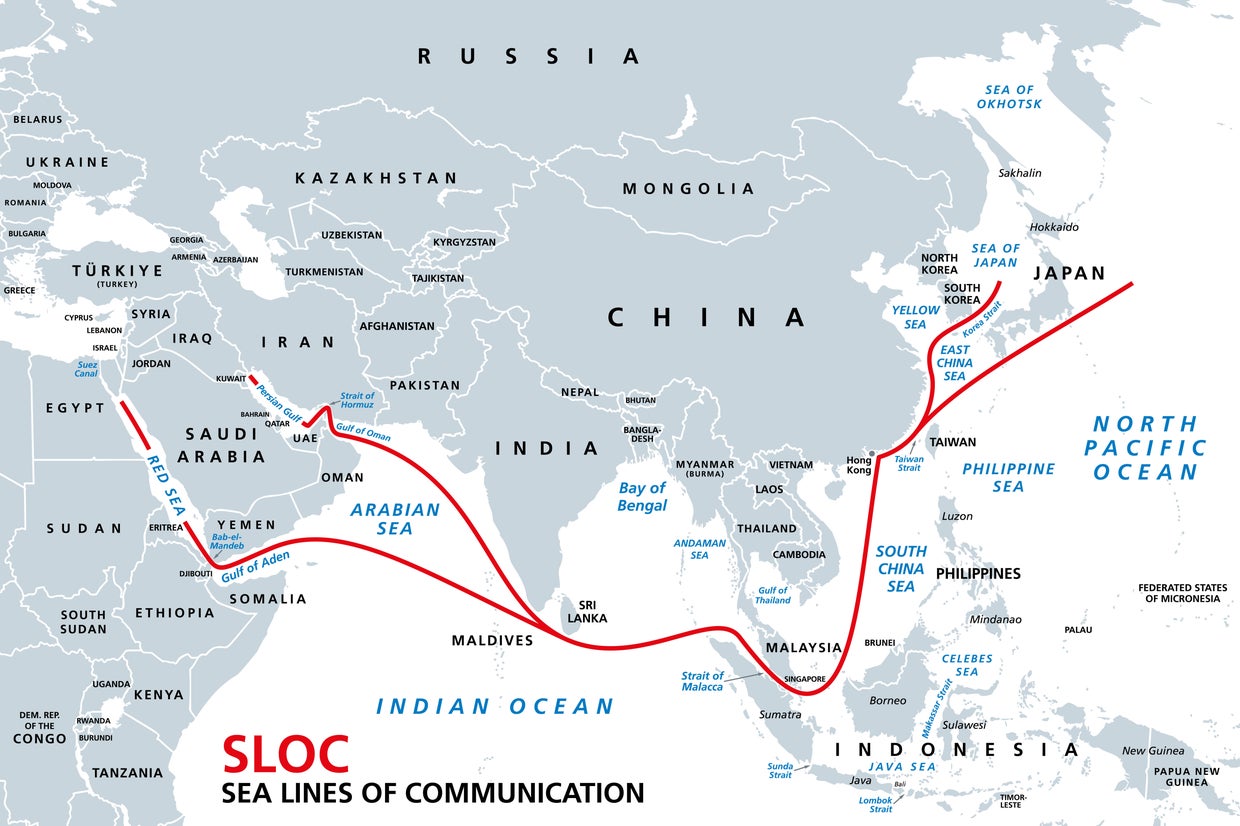
A roundup of the latest reports from CBS News, Fox News and ABC News shows that the conflict over Iran has moved from a limited exchange of strikes into a broader, strategic risk. On one end of this chain are the deaths of U.S. service members and discussion of expanding the U.S. military campaign; on the other end, gas prices in the United States are rising above the psychologically important $4-per-gallon mark. Between them lies the central knot of the entire story: the Strait of Hormuz, which carries about one-fifth of the world’s oil and has become a flashpoint—militarily, economically and politically. In reporting, CBS News describes new attacks after the deaths of American servicemen, Fox News writes about a possible expansion of U.S. operations against Iran, and ABC News documents the direct day-to-day impact of the war—higher fuel prices and the risk of a new inflation wave.
Taken together, all three outlets make clear that the conflict can no longer be described only as an exchange of blows between two states. It is spreading in several directions at once. On the military side, logic pushes Washington toward further strengthening its presence and choosing between a limited operation and a return to “full-scale combat,” as Fox News puts it. The economic logic shows up as an energy shock: according to ABC News, the average price of gasoline in the U.S. rose to $4.003 per gallon after increasing by 13 cents over the week. The political logic is visible in White House rhetoric, where, ABC News reports, Donald Trump said that the U.S. hit Iran “hard” in response to the deaths of American service members, while Fox News cites officials saying a decision on expanding the campaign is expected “in the coming days.”
Against this backdrop, CBS News’ report that after the deaths of three U.S. service members Iran continued launching new attacks—and the U.S. carried out another round of strikes—becomes especially important. Even a brief CBS segment—“2 U.S. troops killed in Iranian attack identified as U.S. launches another round of strikes”—sets the tone for the entire story: this is no longer a one-off escalation, but a steady spiral of retaliatory actions. In such a situation, each new development increases the likelihood of what comes next rather than reducing it. That’s why Fox News reports that the Pentagon and CENTCOM are moving forces in advance, including F-16s, F-35s and KC-135 tankers, to be ready for a widening of the war. The phrasing “preparatory ahead of a final decision” underscores that the military infrastructure is already being adjusted to a potentially larger scenario—even if the political decision has not yet been made.
ABC News’ economic report makes the crisis tangible for ordinary Americans. While soldiers and analysts discuss aircraft, basing and possible targets near Tehran, the consumer sees the price tag at the pump. ABC directly links the price increase to fears of a global oil shortage after the intensification of the war and Iran’s moves to close the Strait of Hormuz. This is not just a regional sea artery, but a strategic chokepoint—a narrow bottleneck in global trade through which a huge share of oil supplies flows. When threats emerge there, the market reacts immediately: oil becomes more expensive, then gasoline, and then pressure mounts on overall inflation. ABC notes that before the current jump, prices had once fallen below $4 after a preliminary agreement between the U.S. and Iran—but this time, renewed exchanges of strikes have again shattered hopes for de-escalation.
Fox News adds another layer: a report that the U.S. has so far avoided striking near Tehran and Iran’s nuclear sites, but that this “could change” if the conflict shifts to full-scale war. This means the current campaign is still limited in terms of targets, but not in terms of consequences. A war of this kind can quickly go beyond punishment focused on specific attacks and turn into a strike at Iran’s entire military—and possibly nuclear—infrastructure. At the same time, Fox News points to the movement of aircraft and tankers to Israel, suggesting preparation for closer coordination with allies. Even mention that tankers are being transferred from other bases in the region to Israeli facilities shows how important now are questions of logistics security and readiness for a long campaign. War in this form is not only about bombings, but also about managing refueling, routes, air cover, and the resilience of the entire air operation.
Against this backdrop, ABC’s reports about rising inflation take on the importance of a political signal rather than a private economic indicator. The outlet emphasizes that easing in the fuel market helped reduce the overall inflation backdrop, but that with a new spike, this effect could quickly disappear. In other words, the conflict in the Middle East is becoming a factor in U.S. domestic politics: it affects consumer expectations, perceptions of the administration’s actions, and voters’ moods. When gas prices again cross $4, it is no longer abstract macroeconomics, but the daily sensitivity of millions of households. Even if overall inflation remains below peak levels, the very return to expensive fuel undermines the sense that conditions are stabilizing.
Combining all three pieces, one can say that the key trend is the fusion of military escalation and economic shock. In a typical geopolitical storyline, combat and fuel prices often move in parallel, but here they are literally feeding each other. Strikes, losses among U.S. troops and the risk of expanding the campaign increase nerves on the oil market. Higher gasoline prices, in turn, create additional pressure on politicians who have to explain the conflict’s costs to the public. This closed loop makes de-escalation not just desirable, but strategically necessary.
There is also a broader takeaway: the Strait of Hormuz remains one of the most dangerous points in the world economy precisely because its vulnerability instantly turns a regional conflict into a global problem. ABC’s reporting captures this especially clearly when it discusses the closure of the strait and “historic oil disruption.” Fox News shows the military side of the same reality—aircraft redeployments, preparation for a potential expansion of operations, and caution around Iran’s capital. CBS News captures the human price of what is happening—new casualties and new strikes. Together, these materials depict not a single separate development, but a turning point, when the conflict is already affecting both the strategic balance in the region and the wallet of the American consumer.
Some terms in this story need clarification. The Strait of Hormuz is a narrow sea passage between Iran and Oman through which oil and gas tankers travel; blocking it immediately hits global energy supplies. CENTCOM is the U.S. Central Command, responsible for operations in the Middle East and nearby regions. F-16s and F-35s are fighter aircraft, and KC-135s are air refuelers that allow aircraft to stay in the air longer and operate farther from bases. Base inflation and overall price indices are ways to measure how quickly goods and services are becoming more expensive; in this case, the rise in gasoline is especially dangerous because it is transmitted rapidly to other prices through transportation and logistics. The term “full-scale combat” does not just mean a series of retaliatory strikes, but an expanded campaign with a broader range of targets, means and risks.
The main conclusion across all three sources is that the current phase of the Iran-U.S. standoff has stopped being purely a military story. It is now a conflict with direct consequences for global energy, American inflation and the domestic political stability of the United States. While Washington decides whether to limit itself to current strikes or expand the campaign, the market has already reached its own conclusion: the risk of oil disruptions is real, which means the price at the pump in the U.S. will remain hostage to Middle East escalation.