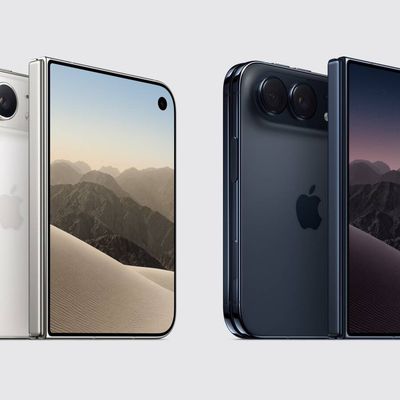
The launch of the foldable iPhone Duo shows that Apple has entered a new market with exceptionally strong demand, while simultaneously facing limited production capacity and a number of practical compromises. The device, priced from $1,999, was almost unavailable within the first few minutes of preorders, and retail employees were reportedly advised to warn customers that they should not expect to buy one without a preorder on launch day. Against this backdrop, a comparison with the Samsung Galaxy Z Fold 8 is particularly revealing: the iPhone Duo attracts buyers with Apple’s ecosystem and its novelty, but Samsung offers a more mature product, broader features, and lower risks for consumers.
The main theme of all the reports is the gap between the excitement surrounding Apple’s first foldable model and the product’s actual readiness to meet mass demand. Limited supply increases the Duo’s appeal, but at the same time turns the launch into a test for Apple: the company must prove that the high price and technological novelty justify less refined usage scenarios.
According to MacRumors, employees at some Apple stores were instructed not to encourage iPhone Duo purchases without a preorder on Friday, October 23. They were told that there would probably not be enough devices for regular walk-in customers on the first day of sales. Apple’s online store suggests checking pickup availability from October 24, but this does not guarantee that the product will be in stock.
The shortage came as no surprise. Even before the official announcement, reports said that production amounted to only several hundred devices per day at the end of August, while new problems emerged at the end of September. According to Bloomberg, Apple even considered postponing the start of sales until November. Ultimately, the company managed to assemble the minimum inventory needed for a launch on October 23, but was unable to ensure full availability.
The scale of the problem became clear after preorders opened. Estimated delivery dates began moving beyond launch day within just a few minutes, and after approximately half an hour, Apple’s U.S. online store was showing a shipping date of January 25 for all configurations. As a result, the device was effectively unavailable for the holiday season to buyers who failed to place an order immediately.
Apple described demand as “incredibly high” and said it was working to deliver devices to customers as quickly as possible. However, the shortage creates room for speculation. PhoneArena reports that some eBay listings reached $2,800–$5,200, compared with the official starting price of $1,999. These listings may involve resellers or sellers attempting to capitalize on the limited number of initial shipments. In either case, the higher price reflects not only interest in the product but also artificially intensified scarcity.
The advice to wait for subsequent batches appears rational. The first wave of devices may be accompanied by software bugs, design shortcomings, and undiscovered reliability issues. Buying from resellers deprives customers of the usual benefits of an official purchase and forces them to overpay for access to a product that will likely become more widely available over time.
A comparison of the iPhone Duo with the Galaxy Z Fold 8 shows exactly what buyers are paying for in Apple’s case—and what they must give up. As Geeky Gadgets notes, the iPhone Duo is approximately $100 more expensive than the Galaxy Z Fold 8 in the United States, while in the United Kingdom the difference reaches £300. In some countries, including India and South Korea, the higher-end Z Fold 8 with 1TB of storage may cost less than the 256GB iPhone Duo.
However, the initial price is only part of the expense. Repairing the iPhone Duo’s internal display in the United States is estimated to cost $999, compared with approximately $419 for the Galaxy Z Fold 8. AppleCare+ can reduce the financial risk, but it also increases the overall cost of ownership. This is particularly important for foldable smartphones: the flexible internal display, hinge, and body design are potentially more vulnerable than the components of a conventional smartphone.
Samsung also retains an advantage in multitasking. The Galaxy Z Fold 8 can run up to three apps simultaneously, use floating windows, and switch to Samsung DeX—a mode that turns the smartphone into something resembling a desktop computer. According to the comparison, the iPhone Duo is limited to two apps and does not offer a comparable set of tools for professional work.
There are other limitations as well. The iPhone Duo does not support a physical SIM card and uses eSIM only. This may be convenient in countries with well-developed eSIM support, but it can create difficulties when traveling, changing carriers, or using local SIM cards. The device also lacks reverse wireless charging, meaning it cannot charge compatible accessories or other gadgets from its own battery.
At the same time, the iPhone Duo’s advantages are not limited to the Apple logo. The company claims improved dust resistance, a redesigned hinge, and a less visible crease on the internal display. For Apple’s first foldable device, these are significant engineering achievements. In addition, customers who already use an iPhone may benefit from more seamless integration with iCloud, Apple Watch, AirPods, and other ecosystem services.
But this is precisely where the key conflict emerges. Samsung has been releasing foldable smartphones for eight generations and has accumulated considerable experience with hinges, displays, multitasking, and everyday reliability. The iPhone Duo, by contrast, is only beginning to establish its own reputation. An improved design on paper does not yet mean proven durability after two or three years of use.
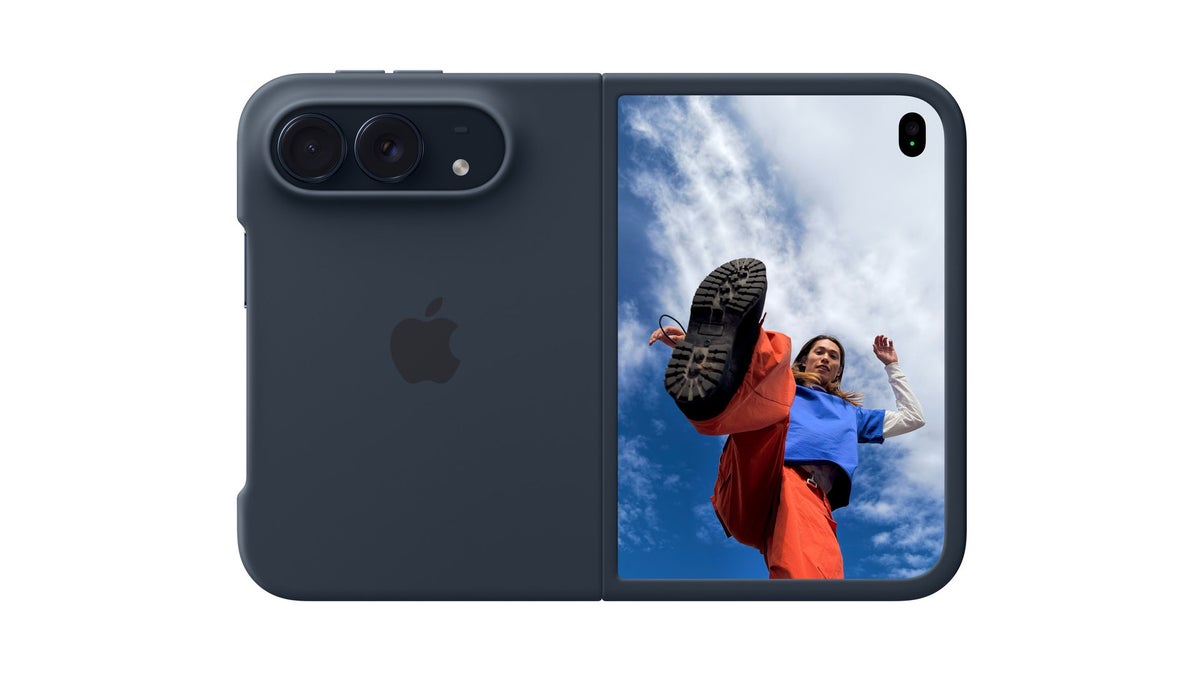
Practical compromises are visible even in the accessories. According to PhoneArena, the official $79 iPhone Duo case attaches to the body using adhesive strips. Users must remove the protective film, install both parts, and press them together so the adhesive can secure the accessory. This approach is found on some foldable devices because a conventional rigid case may interfere with the folding mechanism, but for a premium product it looks unusual and potentially inconvenient.
The more expensive $129 Folio case attaches magnetically and features metal hinge elements that serve as a stand. However, it covers the outer display, reducing the convenience of using the phone while folded. This is a typical example of a foldable-design compromise: the accessory is intended to protect the device but may simultaneously undermine its main advantage—the ability to use the external screen quickly without unfolding the phone.
The case situation matters not in itself, but as an illustration of the product’s maturity. When a manufacturer must choose between adhesive attachment, a covered outer display, and insufficient protection for the internal screen, it indicates that the form factor has not yet become fully convenient and standardized. The buyer is purchasing not only a smartphone but also a new set of rules for handling it.
In terms of cameras, the Galaxy Z Fold 8 also appears stronger in terms of features. It offers manual professional video controls and 8K recording, which may matter to content creators. The iPhone Duo can deliver high-quality photography and will probably perform better in certain scenarios thanks to image processing and app integration, but the comparison cited here points to the absence of some advanced tools.
This does not mean that the Galaxy Z Fold 8 is unequivocally better. The devices have different priorities. Samsung emphasizes functionality, interface customization, and productivity. Apple is more likely relying on ease of use, close integration with its own ecosystem, software optimization, and a recognizable industrial design. For users who already work within the Apple environment, these factors may outweigh the higher price and more limited multitasking.
Nevertheless, the current shortage cannot automatically be interpreted as proof that the iPhone Duo is superior. High demand may result from a combination of factors: Apple’s enormous audience, years of anticipation for a foldable iPhone, the novelty effect, limited supply, and buyers’ desire to be among the first to own the device. When a product quickly disappears from stores, scarcity itself begins to generate additional demand. This is known as the scarcity effect: limited availability increases the product’s perceived value even when its objective characteristics have not yet been validated through long-term use.
An important consequence for Apple is that a successful launch also creates reputational risks. If the company rapidly increases production, the shortage will become evidence of a strong debut. If delays continue, however, buyers may view them as evidence that Apple overestimated the readiness of its supply chain and product for mass production. For a foldable smartphone that already costs $1,999, a long wait is especially frustrating: customers pay a premium price but do not receive premium availability.
For the smartphone market, the Duo’s launch confirms a broader trend. Foldable devices are gradually moving from the category of experimental gadgets into the flagship-phone segment, but they still retain high prices, expensive repairs, and design limitations. Manufacturers are competing not only over thickness and screen size, but also over hinge reliability, dust protection, accessory quality, software multitasking, and total cost of ownership.
The main conclusion is that the iPhone Duo looks like a strong and highly desirable debut, but not an undisputed category leader. Apple brings a powerful ecosystem, a recognizable design philosophy, and potentially more seamless integration of hardware and software. Samsung, in turn, offers a more mature foldable platform, broader productivity features, a lower price, and considerably more accumulated experience.
While initial shipments remain limited and real-world reviews of reliability and everyday usability have yet to form a clear picture, buying an iPhone Duo from resellers for $2,800–$5,200 looks unjustified. Waiting for subsequent shipments will not only save money but also allow for a more objective evaluation of the device. For Apple, the real test will begin not on launch day, but after the iPhone Duo becomes available to a broad range of users and stands the test of time.