Apple’s first foldable iPhone is testing both whether buyers are willing to pay around $2,000 for a new format and whether the company can turn a technically impressive device into an everyday product. Initial demand has been strong, and the nearly invisible hinge has earned positive reviews. But the high price, camera compromises and unfamiliar way of using the device still make the Duo feel more like an expensive novelty than an obvious replacement for a regular smartphone. The release of repair guides and support for Apple Pencil show that Apple is developing the device not just as a hardware novelty but as part of a broader ecosystem—although the practical value of these features remains limited.
The launch of the iPhone Duo marks Apple’s entry into a category its competitors have been exploring for several years. According to the Honolulu Star-Advertiser, demand was high in the first few hours: delivery dates quickly slipped to January after preorders opened, and the company called the customer response “exceptional.” At the same time, the launch generated less buzz than previous iPhone debuts. Lines persisted, but were no longer a ubiquitous sight, and sales were limited to spread out the scarce supply.
This combination of excitement and restraint says a lot about the new product’s position. The Duo is attracting loyal Apple users eager to try the company’s first foldable smartphone, as well as people drawn to the idea of a device that combines a phone with a small tablet. But a price of around $2,000—and even more in some countries—makes it a niche choice. Queues and resale at inflated prices point to strong interest, but do not, by themselves, prove that foldable phones have become a mass-market need.
First impressions of the design have generally been positive. Reviews have praised the sturdy, nearly invisible hinge—an important achievement for foldable smartphones, where the crease in the screen has long been one of the main visual and practical drawbacks. At the same time, reviewers point to the lack of a telephoto lens, the need for third-party apps to adapt to the unusual screen and a less convenient folded form factor for quick everyday tasks. John Gruber, a prominent Apple commentator, described the device as “an extremely polished prototype” rather than a finished product he would want to carry around. That does not necessarily mean the model is a failure; rather, the Duo shows that refining the engineering of a form factor is not the same as creating a compelling use case.
That use case will be Apple’s key test. If buyers mainly need a smartphone for messaging, calls and browsing, the large inner screen and foldable design may not justify the extra cost. The Duo may be more appealing to those who want to combine a phone with a compact device for reading, note-taking or watching content. A Berlin-based content creator quoted in the article believes the device could eventually replace a separate tablet for him. But that depends on more than screen size: it will take convenient apps, well-designed multitasking and features that genuinely make use of the foldable format.
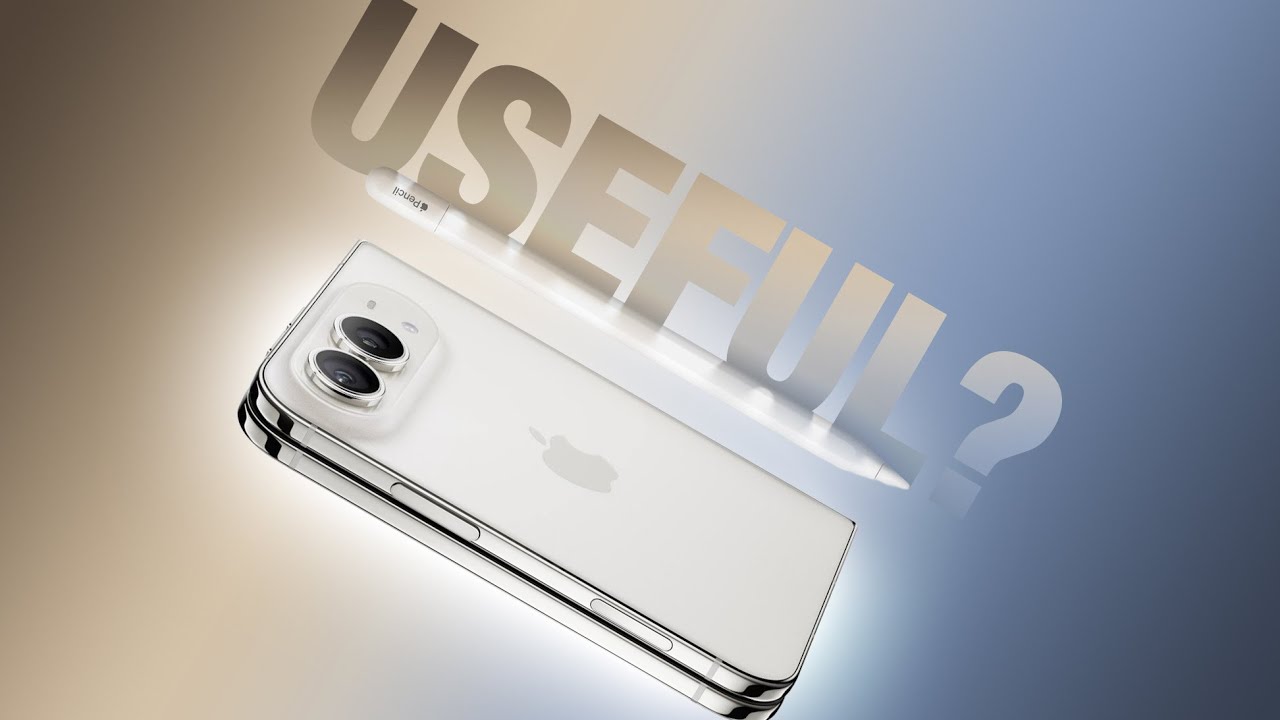
In this respect, the MacRumors report on Apple Pencil is telling. The Duo supports only the USB-C Apple Pencil, not the first- or second-generation Pencil or the Pencil Pro. Pairing the stylus requires a cable; it can be attached magnetically to the hinge for storage, but cannot be charged that way. Support is arriving in the iOS 27.2 beta. The stylus allows users to write and draw on both screens, but offers fewer features than the Pencil Pro: it lacks pressure sensitivity, double-tap and squeeze gestures. The screen’s small size also limits the usefulness of note-taking and drawing compared with an iPad.
This compatibility broadens the Duo’s capabilities, but also highlights how incomplete the ecosystem solution is. Users may need to buy a separate accessory, and not the most capable option in Apple’s lineup. Note-taking and drawing are sensible additions, but they do not yet make the foldable iPhone a full-fledged tablet replacement. In other words, peripheral support alone does not create a new use case; everyday convenience and suitable apps will have to do that.
Another important signal is the availability of repair documentation. On launch day, Apple published official instructions for repairing the iPhone Duo yourself, as 9to5Mac reports. The guides describe the device’s internals, the tools required and the procedures for replacing individual components; separate instructions cover the risks of working with cracked glass and the battery. The company recommends reading the guide in full beforehand and attempting repairs only if you are confident in your skills. However, original replacement parts for the Duo were not yet available through the Self Service Repair program at the time of publication.
This is particularly significant for a foldable device: its complex hinge, two displays and battery could make repairs more labor-intensive, while the phone’s price raises the cost of a mistake or damage. Publishing guides improves transparency and could support independent repairs, but without available parts, their practical value remains limited. It also reminds buyers that the premium price comes with not only new capabilities but potentially costly maintenance and repairs.
The device could nevertheless have a significant impact on the market, even with a limited audience. According to research firm IDC, as cited by the Star-Advertiser, Apple could capture 44% of foldable-device revenue in 2026 while accounting for 31% of shipments, and become the leader in both value and units sold as early as 2027. The gap between revenue share and unit share is understandable given the Duo’s high average price: Apple could claim a large share of the market’s total value without selling more than half of all foldable phones. But the forecast depends on whether the company can turn initial interest into sustained sales and secure adequate supplies.
The launch is also taking place against a backdrop of industry challenges: in China, weak consumer demand and rising memory costs have coincided with six consecutive quarters of declining smartphone shipments. A premium foldable iPhone may support sales by attracting buyers willing to upgrade to more expensive devices, but it is unlikely to solve the problem of mass-market demand on its own. Availability and sustained interest will be particularly important for Apple: the initial queues may reflect the novelty of the product, while its long-term success will depend on how convenient the Duo remains after weeks and months of use.
The iPhone Duo is therefore more than just another model; it is a test of whether Apple can give the foldable format a compelling purpose for a broad audience. A strong launch, a well-engineered hinge and the ability to combine phone and tablet functions work in the device’s favor. Its high price, camera compromises, limited stylus support and still-developing software ecosystem work against it. The publication of repair guides shows attention to servicing, but does not yet resolve the question of parts availability. The key measure of success will not be how many people lined up at launch, but whether the foldable screen proves useful enough in everyday life for buyers to pay substantially more for it than for a regular iPhone.