Modern news—even when stories seem entirely unrelated — a bill to replace the words “mother” and “father” in New York, a change of the “voice” on a popular NPR radio show, and Detroit receiver Kendrick Law’s ACL injury in the NFL — actually tell the same fundamental story: how society redefines familiar roles and the words it uses to describe reality. Through language and symbolic figures — “mother” and “father,” the “voice of the show,” the “franchise player” — we negotiate what counts as normal, authoritative, loss, and justice.
A piece in Fox News describes a New York Democratic bill that replaces the words “mother” and “father” in a number of child- and parent-related statutes with the terms “gestating parent” and “non-gestating parent,” and changes “paternity” to “parentage.” In other words, in legal language, instead of traditional biological and social designations “mother” and “father,” the proposal uses formal, “gender‑neutral” formulations: literally “gestating parent” (the one who carried the child) and “non‑gestating parent” (the one who did not carry the child but is a parent under the law). The key motive of the bill’s authors is inclusivity, an effort to encompass all family variants under legal norms, from same‑sex couples using surrogacy to transgender parents.
In substance, this is an attempt to make legal language as descriptive and “nonjudgmental” as possible, removing references to sex and biological gender as defining traits. The concept of “parentage” instead of “paternity” is meant to reflect the fact of origin and the legal recognition of parental rights, not just fatherhood in the narrow sense. This is an example of what sociolinguists call language policy: the deliberate adjustment of vocabulary and formulations to change or broaden the social reality recognized by law.
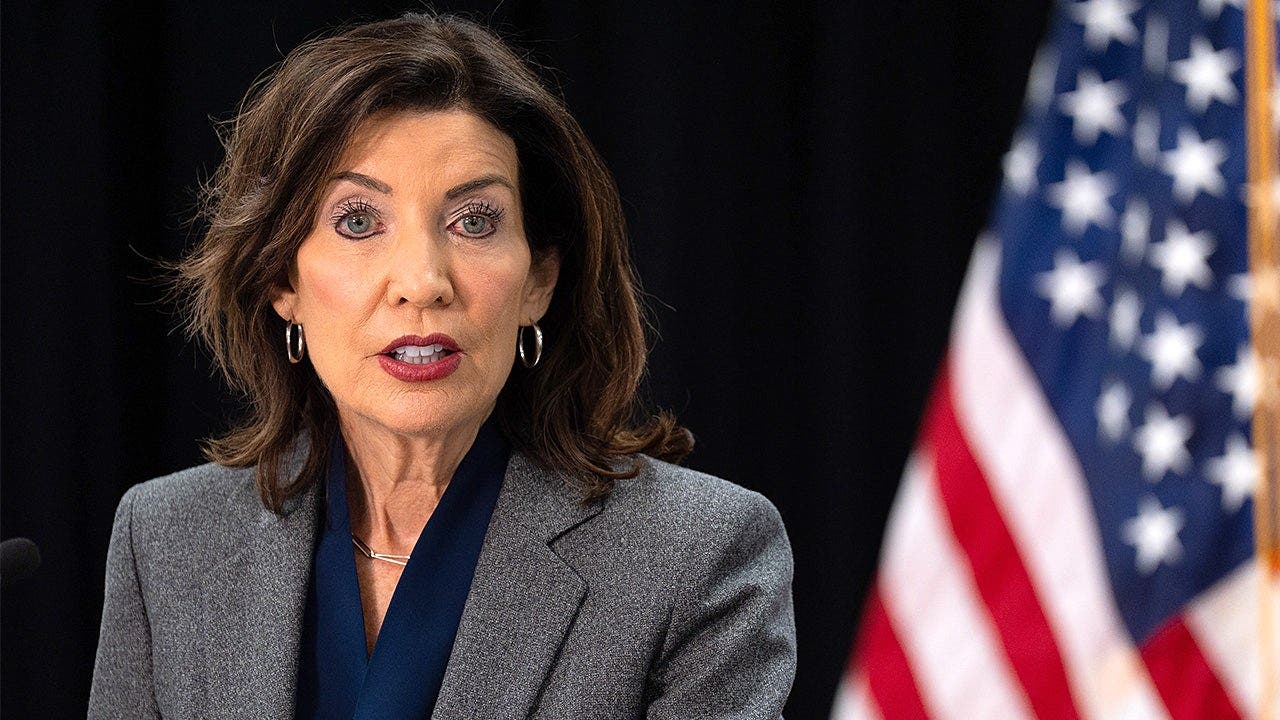
Opponents’ reactions, cited in the Fox News article, show that for a significant part of society such changes are perceived not as technical clarifications but as a threat to familiar symbols and identities. Republican gubernatorial candidate Bruce Blakeman writes: “In New York, Kathy Hochul ‘mom’ is now ‘gestating parent’... I will defend moms and dads against this lunacy.” Congresswoman Claudia Tenney talks about “erasing” mothers and fathers. This is not only a political conflict but also a clash of worldviews: one holds that changing official language can reduce discrimination and include people with nonstandard biographies; the other believes that sanitized, technocratic vocabulary destroys the emotional, cultural, and even anthropological foundations of family life.
Interestingly, Governor Kathy Hochul herself is distancing from the bill for now, saying she’s not familiar with the text and will review it by year’s end. So even within the Democratic camp, it’s clear the language question is politically sensitive: to support it is to invite conservative criticism; to reject it is to disappoint the progressive wing. Legal language that most citizens will never read suddenly becomes a media symbol of a “war on families” or, conversely, a fight for recognition of new family types.
The same question — which voice and which words are considered normative — is revealed differently in an NPR piece about the radio show Wait Wait... Don’t Tell Me! The NPR note reports that the role of judge and scorekeeper, filled for nearly 30 years first by Carl Kassell and then by the legendary announcer Bill Kurtis, will now go to Alzo Slade. At first glance this is simply a personnel update, but in fact it’s a change of the institution’s “voice,” a fixture of the U.S. cultural landscape.
Bill Kurtis embodied the classic image of the “radio father”: a velvety, polished voice, decades of news experience, a figure of trust. Host Peter Sagal tells NPR that Kurtis had “the dad voice you always wanted.” That is an important metaphor: the show built a sense of stability and authority around him. Now Slade takes his place — a journalist with a Peabody and three Emmys, but also a stand‑up comedian, a former Prince tour photographer, and the creator of the touring hip‑hop party Grits and Biscuits. Put simply, the “father” is being replaced by a “friend”: as Sagal says, “the voice of the friend you always wanted.”
Here again the same tendency appears as in the New York bill: institutions move away from the traditional image of vertical authority (father, patriarchal announcer, the wise newscaster speaking down to the listener) toward a more horizontal, flexible, and “friendly” voice. Slade himself frames the role almost as a question of his own “legitimacy”: he says the role feels “equal parts honor and carefully considered prank or clerical error.” That self‑irony is also a new norm of public roles: instead of an infallible voice of truth, we get a smart but self‑reflective and vulnerable character who makes the news “silly enough to survive the week.”
As NPR notes, Slade is only the third person in the role in 29 years. So the replacement of an emblematic voice is rare, and his personal biography (African American background, Southern hip‑hop, stand‑up) becomes not merely biographical detail but part of a cultural statement. The station is signaling that the new normative voice of news is not necessarily an older white male announcer, but a person with a very different cultural code. This is not simply swapping one professional for another; it is changing the very model of who “has the right to voice the news” and how it’s done.
Finally, a sports story in Yahoo Sports about Detroit receiver Kendrick Law’s torn ACL — on a different playing field, but about the same theme: how through language and narratives we agree what is normal in professional sports and what we will tolerate. The piece reports that Law, a rookie and a fifth‑round draft pick, tore his anterior cruciate ligament (ACL) during a non‑contact drill in practice and will miss the entire 2026 season. Head coach Dan Campbell says: “I hate this for him. The guy was doing a good job. But it’s part of the deal. Harsh reality.” He adds that Law “will get through this early and his career is ahead of him.”
The phrase “part of the deal” in a sporting context is analogous to the legal “technical wording” change or radio’s “voice swap”: a familiar norm that masks a vast personal tragedy behind a dry formulation. For Kendrick Law, just entering the league and hoping to carve out a role as a fifth receiver and returner, this is the loss of a whole year of pay, development, and visibility to coaches and fans. His college stats (86 catches, 883 yards, kickoff return experience, nearly 23 yards per return, as Yahoo Sports notes) show a player with potential as a versatile special‑teams weapon. But professional sports language is “stitched” so that such injuries are described as an inevitable cost of production.
ACL refers to the anterior cruciate ligament in the knee, one of the joint’s main stabilizers. In American football, its rupture is almost a cliché because it happens so often. The typical scenario — like Law’s — is a “non‑contact drill,” a sudden cut or change of direction without direct opponent contact. Here, as in the legal or radio cases, the expression “harsh reality” normalizes what is, from a human point of view, a catastrophe. Media and coaches, through their language, fold the injury into a narrative of toughness: the player “will get through it,” “will come back stronger,” while the team shifts focus to competition for his spot — Tesla, Dortch, Kennedy, Wilson Jr., Cunningham, Meeks, Lovett.
All three stories repeat the same motif: who has the right and authority to rewrite the rules of the game — legal, media‑cultural, sporting — and what words are used to explain inevitable losses and changes. The New York bill effectively says: the law does not have to mirror the cultural image of “mom” and “dad”; it should record biological and legal reality so no one is left out. Opponents reply: by removing familiar words you uproot identity and devalue the experience of millions for whom “mother” and “father” mean more than biology — they carry love, history, and culture.
NPR’s replacement of Bill Kurtis with Alzo Slade takes the opposite approach: it keeps formal roles (judge, scorekeeper) but radically changes the cultural content of those roles, not through law but through the soft power of pop culture. It’s a different path to shifting norms: showing listeners that a new type of voice and biography is a natural continuation of the story, not its erasure. Hence the warm quotes and blessing from Sagal and from Slade himself, recognition of Kurtis’s contributions, and the parallel to a “jazz legend at an open mic” — an image that simultaneously honors the predecessor and celebrates the boldness of the successor.
Sports shows how deeply we’ve already internalized certain norms, even when they are brutal. What a Gridiron Heroics writer at Yahoo Sports calls “absolutely devastating” becomes a minute later an analytical paragraph about other receivers’ opportunities and the Lions’ depth chart. As in law and media, language produces an effect of manageability: one person’s tragedy dissolves into the broader strategy of the season.
Viewed more broadly, the key trend illustrated by these three stories is a shift from rigid, sacral forms to functional, editable ones. A parent in law is primarily a legal figure with described biological parameters (gestating/non‑gestating), not the archetype “mother” or “father.” The voice of the news is not necessarily an embodied patriarch; it can be a friend, a stand‑up comic with a different cultural biography. An NFL player is not an idolized hero but a component of a system described by coaches in the language of risk management: injuries are part of the deal, the “harsh reality” of the business.
This transition has clear gains and risks. More precise, inclusive legal language can help, for example, families using surrogacy avoid ambiguity and injustice. Recognizing new “voices” in media broadens representation and makes the public sphere resemble actual society rather than a narrow slice of it. In sports, honestly acknowledging that injuries are structural rather than rare mishaps could spur reforms in training, medicine, and contracts.
But at the same time, formalization and neutralization of language risk alienation. When the law stops speaking the words families use, it may feel cold and hostile. When a cult “fatherly voice” disappears, part of the audience may experience a loss of bearings because a familiar image of authority has crumbled. When a player’s fate is described with dry formulas — “he’ll have time” and “we have depth” — it can reinforce a cynical view of sport as business where a person is replaceable and his dreams secondary.
Therefore the crucial question in coming years is not only which specific words will be fixed in laws, media formats, and sports regulations, but how society will live through these changes. Will politicians, journalists, and coaches find language that is both precise and humane, that includes new groups without making older ones feel erased; that acknowledges harsh reality without devaluing individual pain?
Stories from Fox News, NPR, and Yahoo Sports show this process is already underway: words are being reassessed, symbolic figures are changing, “voices” and “heroes” are being renewed. Perhaps whether the new reality becomes fairer — or merely more formal — will depend on how thoughtfully we treat these, at first glance, distant changes.