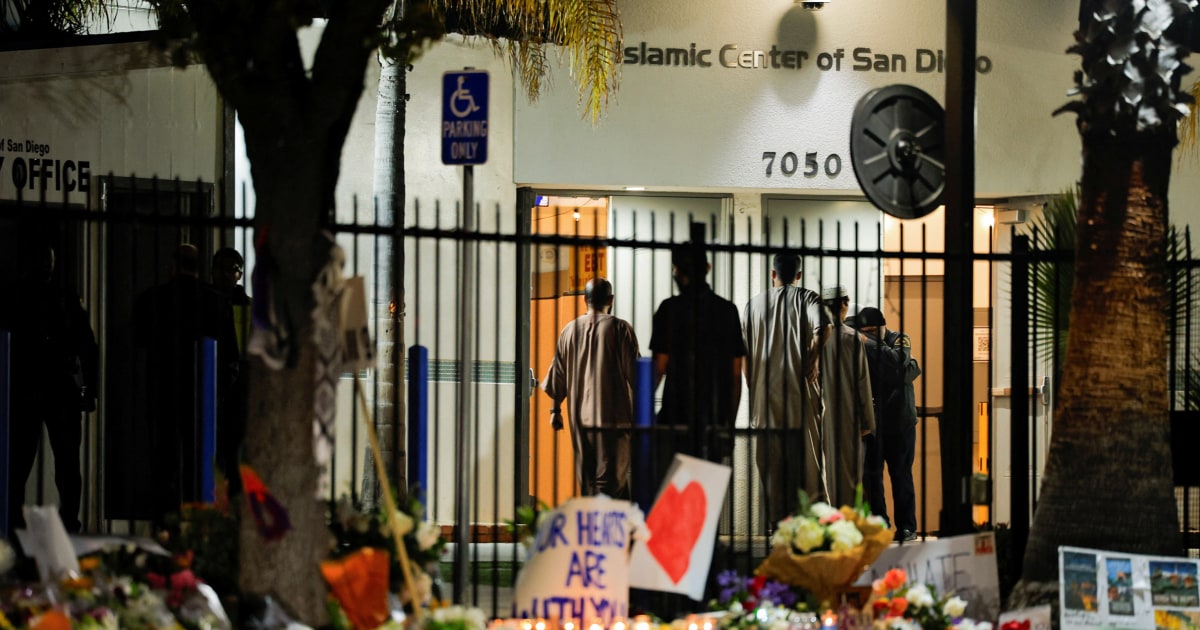
In three at-first-glance unrelated stories — the America’s Cup regatta in Naples, the attack at a San Diego mosque, and the death of rapper Rob Base — a single common thread emerges: how mass events and the media environment shape society, amplifying both constructive and destructive impulses. It’s about what we create around us: physical spaces (cities, waterfronts, sports arenas), digital spaces (online platforms, social networks), and cultural spaces (music, collective memory). Through these, society shows its capacity either to turn the energy of millions into development and solidarity, or into hatred, fragmentation, and violence.
The story of Naples being chosen to host the second Louis Vuitton preliminary regatta of the 38th America’s Cup, noted in the America’s Cup piece announcing the event in Naples from Sept. 24–27, 2026, looks like a model example of how a major sporting event can become an instrument of urban transformation and social mobilization. The Ministry of Sport, city hall, regional authorities and the Sport e Salute structure rhetorically speak of the regatta not as a “party on the water,” but as a lever for long-term change. Sports Minister Andrea Abodi emphasizes that choosing Naples is a “rebirth of a place, Bagnoli, which has been left to its own devices for over thirty years” — the revival of Bagnoli, an industrial area neglected for more than three decades. Here the complex term “urban transformation” is simplified in the text into concrete images: dredging and reclamation work, moving team bases from the temporary location at the naval logistics complex Nisida to the final site in Bagnoli, and extending the tourist season through smart scheduling.
Sport e Salute president Marco Mezzaroma explicitly formulates the strategy: the late-September timing is driven by “vision, planning, and common sense” and is meant simultaneously to extend summer, manage traffic flows in the Gulf of Naples, allow time to finish renovations, and boost tourism and economic returns. Much of his language centers on the concept of “legacy”: “We want to turn it into an opportunity to engage schools, local areas, the suburbs, and the entire community, leaving a tangible legacy.” This is a key concept in contemporary mega-event policy: not merely staging a championship or regatta, but leaving behind infrastructure, new competencies, and social ties. That Naples’ mayor and government commissioner for Bagnoli Gaetano Manfredi speaks of a priority on “social renewal” of Nisida shows that the regatta is being used as an occasion to inscribe marginalized territories into a new image of the city — an international hub with high levels of services, transport, and urban environment.
Thus, in the America’s Cup piece the regatta appears not only as a sporting spectacle but as a catalyst for trust between institutions: government, region, city, armed forces, and state companies (Invitalia, Difesa Servizi) act in the logic of “when Italy works as a team” — Mezzaroma’s key phrase. It’s an example of how a mass event drawing tens of thousands of spectators and a huge global audience can convert attention into development of the urban fabric, infrastructure, and human capital, including outreach to schools and suburbs.
At the opposite pole is the San Diego story, where mass attention and the power of networked spaces turned destructive. In NBC News’ coverage of the shooter who attacked the San Diego mosque and had previously been subject to a gun violence restraining order, the tragedy reveals a complex and ultimately insufficient interaction between the digital environment and legal safety mechanisms. Several concepts that are often difficult to understand and politically contested are central in this story.
First, the mechanism of a gun violence restraining order is used — a kind of “red flag” law: police and courts can temporarily prohibit a person from buying or possessing firearms if there are reasonable fears of violence. In the case of Caleb Vázquez, whom police described as “idolizing Nazis and mass shooters,” such an order was issued back in 2025, according to court documents cited by NBC News. The teen’s father, Marco Vázquez, who had 12 firearms registered, initially voluntarily took all weapons and ammunition to a licensed dealer and documented this, but after refusing police entry to the home he himself received a similar order. Here another important legal concept comes into play — the Fourth Amendment to the U.S. Constitution, which protects against “unreasonable searches.” The father, formally acting within the law and attempting to increase safety, simultaneously aroused police suspicion, leading to heightened measures.
Second, the digital environment plays a crucial role: the family directly states that their son, who was on the autism spectrum, had been exposed to “hateful rhetoric, extremist content, and propaganda spread across parts of the internet, social media, and other online platforms,” which “contributed to his descent into radicalized ideologies and violent beliefs.” It’s important to explain the term “radicalization” in this context: it’s the gradual adoption of extremist ideas and the justification of violence as permissible or necessary. NBC News reports that the alleged shooters’ manifesto contained anti-Muslim, antisemitic, anti-LGBTQ views, Nazi symbols and references to “accelerationism.” In this milieu, accelerationism is not a philosophical theory but a specific white-supremacist doctrine advocating the deliberate provocation of chaos and violence to accelerate the collapse of society and build a “white ethnostate.” This is a stark example of how internet communities and closed forums can function as a kind of “negative legacy” in contrast to the positive legacy of sporting or cultural events: instead of shared experience and trust, they create communities of hatred and mutual incitement to violence.
The Vázquez family, issuing a public apology and condemning their son’s ideology through NBC San Diego and NBC News, address people experiencing “violent thoughts, anger, radicalization, or hatred toward others” with a plea to “seek help before more innocent lives are destroyed.” This acknowledges two things: the limits of legal measures alone (gun orders, police monitoring) and the central role of psychological, family, and community support. Here, as in the Naples story, the notion of an “institutional ecosystem” appears, but not a constructive one — rather a defensive one: school, police, psychiatric care, family, and internet platforms are all involved, yet their combined efforts fall short of preventing tragedy. Against this backdrop, the heroism of slain security guard Amin Abdulla is especially symbolic: mortally wounded, he still managed over the radio to trigger a lockdown protocol and saved up to 140 children sheltering in the mosque.
The third story — about the death of rapper Rob Base, covered in another NBC News piece on the passing of the performer behind “It Takes Two” — at first glance seems entirely unrelated to Naples or San Diego. But viewed through the same key question — how mass culture shapes society — an important line emerges. Rob Base (born Robert Ginyard), according to NBC News, was one of the figures who defined the sound and energy of late-1980s hip-hop. His track “It Takes Two” (1988) became not only a platinum single and a Billboard Hot 100 hit, but also a cultural meme: it was sampled by Snoop Dogg in “I Wanna Rock,” by The Black Eyed Peas in “Rock That Body,” and repeatedly used in ads, films, and playlists. The longevity of the hit shows how a musical track can become part of a shared cultural language — people who don’t know the artist’s name still recognize the beat and chorus.
The obituary emphasizes that Rob Base “helped shape a generation and brought joy to millions around the world,” and offstage was “a loving father, family man, friend, and creative force.” His career, including participation in the “I Love the '90s Tour” with Vanilla Ice and Young MC, demonstrates the phenomenon of nostalgic mass products: concerts where people gather to “relive” their youth create a safe, joyful space of collective memory. This is directly opposed to what is described in the San Diego piece: there, young people find belonging and “meaning” in online communities centered on hatred; here, millions are united by rhythm, dance, and a shared memory of a song nearly forty years old. In both cases, mass culture and media create “affective communities”; the question is what they are built around — joy and play, or hatred and violence.
Juxtaposing all three narratives builds a coherent picture of three types of spaces in which society is being formed today. Physical urban space: Naples and its gulf, Bagnoli, and Nisida in the strong, positive version — as the arena of the America’s Cup — and the San Diego mosque in the tragic, vulnerable version. In the first case, the state and city try to use the event to rethink the waterfront, solve long-standing industrial-area problems, and attract tourism and investment. In the second, a religious community becomes the target of an attack, and only the courage of individuals saves children’s lives. In both cases it’s about how protected a space is and for whom it is open.
Digital space: the Naples regatta and the America’s Cup overall will be broadcast worldwide, turning the Gulf of Naples into an “ideal amphitheater” (as The America’s Cup Partnership CEO Maurizio Perrilli says). This is a positive global showcase — Italy is intentionally relying on livestreaming, media and tourism follow-through. Similarly, Rob Base continues to exist on YouTube, streaming platforms, and TikTok challenges: his “It Takes Two” is a recurring viral presence in the digital environment. But the same platforms that provide clip and regatta virality, according to the Vázquez family, become channels for spreading “hateful rhetoric” and extremist propaganda, including accelerationist and neo‑Nazi narratives.
Cultural and symbolic space: Naples projects the image of a city “preparing for a dress rehearsal” of the main 2027 event, meant to cement its status as a global sports and tourism center. The San Diego mosque carries the image of a place that became a victim of violence but simultaneously demonstrated a high degree of self-defense, solidarity, and heroism. Rob Base’s legacy is that of an artist whose music became part of the collective cultural code; his death is perceived not only as the loss of a person but also as a moment to recognize how important his role was in shaping the sound and mood of a generation.
Several key trends and consequences follow from these three stories. First, major events — sporting or cultural — are increasingly viewed as instruments of comprehensive policy rather than mere entertainment. In Naples the regatta is tied to policies for extending the season, traffic management, environmental and infrastructure renewal, and engagement with schools and suburbs. In pop culture, nostalgic tours like “I Love the '90s” strengthen intergenerational bonds, building a “soft infrastructure” of trust and shared memories.
Second, the critical role of regulation and responsibility in the digital environment becomes evident. The Vázquez family’s admission that “online spaces that normalize hatred” played a major role in their son’s radicalization points to the gap between formal measures (gun orders, school monitoring) and the real influence of social media algorithms. This raises the difficult societal question of how to protect freedom of speech and privacy (the Fourth Amendment, the right to online anonymity) without leaving loopholes for those who use these freedoms to prepare for violence.
Third, the importance of “legacy” as a criterion for evaluating large-scale phenomena is increasing. Naples, preparing for the America’s Cup, openly declares it wants to “leave a tangible legacy” — improved urban environment, new opportunities for youth, a renewed Bagnoli. Rob Base’s musical legacy is already measured not only by platinum records but by the number of samples, remixes, and artists he inspired. In the San Diego tragedy the question of legacy is framed differently: will the shooter’s words and publications, which the family says “we can only pray that his actions and words do not inspire or incite further hatred or violence,” become triggers for imitators, or will society process the story as a lesson on the importance of early help, inter-institutional cooperation, and restricting “spaces of hate” online?
Ultimately, all three stories speak to the same thing: humanity lives in an era when any event — from a regatta to a terrorist attack, from a 1988 hit to a viral social media post — can instantly become global. The question is not whether this happens but how we steward the attention focused on it. Italy aims to turn attention to the America’s Cup into an engine for Naples’ development. The Vázquez family and the mosque community seek to ensure that attention to the San Diego tragedy becomes a catalyst for prevention and rethinking online extremism, not for further imitation. Rob Base’s fans around the world use attention to his death to recall the music that brought lightness and belonging, and so continue his cultural legacy. In this fraught field between creation and destruction, joy and hatred, city celebrations and violence in sacred places, the shape of society in the coming decades will be decided.