Three stories connected by the phrase “breaking news” show how differently urgent information is structured today. In one case, a rapid update helps locate a missing teenager and reflects genuine cooperation among police, rescuers, and local residents. In the second, “urgency” becomes part of the commercial excitement surrounding the record sale of a sports collectible card. In the third, the same format is used as bait to distribute an AI-generated video and direct users to questionable websites. The central theme shared by these publications, therefore, is not simply the speed of the news, but the need to verify what actually lies behind the prominent “breaking” label.
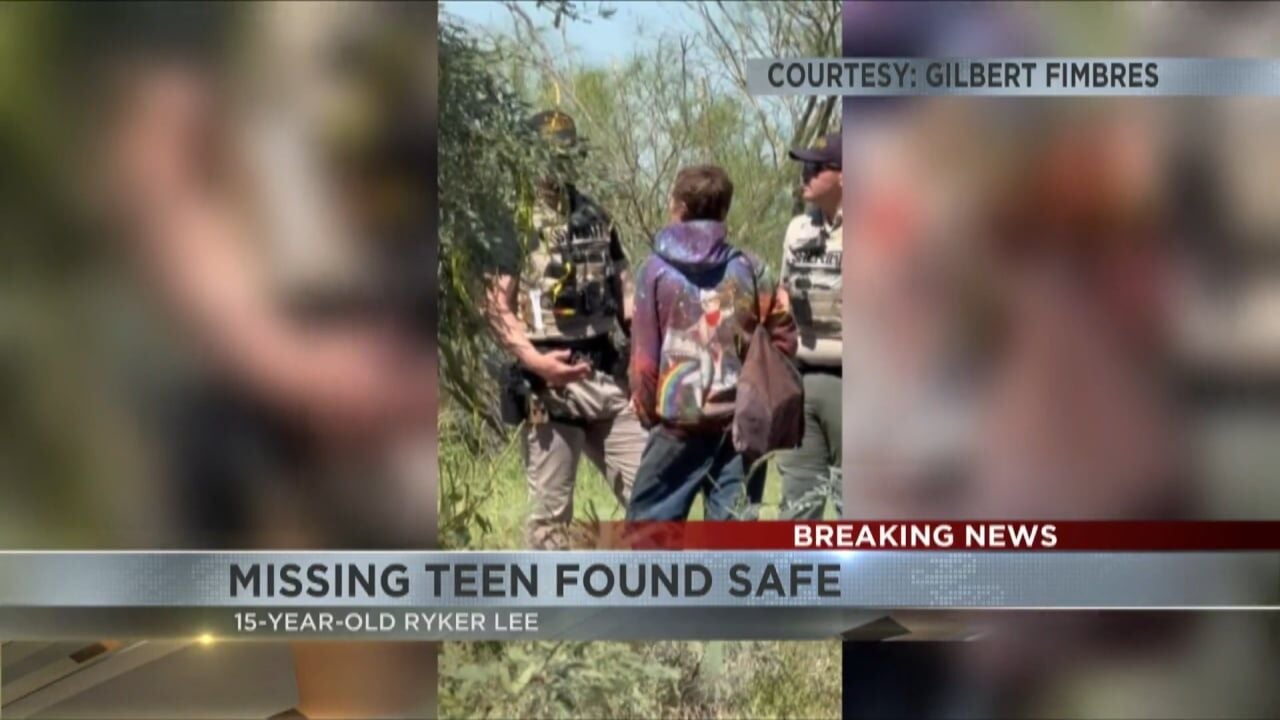
The most socially significant report is KVOA’s story about 15-year-old Ryker Lee being found. The teenager was found on September 25 at about 1 p.m., on the third day of the search, approximately three miles from his home in the Three Points area. According to the Pima County Sheriff’s Department, a local resident reported his location after seeing the teenager near South Sierrita Mountain Road and West Ajo Way. Three Points firefighters then evaluated Lee.
The story highlights the importance of coordination between official agencies and the public. The search involved units from Pima County Search and Rescue, the Border Patrol BorSTAR canine team, an Arizona Department of Public Safety helicopter crew, and residents using drones, horses, and all-terrain vehicles. Sheriff’s officials described the discovery as a “joint effort.” In this case, the speed of publication was justified: the safety of a minor was at stake, and distributing verified information could directly assist the search.
However, the teenager was connected not only to the disappearance but also to an investigation into alleged child abuse. After deputies arrived at the residence in the South Silver Star Road area, investigators found signs of unsuitable living conditions. Lee’s two younger siblings, ages 10 and 8, were placed in the care of the Department of Child Services. His mother, Danielle Lee-Sharp, and stepfather, Michael Menzies, were arrested on child-abuse charges, later released on bail, and are scheduled to appear in court for a preliminary hearing.
According to a preliminary complaint, the 15-year-old allegedly had been living since March 2026 in a recreational vehicle, in a room measuring approximately six by five feet and secured with a padlock. The room had no running water, toilet, or air conditioning. Investigators also described cobwebs, the smell of cat urine, vomit stains, trash, and moldy food. A rifle, according to investigators, was unsecured inside the main house. These details are allegations contained in investigative documents, not a final judicial determination of guilt. Nevertheless, they show that the initial report about the teenager’s rescue was only part of a broader issue involving child protection and adult accountability.
A completely different type of “breaking news” appears in Sports Collectors Digest’s report on the sale of a Cooper Flagg card. The Topps Rookie Debut Patch Auto card sold for $8.04 million at a Fanatics Collect auction. The bidding ran from September 10 to 24 and accelerated particularly sharply on the final day, when the price rose from $3.5 million to the final amount within a few hours. A total of 83 bids were placed.
The card became the third-most expensive basketball card in history and the most expensive card featuring a single player. Only two cards bearing signatures and pieces of game-worn jerseys belonging to Michael Jordan, Kobe Bryant, and LeBron James sold for more. Flagg’s sale also surpassed the previous record for a Topps Debut Patch card: baseball player Paul Skenes’s card had previously sold for $1.1 million. Other NBA rookies—Dylan Harper and Kon Knueppel—also posted strong results, with their cards selling for $2.88 million and $2.34 million, respectively.
Here, the word “breaking” is not connected to a threat to life or the need for immediate action. It describes a sharp price movement and the exceptional nature of an event in the collectibles market. The card’s design plays an important role. A Rookie Patch Auto, or RPA, is a rookie card featuring an autograph and a piece of a game-worn jersey. In this case, the card is a 1/1, meaning it is a unique example of which only one exists. Debut patches were first used on the players’ first game jerseys of the 2025–26 season, then removed after their debut games and incorporated into signed Topps Chrome cards.
This system turns a sporting debut into an investment asset. Value is determined not only by a player’s achievements but also by expectations about their future career, the item’s rarity, brand recognition, and competition among buyers. In Flagg’s case, the speculative element is especially apparent: he has not yet had time to build a long statistical record in the NBA, but he has already become the subject of record-setting collector demand. This shows how the market can capitalize on expectations long before a sporting career receives its final assessment.
The third article, a Lead Stories fact-check published by Yahoo News, demonstrates the most dangerous use of the “breaking news” format. A video circulated on social media with the caption: “Sad news: 30 minutes ago in Ohio, JD Vance was confirmed as…” However, the vice president had made no such announcement, and the video turned out to be AI-generated.
The distribution mechanism relied on emotional incompleteness. The headline did not say what had supposedly happened, but created a sense of extreme importance and encouraged users to click a link in the first comment. The link led to little-known websites carrying articles that did not explain the alleged event. One such article merely referred vaguely to an incident at the April 25, 2026, White House Correspondents’ Association dinner, without confirming any “sad news.”
The investigation identified signs of organized clickbait. The same account repeatedly posted the video claiming that the event had happened “30 minutes ago,” even though the posts were being republished again and again. Other accounts circulated nearly identical wording and used links to sites with similar WordPress templates. Hive Moderation estimated a 77.4% probability that the video was artificially generated. An additional Google Lens search also found no authentic photographs or videos showing Donald Trump, JD Vance, and Marco Rubio together in the described context.
This example helps explain what AI-generated clickbait is: clickbait created or amplified with the help of artificial intelligence. Clickbait is a headline or visual designed primarily to make users click rather than accurately convey facts. Generative AI now makes it possible to create convincing images, voices, and video scenes relatively quickly, imitating a television news report. But the presence of recognizable politicians, logos, or dramatic presentation does not prove that the material is authentic.
Comparing the three stories shows that urgency itself is not a sign of reliability. In Ryker Lee’s case, speed was socially useful because the report was based on a law-enforcement statement and concerned the search for a person. In Flagg’s case, urgency heightened interest in a market event, but the information could still be verified through auction data and a specialized publication. In the fake video, the phrase “30 minutes ago” served the opposite purpose: it was intended to short-circuit critical thinking and make users act before checking the facts.
The difference between the sources is also important. Police and rescue services have direct access to information about a search operation. A sports publication reports on a completed auction with measurable indicators—the amount paid, number of bids, and historical ranking. Fact-checkers, by contrast, examine not only the video’s content but also its origins: repeated postings, link structures, reverse-search results, and technical estimates of the likelihood that AI was used to generate it.
For readers, the practical conclusion is straightforward: a “breaking” report should be evaluated according to its source, specificity, and potential for independent confirmation. A genuine report usually identifies who provided the information, where and when the event occurred, what actions were taken, and what remains unknown. False material often relies on an emotional formula, an ellipsis, a vague promise of “shocking news,” a link in the comments, and a lack of verifiable details.
The main trend running through all three articles is the transformation of news into a competition for attention. In one case, that attention helps mobilize residents for a search. In another, it drives bidding and increases the value of a unique item. In the third, attention becomes a source of traffic and potential income for anonymous websites. The same rhetoric of “urgency” can serve public safety, commercial promotion, or manipulation.
Media literacy today therefore means more than simply knowing how to distinguish truth from falsehood. It requires understanding the purpose of a publication. Readers should ask what the author wants from the audience: help with a search, participation in an auction, or a click on a link. As synthetic videos become more widespread, it is especially important to remember that a convincing image is only a claim, not proof. Checking official channels, comparing several independent sources, and treating emotional headlines with caution are becoming essential conditions for responsible news consumption.