At first glance, these three pieces are about entirely different things: oil tankers, a collapse in the technology market, and the death of music producer Clive Davis. But look a little deeper and they share one theme—how large systems depend on a small number of key people, pieces of infrastructure, and decisions, and how any disruption at a single point instantly spreads far beyond the original sphere. In one case, the world faces a physical bottleneck in the Strait of Hormuz, where even ordinary marine organisms become part of a global energy crisis; in another, investors dump shares when the fragility of the tech market becomes too obvious; and in the third, the music industry looks to a figure who for decades was an “influence hub” in much the same way the strait is for oil or big tech firms are for the stock exchange. All three storylines, in different ways, show that the modern world runs on a delicate balance—and that recovery after a disruption is almost never immediate.
The most important and most unexpected element here is a CNN piece on how hundreds of oil tankers, idling for months around the Strait of Hormuz, were coated with a thick layer of marine life. The situation seems almost comical until you grasp the scale. This is not a cosmetic problem, but biofouling—specifically, the build-up on a ship’s hull of barnacles, mussels, mollusks, algae, and other marine biota. On land, it might just be dirt, but at sea this “living layer” sharply worsens a vessel’s hydrodynamics, increases fuel consumption, and can even damage propellers and cooling systems. As one expert explains in the report, professional bottom cleaner Derek Humm notes that after four months of waiting there is “plenty of time for a lot of gross stuff to accumulate”—“enough time for a lot of nasty stuff to pile up.” The phrase sounds almost like a joke, but behind it is a reality that isn’t funny at all: one giant tanker requires a crew of five or six divers and four to five hours of manual and machine cleaning, and, according to the article, there are around 600 such ships.
The economics of the problem are especially important. Cleaning the bottom of a tanker isn’t just an inconvenient service—it’s a required step before the vessel can resume operations. A dirty hull reduces fuel efficiency, and fuel accounts for roughly half of a ship’s operating costs. That means each extra barnacle on the hull becomes additional expense for the carrier, the insurer, and ultimately the entire market. The story illustrates well how a physical detail can slow the global flow of goods and energy. Even after the strait is formally reopened, oil won’t begin moving through it “at the flick of a switch”: it requires cleaning, inspections, approvals, insurance, clearing hazards along the route, and coordination with Iranian authorities. In other words, behind any geopolitical “restart” there is always heavy, slow, and expensive technical work. That is the core message of the CNN piece: global energy can be blocked not only by rockets, mines, and sanctions, but also by biology, time, and plain old delay.
The Washington Post piece about the Nasdaq falling by more than 2% in early trading continues the same logic of system vulnerability, only this time not at sea but in the financial market. The note is brief, but symptomatic: “global stocks fell sharply Tuesday”—global stocks dropped sharply, and the decline was driven by sell-offs among technology heavyweights. There’s no long explanation, but none is really needed: the market leaders themselves became a source of concern. When a few of the biggest tech companies pull an index up on good days, they can pull it down at the first sign of worsening sentiment. It’s the same story of dependence on narrow “support points” as in the Strait of Hormuz: if a tight passage slows down, the whole system suffers; if the largest tech stocks drop, the entire market trembles.
It’s also important that both storylines—maritime and stock-market—are about more than just the problem; they also highlight the cost of recovery. In oil logistics, you have to physically clean ship hulls, clear the channel, verify insurance coverage, and check the readiness of crews. In finance, recovery likewise doesn’t happen automatically: first, expectations shift around interest rates, profits, company outlooks, and risk, and only then does trust return. The tech sell-off is particularly telling because it underscores the concentration of capital in the hands of a few giants. When the market depends on a small number of ultra-large companies, even moderate pressure on them triggers a broad wave of selling. And here, as in the tanker story, the scale itself becomes a source of fragility.
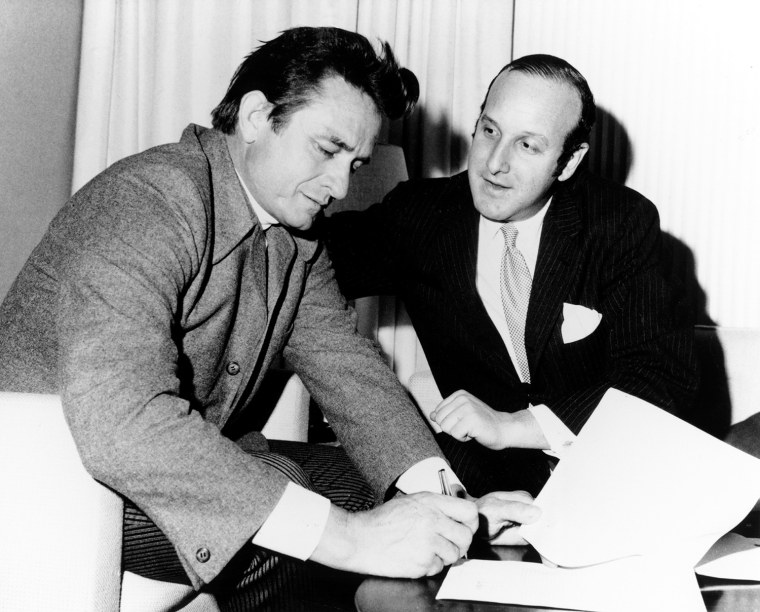
NBC News’ story about Clive Davis’s death may seem out of step with the rest at first, but in reality it adds to the overall picture. Davis wasn’t just a producer—he was, in a literal sense, an architecture of musical success. In his obituary, his family says: “He discovered, mentored, and championed the greatest artists in modern music history”—“He discovered, mentored, and championed the greatest artists in modern music history.” And that’s an exact description: Davis didn’t simply work with artists—he built a system in which talent became mainstream culture. Thanks to his instincts, taste, and business energy, a huge part of American pop and rock history gained a commercial form. He was behind the careers of Whitney Houston, Bruce Springsteen, Aretha Franklin, Neil Diamond, and Kelly Clarkson—meaning his influence wasn’t tied to one genre, but to an entire era of sound.
And again, a shared motif comes through in this story: when a person of that scale dies or steps away, it’s not only personal memory that remains, but also the question of what happens to their influence. Clive Davis was the figure through which artists, decisions, recordings, quality standards, and the very idea of turning talent into a cultural product flowed. His death is a reminder that industries are built not only on systems and technology, but also on rare people with an exceptional “ear”—in both the figurative and literal sense. His family called him “iconic music legend whose vision, instincts, and relentless pursuit of excellence shaped the soundtrack of countless lives”—“an iconic music legend whose vision, instincts, and relentless pursuit of excellence shaped the soundtrack of countless lives.” It’s almost a perfect description of how one person can become an infrastructure of taste.
Taken together, these materials point to a very modern conclusion: large systems—maritime trade, the stock market, the music industry—remain resilient only as long as they can respond quickly to disruption. Where there are too many months of idling, barnacles and mussels appear; where there is too much concentration in a handful of stocks, market turbulence begins; where too much depends on a single outstanding personality, that person’s absence raises the question of continuity. All three stories also stress that real recovery is always more expensive and complex than it looks from the outside. The strait can be reopened in name, but the flow of oil won’t return instantly. The market can open for trading, but that doesn’t mean the sell-off has ended. A legend can be mourned, but the institution it created has to keep living—already without its personal involvement.
It’s worth separately clarifying a few terms that appear in these pieces. Biofouling is the growth of living organisms on a surface—in this case, ship hulls; it worsens handling and increases fuel consumption. Bottom cleaner is literally a “hull cleaner”: a specialist who dives under a vessel and removes growths, often using scrapers, grinding machines, and water installations. Barnacles and other marine organisms are dangerous not only because of the mess they create, but also because they can hide invasive species—foreign organisms capable of harming ecosystems. Nasdaq is one of the leading U.S. stock indices, especially sensitive to developments in the technology sector. And Arista Records and Columbia Records, with which Clive Davis was associated, are influential record labels—companies that record, promote, and distribute music.
A key trend running through all the sources is that the modern world is increasingly facing not catastrophes in the classic sense, but chains of delays, dependencies, and bottlenecks. Often the most serious crisis is not an explosion, but accumulation: marine grime on a hull, market irritation around tech leaders, a historical loss of a figure whose influence for a long time seemed almost taken for granted. The implications matter too: energy security depends not only on diplomacy, but also on the technical readiness of the fleet; financial stability depends not only on macroeconomics, but also on the concentration of capital; the cultural industry depends not only on platforms and algorithms, but also on rare producers who shape a generation’s taste.
In the end, taken together, all three articles deliver a fairly sober lesson: big flows—of oil, money, and music—don’t exist on their own. Someone has to start them, someone has to service them, someone has to clean them, someone has to direct them. And when a system stops, it turns out it has not only a visible surface, but also a cargo of problems accumulated during downtime—problems that have to be cleared away manually, step by step.