At first glance, the three stories — a tragic shot by a Chicago police officer that killed his partner, the breakup of sports couple Sue Bird and Megan Rapinoe, and the escalation between the U.S. and Iran — have nothing in common. Different contexts, different scales, from the personal to the geopolitical. Yet they are all variations on the same theme: how trust breaks down and is rebuilt in relationships when it is pressured by fear, power, emotions and publicity.
In each of these situations, people who should have had maximum mutual trust — patrol partners, life- and podcast-partners, states under a ceasefire — find themselves at a breaking point. And the way participants explain what happened, defend themselves, accuse, hide or, on the contrary, open up, shows that trust today has become a rare and vulnerable resource, constantly undergoing a “stress test” under the scrutiny of cameras, social media and political interests.
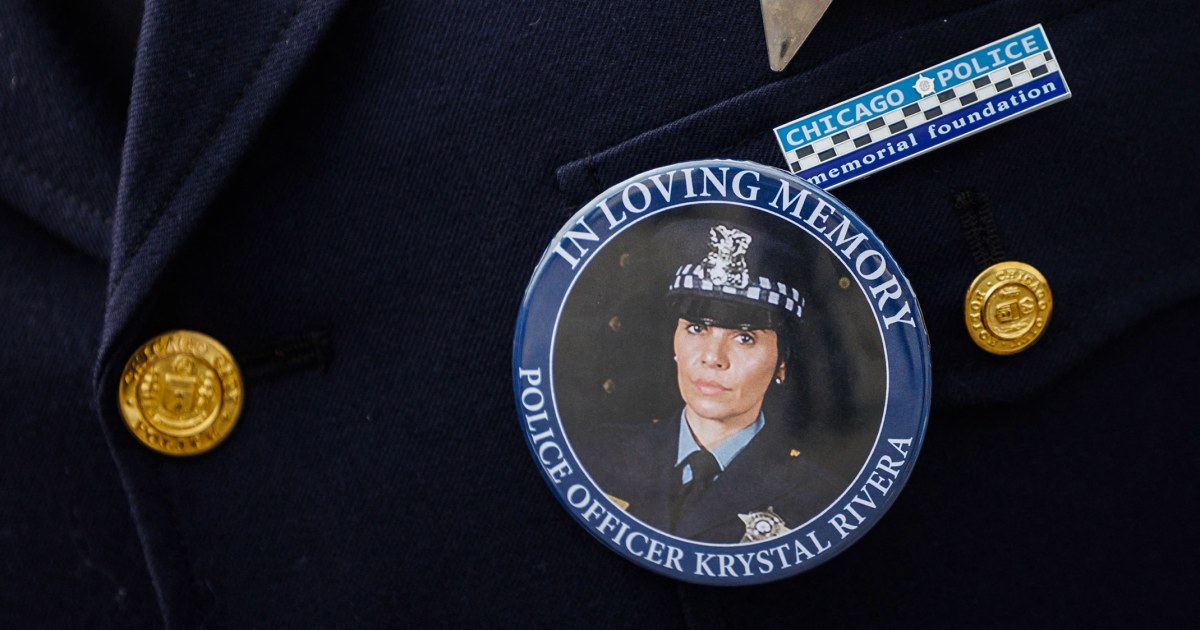
The story shown in an NBC News piece about the death of Officer Krystal Rivera in Chicago appears almost like a textbook example of how trust in institutions that are supposed to protect citizens collapses (NBC News). The bodycam video released by the civilian police oversight commission captures the seconds when Officer Carlos Baker kicks in an apartment door, sees an armed man, says “Wait” and “Oh,” a single shot rings out — and his partner Rivera falls. That fragment, removed from the usual closed space of police reports and internal memos, turns the tragedy into a public event in which every viewer becomes a kind of juror.
The official wording — “unintentional discharge” — seems intended to reassure: there was no malicious intent, so this was an accident. But Rivera’s family and their lawyers see not just a tragic mishap but a predictable outcome of systemic ignoring of warning signs. In the wrongful-death lawsuit they allege the department knew Baker was “reckless” and posed a threat to his partner, that he allegedly had a history of “poor, severe misconduct on and off duty,” and that Rivera had asked to be reassigned to a different partner. The accusation is not against a single officer but against an entire system that failed to respond to “numerous warning signs.”
Rivera’s mother’s lawyers say: “If only the numerous warning signals had been heard and steps taken to remove him as her partner or to get him out of the police force altogether… he should never have been an officer of the Chicago Police Department” — this is already a moral-political verdict as much as a legal one. It’s important to clarify: a wrongful-death suit in the U.S. is not only a claim for compensation but also a tool of public investigation, through which the family seeks to expose deeper problems than a single tragic shot.
An alternative narrative is being constructed by Baker and his circle. His lawyer Timothy Grace insists the officer “was faced with the lethal muzzle of a rifle” and, while retreating under threat, “unconsciously” pulled the trigger. He describes “unique, dynamic and deadly circumstances” related to the officers’ height, positioning and the weapon’s angle — in other words, he argues that the actual combat conditions cannot be recreated in a “controlled environment.” Police union president John Catanzara emphasizes that Baker “had no malicious intent” and that he “lost his balance.” Their rhetoric aims to preserve trust in the officer and, more broadly, in the police, even if a tragic mistake occurred.
On top of that comes another layer of distrust — technical and procedural: Rivera family lawyer Antonio Romanucci claims the video released by the oversight commission was allegedly edited and incomplete and announces a “forensic” examination of the recording. It is important to explain that forensic analysis means a specialized examination to check whether a digital file has been altered or manipulated. In other words, distrust is now directed even at what is supposed to be an “objective witness” — the camera recording. The oversight body offers no comment, citing an ongoing investigation.
Altogether this story demonstrates several key trends. First, institutional trust in the police and internal investigation mechanisms has been undermined to the point that even clear facts — who fired, what happened after the shot — are interpreted through suspicion and conflicts of interest. Second, personal relationships — the suit alleges Rivera and Baker recently broke up, while the defense says the romance was “short-lived and incidental and ended years ago” — become part of the legal and media battle, turned into an argument about motives, stability and the officer’s fitness. Third, the police as an institution is effectively split: on one side are the family, lawyers and civilian oversight; on the other, the union, Baker’s attorney and department statements that he “is cooperating” and officials “cannot comment” because of an active investigation.
A similar, though emotionally much gentler, process of eroding and reshaping trust appears in ABC News’ coverage of Sue Bird and Megan Rapinoe’s breakup and the winding down of their joint podcast “A Touch More” (ABC News). This is not a tragedy but a civilised ending of a ten-year relationship and media project — yet the logic of the parties’ behavior is also about managing trust, now not institutional but fan-based and public.
Bird, one of the greatest WNBA players, and Rapinoe, a star of the 2011, 2015 and 2019 World Cups, over the years built a public image as a power couple whose personal story became part of their influence in women’s sport and popular culture. They deliberately shared their relationship and daily life with their audience, and the podcast became a space where that closeness was amplified. So they too turn the moment of separation into a public act, announcing it in the very space that symbolized their unity: a joint episode where they reveal the breakup and the “phased winding down” of the podcast.
Rapinoe emphasizes: “We put a lot of thought and care into this… It’s a decision we made together. We will still be here for all of you and for each other. It’s just going to look and feel a little different.” Bird adds that “these last 10 years have given us so much, and launching the podcast and sharing that space was one of our favorite things we did together.” They effectively articulate a new model of breaking up in an age of total mediatisation: separation not as disappearance but as an “evolution” of the form of a relationship, where the personal and the public cannot simply be cut in two.
Context matters: for major athletes and activists like Bird and Rapinoe, fan trust is not only emotional capital but a real resource of influence — from endorsement deals to the agenda on equality, LGBTQ+ rights and women’s sports. A sharp, conflictual split or the silent disappearance of the project could have spawned rumors and distrust, undermining the openness they’ve cultivated for years. Instead, both parties outline the trajectory in advance: six “farewell” podcast episodes, then separate projects — Rapinoe’s new show and Bird’s continuation of “Bird’s Eye View.” In other words, they manage the transition to show that even in separation the pair retains mutual respect and connection, and the space of trust with the audience does not vanish but is redistributed.
This is a notable cultural trend: the personal relationships of public figures become part of their brand, and thus responsibility for clear, honest explanations of changes becomes an element of professional ethics. The fact that they openly acknowledge how “sad” it is to lose “that space,” especially after retiring from sports, only strengthens trust: weakness and grief are not hidden but spoken aloud.
Finally, the third story — about the rising conflict between the U.S. and Iran covered by The Independent (The Independent) — moves the crisis of trust to the global level. Here the breach of trust is not only between two states but also between citizens and their leaders, and between information and propaganda.
Donald Trump threatens strikes on Iran’s civilian infrastructure — “every powerplant and every bridge” — if Iranian authorities do not agree to a “very fair and reasonable deal” before the ceasefire expires. His “NO MORE MR. NICE GUY!” proclamation and the promise that targets “will fall fast, will fall easy” demonstrate the use of the threat of destructive force as leverage in negotiations. At the same time he publicly says the U.S. is sending negotiators to Islamabad, while it remains unclear whether Iran is sending its delegation; Iran’s chief negotiator says the parties are “far apart” on key issues and accuses the U.S. of continuing to blockade the Strait of Hormuz.
The episode in which Trump claims Iran allegedly attacked British and French ships in the strait — calling it a “complete violation of our ceasefire agreement” — is especially illustrative. Tehran denies Trump’s claim that Iran is supplying the U.S. with stocks of enriched uranium. So we have two parallel sets of assertions, neither of which is taken as reliable without additional verification. This is a classic example of how in wartime and tense negotiations an “information fog” develops: each side uses statements for internal mobilisation and external pressure, and trust in facts is replaced by a battle of narratives.
From the standpoint of international law, threats to deliberately strike civilian infrastructure that are not military objectives are extremely problematic, because the principle of distinction between military and civilian targets is one of the cornerstones of humanitarian law. But in Trump’s logic it is a tool to coerce a deal: either a “fair and reasonable” agreement or a slide into total escalation. The remark that “this should have been done to Iran by previous presidents over the past 47 years” is a classic move to shift blame backward and legitimize a hard line by accusing predecessors of weakness.
Juxtaposing this with the two earlier stories highlights a common motif: when a system of trust is already eroded — whether a family, a police department, or the international community — parties begin to act by maximizing control over the narrative rather than seeking a shared factual basis. In Chicago each side constructs its version of who Baker was and what really happened in the hallway; in the Bird–Rapinoe story the key is not the mere fact of the breakup but how it will be explained to minimize harm to the broader community; in the U.S.–Iran conflict the fight is over whose interpretation of agreements, violations and threats will dominate in the eyes of the international audience.
A few key conclusions and trends stand out.
First, trust is becoming not a prerequisite but the product of complex work. In the case of the “A Touch More” podcast it was built over years through openness, humor, and shared reflection on sport and life. At the moment of breakup it had to be preserved or reformatted. In the case of the Chicago Police, trust was not only not built with the public but actively undermined by stories of allegedly ignored complaints, sealed disciplinary files and a defensive union posture. In international politics trust between the U.S. and Iran has long been corroded by decades of sanctions, interventions and failed deals; threats to crush infrastructure only reinforce the perception of a zero-sum relationship.
Second, media and digital technologies turn every trust crisis into a public spectacle. The bodycam, intended as an accountability tool, itself becomes a matter of dispute: editing, completeness and interpretation of the recording. Celebrity podcasts turn intimate life into collective experience where even breakups cannot occur “quietly.” Leaders’ social-media posts, like Trump’s, become platforms for ultimatums, threats and “signals” to rivals and allies. It’s worth clarifying: previously many of these processes happened behind closed doors — from internal inquiries to diplomatic talks; now a significant portion takes place in the open digital sphere, where every word immediately comes under the microscope of public opinion.
Third, the personal and the structural are constantly intertwined. In Rivera and Baker’s story, a romantic relationship is used by the family as an argument that the department should have taken extra safety measures, while the defense paints it as something “brief and insignificant” that did not affect professionalism. In Bird and Rapinoe’s case their romance was part of their brand and political clout, so the breakup is not only personal pain but a repacking of their public roles. In the U.S.–Iran conflict Trump’s personal style — a proclivity for hyperbole, threats and public statements — is not mere background but a factor shaping the dynamics of war and negotiation, because whether Tehran and U.S. allies believe him affects how seriously threats and promises are taken.
Finally, in each case the question remains open: is it possible to restore trust once it has been so visibly damaged? In Chicago much will depend on the transparency of COPA’s investigation and how fully and honestly Baker’s disciplinary materials and the department’s organizational decisions are disclosed. If it turns out warnings were ignored, it will be another nail in the coffin of trust in the police; if the inquiry convincingly shows this was a tragic but unforeseeable error, there may be a chance to partially restore faith in the process.
For Bird and Rapinoe, the very form of announcing the split — a joint episode, admission of sadness, a clear roadmap of “farewell” episodes — creates conditions for most of their audience to retain loyalty to both of them individually. This shows another trend: contemporary culture is learning to live through breakups publicly without automatically turning them into scandal.
For the U.S. and Iran the question is far more difficult. The use of threats to destroy civilian infrastructure, disputes over enriched uranium and accusations of ceasefire violations in the strategically vital Strait of Hormuz all deepen the chasm of distrust. In such an environment even a real agreement — the “very fair and reasonable deal” Trump talks about — would be viewed with suspicion: either side might expect the other to declare at a critical moment that “they’re not being nice anymore” and return to coercive force.
The bigger picture linking these seemingly unrelated stories is this: we live in an era when trust is scarce, fragile and at the same time a vital resource — from a stairwell in a Chicago apartment building to geopolitical arteries like the Strait of Hormuz. Where it breaks down, it is immediately replaced by a fight over narratives, legal battles, information pushes and impression management. The question is not whether we can return the world to a state of complete certainty — that is unlikely — but whether institutions, couples and states will build mechanisms of accountability and honest dialogue that at least partially compensate for inevitable failures of human and political trust.