Three seemingly unconnected news items — the disappearance of 84-year-old Nancy Guthrie in Arizona, the shooting and deaths of two sheriff’s deputies in Missouri, and a serious accident at an oilfield in Oklahoma — form a single narrative. It is a story about the fragility of human security in everyday America and about how society, law enforcement, the media and ordinary people respond when the familiar order suddenly collapses.
From reports by NBC News, KY3/KMOV and KOCO emerges not just a string of criminal and accident briefs. At their intersection is a central theme: the cost of security when it fails, and how society tries to compensate for that failure — with money, solidarity, massive mobilization of forces, increased attention to risks and, above all, collective hope and grief that become public.
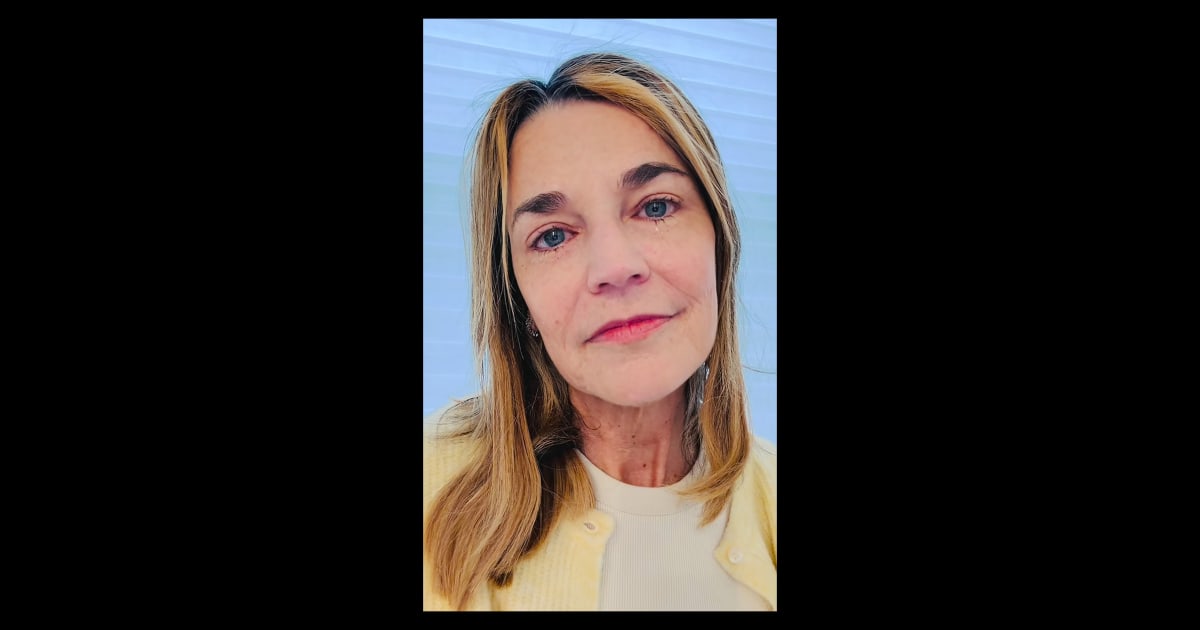
The story of Nancy Guthrie and her daughter, TODAY show host Savannah Guthrie, is a telling example of how a private family tragedy instantly becomes a public security issue. Nancy, 84, disappeared more than three weeks ago; the Pima County sheriff from the outset said investigators believe she “was taken from her home against her will, possibly in the middle of the night, which includes the possibility of abduction” — the term “abduction” here meaning a violent or secret taking/transporting of a person, usually for unknown purposes. The FBI released intercom camera footage showing an armed, masked man near the house on the morning of her disappearance; at the same time authorities emphasize that family members are fully cleared of suspicion, and the Pima sheriff called any insinuations of their involvement “not only wrong but cruel.”
Against that backdrop comes the family’s decision to offer a substantial reward and make a charitable donation. In a video statement on Instagram, Savannah Guthrie announced the family is offering up to $1 million for the return of her mother. Importantly, as a source explained, the reward is not tied to an arrest or conviction but only to the fact of Nancy Guthrie’s return, and the amount can be split among multiple people if there are several credible claims. That shifts the focus: the money here is not a tool for punishing the perpetrator but a tool for saving the victim — a last lever that might make someone speak up or change their mind.
At the same time, the family announced a $500,000 donation to the National Center for Missing & Exploited Children. The organization’s leader Michelle DeLaune, in a blog post cited by NBC News, articulated the key point: “Their donation is based on a simple but powerful belief: when a family is in crisis, they deserve someone standing beside them.” That sentence essentially describes the public reaction to the other two situations as well — the officers’ deaths and the industrial accident.
Notably, the Guthrie family was initially ready to announce a cash reward, but at first they were talked out of it: investigators feared a flood of false tips would overwhelm the infrastructure set up to receive reports. This nuance shows the flip side of “monetizing hope”: large sums stimulate public activity but also increase noise, risking hindrance to law enforcement work. To find a balance, the reward was introduced only after consultations with police and the FBI — a private initiative adapting to the public security apparatus.
Against this background, Savannah Guthrie’s personal appeals — both to the audience and possibly to the abductor — become part of a kind of public security strategy. On screen and via social media she asks: “Please pray without ceasing,” “we still believe in a miracle,” while honestly acknowledging: “We also know she could be gone. She could already be dead.” This honesty, combining hope with the recognition of the worst-case scenario, makes the family drama particularly resonant: millions of people see how the breakdown of security in one Arizona home becomes a nationwide emotional experience.
Even anonymous neighborhood residents join in. As NBC News notes, people bring flowers and homemade signs to Nancy’s house. On one sign, an unknown person addresses not the family but the possible abductor directly: “Unintended things happen, and we understand that… Life is made of choices. Please make the right one now.” This message concentrates another aspect of the broader theme: an attempt, through appeal to conscience and human choice, to restore broken security even when formal force and legal resources are not yet sufficient.
If Nancy Guthrie’s story shows how society reacts to a threat to an elderly citizen’s safety at home, the tragedy in Christian County, Missouri, described by KY3/KMOV, demonstrates the price paid to maintain public safety on streets and roads. There everything also begins with a seemingly routine situation — a traffic stop: around 4 p.m. Monday south of Highlandville at the intersection of Highway 160 and Route HH. Such stops are one of the primary but most dangerous elements of patrol work: a statistically significant share of armed incidents involving police in the U.S. occur during roadside checks.
The traffic stop set off a chain of events that ended with a multi-hour manhunt involving about a hundred personnel — from local sheriffs to U.S. marshals, FBI agents and the Bureau of Alcohol, Tobacco, Firearms and Explosives (ATF). Such interagency mobilization is a typical response to the killing of a law enforcement officer and is usually launched as a Blue Alert, when society and security forces fully mobilize to find someone who poses a danger to police and civilians.
The suspect, Richard Byrd, abandoned his pickup near Reeds Spring and then fled into the woods in Stone County. A highway patrol helicopter was brought in to search and eventually detected a heat signature — movement in the woods. The use of airborne thermal imaging shows how modern technology attempts to offset the suspect’s advantage in rugged terrain and night conditions, but even so the situation remained extremely dangerous: when officers closed in, Byrd opened fire, and in the subsequent shootout he was killed.
The cost of restoring relative security was horrific: two Christian County deputy sheriffs were killed — one of them, 30-year-old Gabriel Ramirez, was identified by name in KY3. Two other officers — one from Christian County and another from neighboring Webster County — were wounded; according to Sheriff Brad Cole, their injuries are not life-threatening. The death of two officers in a single episode underscores how unpredictable any contact between an officer and a citizen can be, and how fragile the line is between routine duty and mortal danger.
If the Guthrie family turns to financial reward to provoke an outpouring of information from the public, in Missouri the mobilization is achieved through other mechanisms: formal alert procedures, interagency coordination and maximal force presence on site. But the meaning is the same: a breach of security — a missing person or the killing of an officer — creates a resonance effect by which a private case becomes the concern of the whole community, and citizens see that “their” security is paid for with the lives of specific people.
The third storyline — the oilfield accident in Canadian County, Oklahoma, reported by KOCO — at first glance stands apart: there is no malicious crime, no police targeted, no missing person. But that story carries the same basic theme: security, taken for granted, can collapse in a split second.
According to the Sky 5 helicopter, there was a powerful pressure release in a pipeline at a site north of the community of Cougar (near Hinton and southwest of El Reno). Reporters emphasize that this was not an explosion in the usual sense — not combustion or detonation — but the line came loose with such force that the pipe literally struck a parked truck like a projectile and simultaneously hit three people. That distinction matters: in an industry where the word “explosion” conjures images of large fires and destruction, interviewees try to describe the nature of the incident precisely, but for the victims the difference means little — two of them are in critical condition and were airlifted to Oklahoma City hospitals.
Here security is hostage to a complex techno-system in which pipeline pressure, the quality of fastenings, procedural checks and human factors interweave into a single risk. Pipeline pressure is a physical parameter normally controlled by sensors and regulators; yet even a brief malfunction or maintenance error can lead to a “discharge” where energy built up in the system is released instantly and destructively. The Sky 5 reporter stresses: “I want to note specifically, they say it was not an explosion,” while immediately showing the aftermath — a mangled truck, severely injured people — and calling the event a “dangerous situation.”
The pattern of response mirrors the other two cases, adjusted for an industrial context: the site is cordoned off, company representatives and likely regulators work on scene, reporters speak of attempts to “exactly determine what happened,” and a ground crew is dispatched for further investigation. Again, private safety (that of specific workers) becomes the focus of public attention: an aerial camera, live coverage, and public wishes for the victims’ recovery.
Several important trends and conclusions run through all three stories.
First, security stops being mere background. The disappearance of an elderly woman, a traffic stop, routine pipeline maintenance — these are parts of daily life that normally don’t make the news. But each episode shows how quickly “normalcy” can be shattered and how society is forced to expend enormous resources — financial, human, technological, emotional — to regain at least a partial sense of safety.
Second, in today’s conditions the response to a security crisis is almost always public. The Guthrie family does more than file a police report — they reach out to the nation through a popular morning show and Instagram, announce a million-dollar reward and a major donation to the National Center for Missing & Exploited Children, as covered by NBC News. The Christian County sheriff publicly commented on the chase and shootout with Richard Byrd, announced the death of Deputy Gabriel Ramirez and the mobilization of around a hundred personnel, as reported by KY3/KMOV. KOCO’s reporter, flying over the oilfield, shows the accident live and reports on the victims’ condition, stressing it was a “pressure release, not an explosion” (KOCO).
In this sense the media become not only sources of information but parts of the response system: they broadcast appeals, explanations and sometimes emotional messages to families or even suspects (as with the sign “Make the right choice now” shown in the NBC story).
Third, the role of civic solidarity and private initiatives is growing. In Nancy Guthrie’s story this appears in large sums — a $1 million reward and a $500,000 donation to the National Center; in the case of the slain deputy sheriffs, it is reflected in colleagues’ mobilization and likely fundraising for the families of the dead and wounded (although KY3 does not directly mention such campaigns, they are typical in the U.S.); in Oklahoma the focus is on the human scale of the accident, with the reporter on air saying “we wish the very best to everyone involved, especially the three injured.” This shows that when institutional guarantees fail, society instinctively seeks ways to compensate through empathy, donations and public support.
Fourth, in all three cases there is an emphasis on procedure and accountability. The Guthrie family did not announce the reward spontaneously but did so “after careful consultation and coordination with law enforcement,” to avoid overloading information channels. Sheriff Brad Cole explains in detail how the manhunt was conducted, which forces were involved and how Byrd was detected by a helicopter heat signal — a demonstration of transparency and professionalism aimed at bolstering trust in the police after such heavy losses. In the oilfield case the journalist references official statements and stresses that companies and authorities “are trying to understand what happened”; this is part of the public ritual of sorting out an accident that should ideally lead to strengthened safety measures.
Finally, in all three stories the central element is human vulnerability. Nancy Guthrie, 84, may already be “gone” or “passed,” as her daughter says, and the family, while kindling the embers of hope, simultaneously acknowledges that possibility. Young 30-year-old Deputy Gabriel Ramirez dies performing an ordinary duty, and his name, photo and age become part of the public narrative about the cost of service. Unknown workers at the oilfield are instantly transformed from statistical “labor” into concrete people whose lives the whole state cares about through KOCO’s broadcast.
These stories do not provide simple answers to how to make the world truly safe. Rather, they emphasize that security is not a one-time built “frame,” but a fragile, dynamic construct requiring constant attention, resources and a society’s readiness to support those who at some moment find themselves on the wrong side of the statistics.
And therein lies the main meaning that unites the disappearance of Nancy Guthrie, the deaths of deputy sheriffs in Missouri and the accident in Oklahoma: each case, when it reaches the pages of NBC, KY3/KMOV or KOCO, reminds us that behind dry terms like “search operation,” “manhunt,” “industrial incident” are always real people — their hope, fear, choices and the solidarity of those around them. Whether society treats such news not only as sensation but as a prompt for change — in behavior, in laws, in priorities — determines whether security remains an illusion or becomes a shared responsibility.