Stories from a Japanese zoo about a monkey called Punch, a canceled U.S. strike on Iran, and an air show in Idaho at first glance seem unrelated. But viewed together, a common theme emerges: security as a constantly disrupted and rebuilt balance between risk, public attention, and the responsibility of individuals and institutions. This is an account of how the modern world responds to threats — from a prankster in a smiley-mask to the prospect of war and an air disaster in front of spectators.
In the Japanese city of Ichikawa, a small zoo suddenly became the epicenter of global attention. There, as NBC News reports, an unknown person in a bright blue costume and a smiling-face mask climbed over a barrier and leapt into the enclosure with the famous macaque named Punch. Punch became an internet sensation after being rejected by his mother and expelled by his peers, and he clung to a plush toy monkey. That touching story made him the object of mass online empathy and, at the same time, a target for people seeking hype and attention. The intruder was clearly not aiming for a traditional interaction with the animal, but for a spectacular stunt in the spirit of viral clips.
The zoo’s response was extremely serious and almost “military-like.” On its social media page, Ichikawa City Zoo announced an “intruder” in the enclosure, reported that two people had been detained by police, and stated that all animals had been inspected: “no anomalies” found. But this was followed by a list of new security protocols: expanding the area where visitors are prohibited from approaching, installing “intrusion-prevention nets,” and constant patrols. This is a classic example of a single, high-visibility incident triggering a stringent tightening of rules and security infrastructure.
An important point here is the shift in the source of threat. In the traditional logic of zoo security, the main risk was animal behavior and the physical vulnerability of visitors. In Punch’s story the focus changes: people themselves, fueled by social media culture and the desire for fame at any cost, become the threat. The monkey, formerly seen as an object to be protected from the crowd, suddenly becomes the protected party in a conflict between ethics and internet spectacle. The figure of the intruder in the smiley mask is symbolic: a depersonalized “cheerful” face of virtual space, behind which lies a very real intrusion and potential violence.
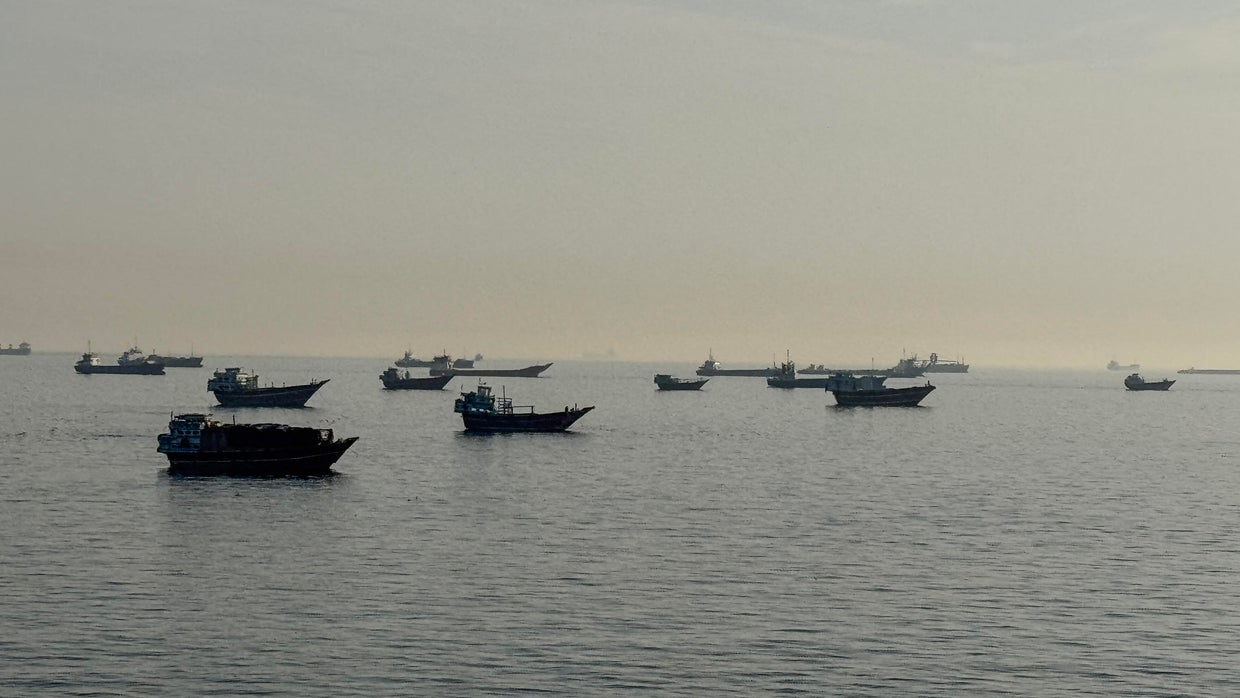
Shifting this motif to another plane clarifies the nervousness in international politics, reflected in a brief but telling update from CBS News about “where relations between the U.S. and Iran stand” after Donald Trump canceled an already planned strike. Here security is not a net around an enclosure but an architecture of deterrence and diplomacy stretched between military plans and the fear of catastrophic consequences. This is one of those rare moments when the public is told plainly: a strike had been planned and was practically ready to execute, but was withdrawn at the last moment in the context of “serious negotiations” for a peace agreement.
The fact of the strike’s cancellation itself — described by CBS as the current status of the U.S.-Iran confrontation — is an expression of the same “countermeasure” logic as at the Japanese zoo, but on a far more dangerous scale. There is already a deployed mechanism for using force, involving the military, intelligence, and logistics, but political leadership pulls the plug at the very last moment. The reason is an understanding of the cost of risk: possible retaliatory strikes, loss of life, rising oil prices, and market destabilization. The CBS headline linking “oil, markets, futures, diplomacy, cease-fire” shows that in the modern security system war is viewed not only as a military event but as a powerful blow to the global economy.
In both cases — in Punch’s enclosure and in the airspace over Iran — we see a world where security is primarily reactive. First an incident or near-crisis incubator occurs (breach of the enclosure, preparation of a strike on a state), then a public acknowledgment of the fact and a sharp increase in protective measures follow. Society learns about the danger after the fact — from a zoo post or an urgent news bulletin, where the laconic phrase “where relations stand now” hides an extremely tense effort to keep peace on a knife-edge.
The third story, reported by KTVB, completes this overall image of a world where spectacle constantly coexists with threat. During the Gunfighters Skies air show in Mountain Home, Idaho, two jet aircraft collided in midair. Four crew members managed to eject safely. The air-show format itself — demonstrations of military power, aerobatics, and equipment turned into mass entertainment — is essentially “military hardware on stage,” much like Punch under the gaze of fans or an army at Iran’s border — on the screens of analytical programs.
The pilots’ ejection is an example of how complex safety systems are built directly into the scenario of a potential catastrophe. Flying supersonic aircraft is inherently high-risk, and the response is advanced rescue measures: ejection seats, crew training, system redundancy. The fact that none of the four died is not the result of luck but an indicator of how far the technological culture of risk management has come. Yet the collision itself is a reminder that zero accidents in real — not laboratory — conditions is impossible.
Comparing all three cases reveals several key trends. First, modern security increasingly relies less on the idea of “prevention at all costs” and more on accepting the inevitability of failures and creating “controlled-failure” scenarios that minimize harm. In the Iran story this is a last-minute canceled strike and a bet on negotiations; in Idaho — pilots saved by ejection seats; in Japan — rapid checks of animals and immediate upgrades to barriers.
Second, the role of public perception of risk is growing. The image of Punch with a plush toy makes the enclosure breach not just a rule violation but something emotionally charged: it seems that a “personality” to which millions have attached themselves was threatened. In the Iran case CBS’s news frame directly ties a potential strike to oil prices and market futures, emphasizing the impact of war on every reader’s wallet. In the air-show incident, the value of pilots’ lives and the spectacle of the event are intertwined: the show is staged for the public, and any disaster in front of spectators becomes not only a tragedy but a trauma for the public consciousness.
Third, the source of danger itself is transforming. In the Japanese zoo it is not an aggressive animal but a person seeking content; in international politics it is political decisions and escalation chains that can be as abruptly launched as they are abruptly halted; at the air show it is a combination of human factors, technical limits, and the desire for demonstrative risk for the sake of impression. A world in which any situation can go viral forces institutions (zoo administrations, militaries, governments) and individuals to act under the constant gaze of cameras and public opinion.
Finally, the question of the cost of security inevitably arises. Every new “countermeasure” at the zoo is not only an additional expense but a narrowing of the distance between people and animals: spectators will be farther away, access stricter. Every canceled strike creates tension between the military, who prepared the operation, and diplomats, who see an alternative, and between the display of power and the real fear of destruction. Each air-show accident can lead to tighter regulations, program reductions, and sometimes the closure of the format. In other words, security almost always exacts a price in the form of diminished freedom, spectacle, and familiar modes of interaction.
These stories, gathered from different corners of the globe, show that we live in an era when security is no longer a static state but an endless process of adjustment. People in masks climb fences for likes, presidents cancel already-prepared strikes for “serious negotiations,” pilots eject before the astonished eyes of spectators. Technology becomes more complex, protocols more sophisticated, but the central element of the system remains the human being — with all their impulses, mistakes, compassion, and fear.
The key takeaway from this set of events is that the fragility of security is not an anomaly but the norm. The question is not whether we will build a world without incidents and threats, but how quickly and sensibly we can respond when the next “intruder” — be it a person in a mask, a military plan, or a mistaken maneuver in the sky — ends up on the other side of the protective barrier.