Stories from Japan, North Carolina and Pennsylvania may seem unrelated at first glance: a powerful earthquake and the threat of a mega‑tsunami, a planned teenage fight that escalated into a mass shooting, and a string of “ordinary” incidents — from crashes and fires to a fight for victims’ rights. Together they form a single larger theme: modern societies are trying to cope with vulnerability — to nature, weapons, infrastructure and their own social conflicts. We live in a world where the “norm” is constant risk management, not the absence of risk. How different countries and communities respond to threats reveals where security becomes a collective project and where society is only catching up after tragedies have already occurred.
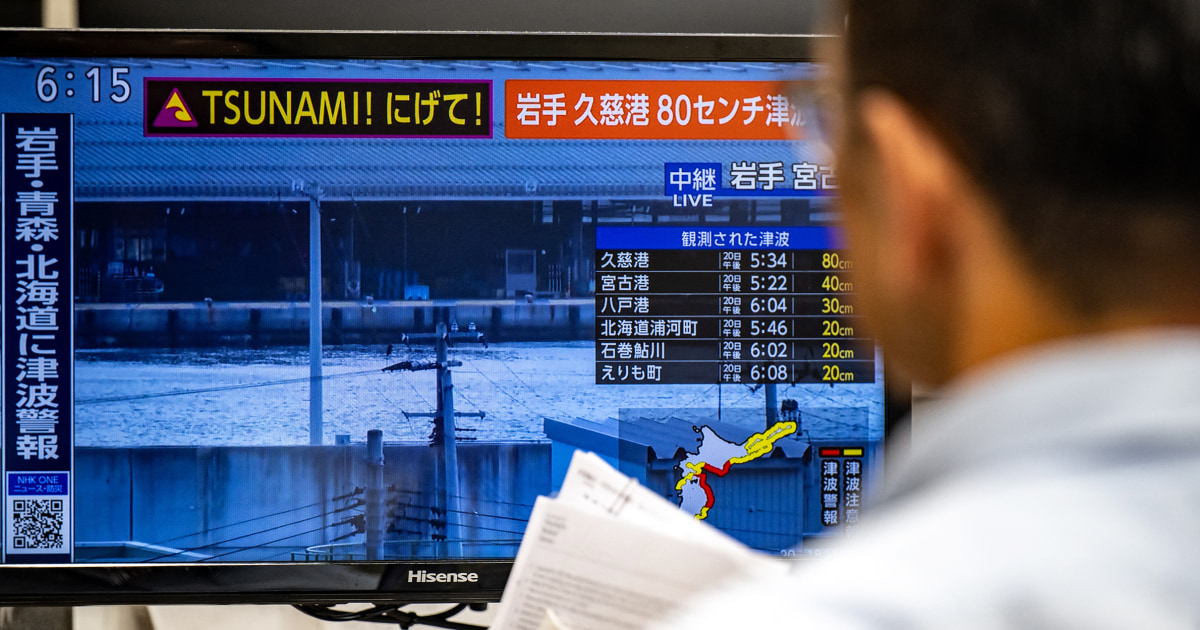
In NBC’s piece about another earthquake off Japan’s coast, “Major 7.7‑magnitude earthquake strikes off Japan, prompting tsunami alerts,” the Japan Meteorological Agency reports that the probability of a so‑called “mega‑quake” for the northern part of the country has been raised from the usual 0.1% to 1%. Those figures seem tiny, but for specialists this is a tenfold increase in risk. A “mega‑quake” refers to an ultra‑powerful earthquake, usually magnitude 8 or higher, capable of producing devastating tsunamis and systemic consequences across vast areas. The agency points to two deep‑ocean trenches in the Pacific and issues warnings for more than 180 cities and towns — from Chiba to Hokkaido. Japan’s early‑warning system is an example of how a state and society live while continually acknowledging that absolute safety does not exist. What matters is not zero percent risk, but how you respond to one percent.
Japan is one of the few countries where “living with disasters” is built into the culture: regular drills, strict building codes, automatic alerts, preparation in schools and municipalities. Raising the risk estimate from 0.1% to 1% is not panic, but a signal to mobilize institutions: to check systems’ readiness, infrastructure and the population. This approach shows that modern security is primarily probability management, not the illusion of total control over nature. The phrase “heightened risk alert” means exactly that: not a prediction that a mega‑disaster will certainly happen, but an acknowledgment that, statistically, the window of danger has widened.
A completely different kind of vulnerability, but the same logic of an “unfinished disaster,” appears in KCCI’s report on the tragedy in a North Carolina park, “Two dead after planned fight in North Carolina park escalates into mass shooting, police say.” In Winston‑Salem a group of teenagers, aged 14 to 19, gathered in a park for a prearranged fight. It was midmorning, around 10 a.m., near a school in a residential, “quiet” neighborhood. At some point firearms were used. The result: two teenagers, a 16‑year‑old and a 17‑year‑old, were killed at the scene, and five more were injured, mostly girls. Police emphasize that the incident site was a park, not a school; but territorial distinctions change little in the context of public perception of child safety.
Authorities say the identities and whereabouts of the alleged shooters are known, but no arrests have been made, the investigation continues, and among the wounded, according to Police Chief William Penn, there are likely participants in the shooting. His human reaction — “I, like everyone, am disappointed, angry and saddened. This should not have happened” — sounds almost like a verdict on a system that allows a teenage conflict to so easily become a mass shooting. Assistant Chief Jason Swaim explains that two minors agreed to meet for a fight, and at some point during that fight a shot was fired. Thus what in another reality might have ended with bruises and calls to parents in the American context becomes an episode of armed mass violence.
It’s important to understand that the term “mass shooting” in American practice is often used for incidents where the shooters are not random passersby but participants in a conflict; nevertheless, for bystanders the risk is the same: time, place, number of injured and killed. This story demonstrates structural vulnerability: easy access to guns, a culture of using them as an “argument” in teenage conflicts, and a gap between schools and the outside environment where there is neither supervision nor prevention. Police stress that the schools nearby were secure, but parents are unlikely to accept such formal boundaries: a “safe school” means little if a child can be killed in the adjacent park on the way home or between classes.
In WGAL’s news block from Pennsylvania, “Vehicle crashes into tree, shuts down Adams County road,” and accompanying reports, the picture of risk is even more fragmented, but taken together it is a chronicle of the constant fragility of everyday life. In a single morning broadcast viewers encounter a scatter of threats.
A car crashes into a tree and blocks a road in Adams County: a typical accident, hardly worthy of national headlines, but important to those stuck in traffic or in the vehicle. In Mifflin County a “do not drink” order was earlier issued because an overturned truck spilled oil and fuel into the Laurel Creek reservoir on Route 322; the driver died. Water was tested and authorities lifted the ban, reporting that analyses showed no hazardous contamination. Behind the dry phrasing “do not drink order” is a crucial mechanism: a rapid preventive restriction, acknowledging risk before definitive proof, and its equally public removal after inspections. Here, as in the Japanese example, the state acts as moderator of everyday risk, temporarily sacrificing convenience for safety.
At the same time, viewers learn of a less visible but profound social wound: survivors and activists in Harrisburg are holding rallies demanding that Pennsylvania lawmakers change statutes of limitations for childhood sexual abuse cases. WGAL’s reporter explains that many victims currently have no legal avenue to file civil suits because the statutory deadline to sue has long passed. Organizers call for “statute of limitations window legislation” — a law that would open a special temporary “window” allowing even long‑ago victims to file claims despite previously expired deadlines.
The phrase “statute of limitations window” here means a one‑time or time‑limited mechanism: for several years the statutes of limitations on such crimes would be effectively reset, giving those who have spent decades in silence a chance. This initiative emerged following a major investigation into abuses in the Catholic Church, when the vast scale of crimes ran into procedural dead ends: by law, survivors were trying to sue too late. One rally organizer, a survivor, says: “This is long overdue. It’s time to give Pennsylvania’s victims access to justice and proper process. We have hidden predators because of bad and outdated laws, and this should concern every resident of the state.” Thus security includes not only roads and water systems but the legal system: if laws prevent punishing the guilty and protecting future generations, the laws themselves become a risk factor.
Other segments of the same broadcast further underline this pervasive vulnerability. A fire at a social club in Lebanon County leaves the building condemned; the cause of the blaze is still under investigation. In Harrisburg a shooting is being probed after one person was hospitalized. At a motel a man beats a woman and carjacks her vehicle; he is later arrested and jailed. In another county a woman crashes into an embankment on a highway; she is charged with driving under the influence and with providing police a fake ID; a nine‑year‑old girl is seriously injured in the crash, another woman suffers head injuries and a broken wrist. On I‑81 a car leaves the road and catches fire; firefighters extinguish the blaze and one person is hospitalized. In Clinton County a house explodes, killing woman Sarah Stoltzfus and six children aged 3 to 11 who could not be pulled from the building; preliminary theory points to a propane leak, the household fuel used for heating and cooking.
Each of these stories, taken alone, is a local tragedy recorded in community news. Together they show how multi‑layered the very meaning of security has become. There are “classic” technological risks: accidents, fires, domestic gas explosions. There are infrastructural risks: roadside hazardous trees, aging utilities, contamination threats to reservoirs. There is crime and violence: from domestic disputes and drunk driving to armed incidents and organized brutality. There is the institutional level — laws that either protect people or leave them alone with their trauma, as with victims of childhood abuse. And hanging over all this are large background threats — from mega‑earthquakes and tsunamis to systemic changes related to, for example, artificial intelligence. No wonder U.S. Senator Dave McCormick, visiting a Jewish day school in Harrisburg, plans, according to WGAL, to talk with local leaders about AI’s impact on economic growth and the role of local government: even digital technologies are now viewed through the security lens — economic security, cybersecurity, community resilience.
The common thread running through NBC’s Japan report, KCCI’s story about the park shooting, and WGAL’s broad roundup is the shift from seeing security as a given to seeing it as an ongoing, never‑finished process of threat management. In Japan a raised probability of a mega‑earthquake from 0.1% to 1% becomes a reason for systemic mobilization rather than denial or fatalism. In North Carolina the Winston‑Salem park tragedy starkly shows the cost of a cultural and legal environment where access to weapons and teenage aggression combine into a lethal mix; public debate will likely return to youth violence prevention, gun control and adult responsibility. In Pennsylvania WGAL’s video mosaic covers both risk management (swift issuance and lifting of water bans, freeze and ice warnings, road projects) and the consequences of systemic failures — from long‑past sexual abuse cases with no justice to inadequate oversight of dangerous homes and heating systems.
The key takeaway from all these reports: in modern society risk has become background, not exception. The global ocean can spawn a mega‑tsunami, a teenage conflict can turn into a mass shooting, an ordinary household mistake can explode into a family tragedy, an outdated law can perpetuate impunity for abusers. But recognizing this fragility is a necessary condition for a mature conversation about safety. Japan’s preparedness culture, American debates over statutes of limitations and victims’ rights, “do not drink” orders and technical freeze warnings — these are different expressions of one trend: society trying to learn to live with inevitable threats in ways that minimize their consequences and do not leave people alone in the face of disaster.
The future of security, judging by these pieces, lies not in promises of “never again” but in the honest admission: “anything can happen,” and yet every threat can and should be addressed. In some cases — proactively, through building standards, alerts and infrastructure control, as in Japan’s earthquake and tsunami monitoring system described by NBC. In others — retrospectively, through law reform, opening statutes‑of‑limitations windows and creating avenues for justice, as activists call for in WGAL’s coverage. In still others — through deep work on the culture of violence and access to weapons, a central question after the Winston‑Salem tragedy reported by KCCI. The clearer we see connections between these seemingly disparate episodes, the less likely it is that the next “unexpected” catastrophe will truly take us by surprise.