The events described in three sources at first glance seem unrelated: Iranian missile launches toward Israel and a local shooting in a park in a Baltimore suburb, which left a police officer, a suspect and a bystander injured. But if you look not at geography but at the essence of what’s happening, a common storyline emerges: violence as a daily, almost routine reality in which security becomes increasingly fragile, costly and dependent on political decisions and public trust.
At the regional level, this appears as an escalation between Iran and Israel amid the war in Lebanon; at the local level, as an “ordinary” police call that in minutes turns into a shootout with three wounded. Together these stories show how thin the line is between “calm” and an outbreak of violence, how costly attempts to control risk have become — and how much now depends not only on weapons but also on restraint, political will and the quality of relations between security forces and society.
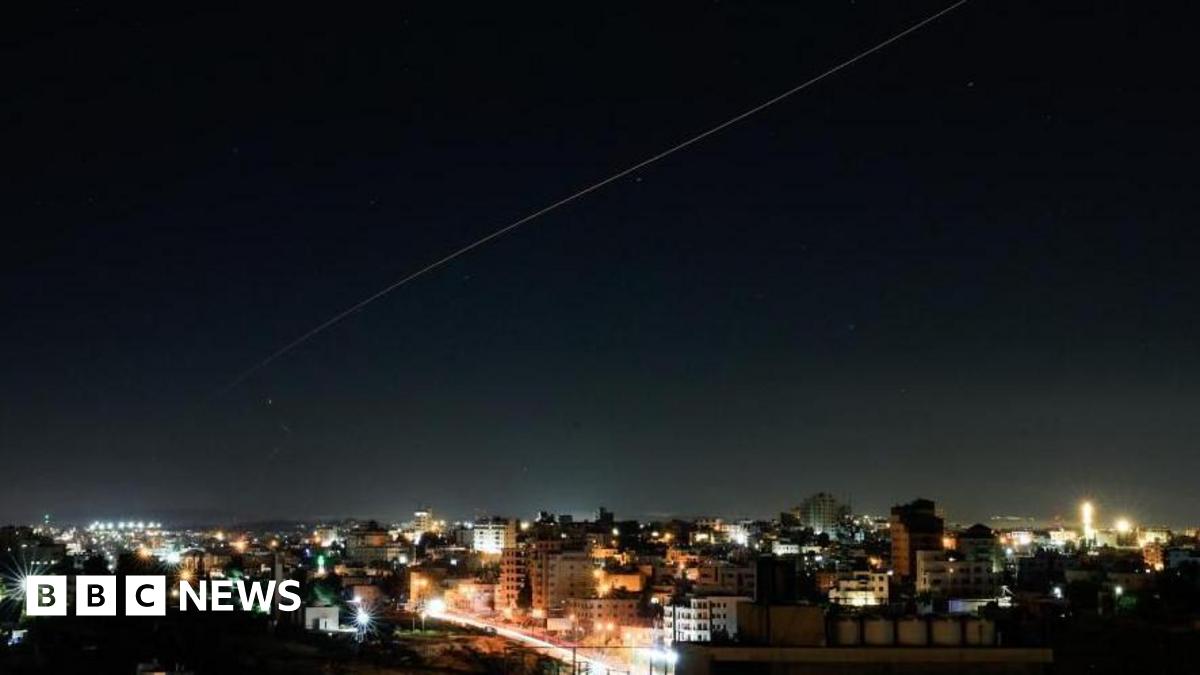
In BBC coverage of Iran firing missiles toward Israel (“Iran fires missiles towards Israel as IDF says it is working to intercept threats”) the report describes another turn in the confrontation in which Lebanon becomes a key arena. Israel strikes southern suburbs of Beirut in response to Hezbollah rocket fire into northern Israel, Iran follows through on previously voiced threats and launches a “barrage of missiles and drones” at Israel. The Islamic Revolutionary Guard Corps says it is prepared to continue for seven days, but at the same time there are signs this strike was intended as a warning. That is an important detail: even when sides display force, they often try to leave themselves room to step back so as not to cross the threshold into full-scale war.
A central motif in the Jerusalem dispatch is the role of Israel’s and the U.S.’s responses. The author emphasizes that “much will now depend on Israel’s response” and on how U.S. President Donald Trump reacts. Earlier, Trump had already urged Netanyahu “in the strongest terms” to refrain from broader strikes on Lebanon, fearing the collapse of an already fragile ceasefire between the U.S. and Iran. Netanyahu agreed temporarily — but on the condition that Hezbollah stop its attacks. It soon became clear that the “sketch” of a truce brokered by the U.S. was weak on the ground and effectively collapsing.
In this depiction it’s not only the use of force that matters but the sense of fragility of any agreements. A ceasefire here is not a stable peace but a pause filled with mutual conditions, threats and distrust. That is exactly what the New York Times noted in a Facebook post about the Iranian missile strike: it explicitly stated that the launch shows “how fragile the truce was.” The post points out that the conflict has entered a phase in which no side can consider itself immune to the costs of escalation: “no side can claim immunity from the costs.” This refers not only to the human toll but also to the economic dimension.
The authors highlight a paradox of modern warfare: relatively cheap missiles and drones — technologies far more accessible than piloted aircraft used to be — force opponents to employ air-defense systems whose operation costs run into the millions. Each volley of inexpensive munitions becomes an expensive test for air defenses, while the “low-cost” attack itself becomes a lever that creates rising economic and military burdens for all participants. The longer the cycle continues, the higher the price for the entire region, the NYT post stresses. In other words, security becomes not only fragile but extremely costly: political leaders must weigh not just the risk of war but the expense of being constantly prepared for it.
In this context the conflict in Lebanon acts as a trigger that “determines what happens in the wider conflict,” as the BBC notes. Lebanon — and specifically Israel’s confrontation with Hezbollah — becomes a central node through which Iranian, Israeli and U.S. interests pass. A local episode — rocket launches at northern Israel — immediately sets off a chain of decisions: Israeli strikes on Beirut suburbs, threats from Tehran, warning statements from Washington, and the subsequent actual launch of Iranian missiles. The whole construct functions as a system of mutual pressure and signaling, where each move can either become another link in the “exchange of blows” or provoke a wider war.
At the same time, the reporter’s observation that “a new round of mutual strikes could begin that could again ignite a war with Iran” reflects an understanding: the participants are balancing on the edge but have no interest in falling in completely. On one hand, they push conflicts to the brink of direct confrontation (Iran launching missiles at Israel for the first time since the April ceasefire; Israel demonstratively widening its targets in Lebanon), and on the other hand they preserve the ability to interpret their actions as limited, “signal” strikes rather than the start of total war.
Turning to the American story from Baltimore, reported by WBAL-TV (“Breaking raw video: Officer, suspect, bystander shot in gunfire”), we encounter on the surface a completely different level of violence: not an international conflict but an episode of police work. However, the structure of events is strikingly similar: a routine action — a call about a “suspicious person” in a park — in minutes becomes a critical incident where a police officer, a suspect and a bystander are wounded. Baltimore County Police Chief Robert McCallow stresses the unpredictability of the situation: officers found an armed man, he “began shooting at our officers,” the officers “returned fire, striking the man,” but an officer and a civilian in the park were also wounded.
The rhetoric of the speakers — the police chief, local politicians, the county head and a trauma clinic doctor — echoes the international reports: the current reality is characterized by constant readiness for sudden outbreaks of violence and the high price of their consequences. McCallow says the case “brightly illustrates how dangerous policing is in America today and how unpredictable it is.” All speakers thank the medics, firefighters, helicopter pilots and colleagues for their rapid response, emphasizing that it is precisely the complex emergency services and hospital infrastructure that preserved the life of the officer, who was taken to the clinic in serious but stable condition.
Here, too, security proves fragile and costly. Responding to the incident required police, fire services, a state helicopter and a high-tech trauma center. The physician in the video stresses that he will not disclose details of the wounds but confirms the officer is in intensive care “critical but stable,” while the suspect is in a “satisfactory and stable” condition. At the end, the police chief reports another important detail: a “third person,” an ordinary park visitor, was also shot and transported to the hospital in stable condition. This is a reminder that violence, even when “targeted” at authorities, almost inevitably affects random people.
The political and civic layer is also notable. Local politicians call the incident “absolutely unacceptable,” “100% senseless,” urge prayers for the officer’s family and emphasize the special importance of close ties between the police precinct and the community. One advisor says that in 30 years of work he has been convinced: when communities “are strong and have a good relationship with their precinct,” they “beat senseless shootings.” Thus, at the local level sources stress the role of public trust and police-community interaction as key factors in improving real safety, not just reactive responses to violence that has already occurred.
Combining these narratives — missile strikes in the Middle East and a park shooting in Baltimore — into a single analytical picture reveals several major trends.
First, violence increasingly unfolds according to similar “micro‑escalation” scripts. Internationally this looks like a series of “limited” actions: Hezbollah shelling, Israeli strikes on Beirut suburbs, retaliatory Iranian missile and drone launches. Each action is presented as limited and mutually conditioned, but collectively they erode the very notion of a stable ceasefire. Locally in the U.S. we see a standard police call — “suspicious person in a public park” — transform within minutes into a shooting with multiple casualties, perceived by participants as a “horrible but, sadly, not unique” event.
Second, security becomes a costly resource. The NYT post rightly emphasizes that cheap missiles and drones used by Iran against Israel automatically trigger multimillion-dollar air-defense systems. Each new wave of such attacks becomes an economic trap for all sides, forcing them either to spend enormous sums on intercepts or to risk strikes on critical infrastructure and civilian casualties. The same dynamic plays out in miniature in Baltimore: neutralizing a single armed suspect deploys an entire costly apparatus, and the consequences remain severe for the officer, the community and the healthcare system.
It’s important to clarify the difference between “cheap” and “expensive” elements of security. Relatively cheap means of attack are short- and medium-range missiles, kamikaze drones, pistols or rifles in a criminal’s hands. Their production or acquisition does not compare to the costs of creating and operating complex defense systems. Meanwhile, air defenses, emergency helicopters, shock-trauma hospitals, special unit training — infrastructure investments measured in hundreds of millions or billions — create an asymmetry: the attacking side needs far fewer resources to challenge a system that must protect a wide range of people and assets.
Third, political decisions and public trust increasingly matter as compensating factors when eliminating the risk of violence altogether is impossible. At the state level this shows up as efforts to keep the conflict within “managed escalation.” Trump, according to the BBC, pressed Netanyahu hard not to expand strikes on Lebanon, fearing the collapse of an “already frayed” ceasefire between the U.S. and Iran. Israel agreed, but only on the condition that Hezbollah cease its shelling, creating an extremely unstable system of mutual conditions. Any violation by one side becomes a pretext for further escalation by the other. The Iranian missile salvo after renewed Israeli strikes on southern Beirut suburbs merely confirmed how shaky the whole structure was.
At the Baltimore city level the response is an appeal to community and police support. Local politicians explicitly state that “the community will rally around our officers” and that it is “strong communities” and “good relations with the precinct” that help “beat senseless shootings.” Where international security relies on fragile deals between states and actors like Hezbollah, local U.S. security rests on much more down-to-earth but no less fragile things: residents’ trust, willingness to cooperate with police, and seeing officers as part of the community rather than an external force.
Finally, in both cases the narrative — how participants describe the violence and their reactions — plays a central role. In the Iran-Israel case the emphasis is on geopolitical stakes and the risk of a “new war with Iran.” The NYT post talks not only about the rupture of a ceasefire but about the strategic consequences of cheap missiles and drones becoming instruments of continuous pressure and economic attrition. In the Baltimore case the narrative is more emotional and local: “horrible, unacceptable,” “utterly senseless” violence, gratitude for the “healing hands” of medical staff and the heroism of officers who “risk their lives every day.”
These different levels of storytelling shape a common perception: populations become accustomed to a world in which sudden outbreaks of violence are normal—whether distant news of a missile strike on Israel or an alert about a shooting in the nearest park. In both cases the solution to the security problem is not the illusion of total control but attempts to reduce the scale of consequences, make responses more coordinated, and minimize casualties.
Key takeaways from comparing all three sources are these. First, ceasefires — whether between states or warring blocs, as in the U.S.–Iran case, or the relative “peace” in an American city — are becoming increasingly fragile constructs. Second, modern security is extremely expensive: what once required armies and air forces can now be effected with comparatively cheap drones and missiles, producing vastly greater costs for defense and response. Third, without political will for de‑escalation and without public trust in institutions, whether armies or police, any security system is condemned to a cycle of recurring crises.
The story of Iranian missiles, detailed by the BBC and reflected on in the New York Times Facebook post, shows that the Middle Eastern conflict has entered a phase in which each “limited” action can be costly for all parties, and regional stability is shaped not only by the front lines in Gaza or Syria but by the dynamics of the confrontation around Lebanon. The Baltimore incident, reported by WBAL-TV, demonstrates how in a formally peaceful U.S. setting violence remains a constant risk that daily falls to police, doctors, local officials and residents to manage.
Together these narratives speak of a world where security is no longer taken for granted as something fixed by borders or laws. It is a process that must be paid for — in money, attention, restraint and, regrettably, sometimes in lives. Whether violence remains a manageable risk or becomes the new normal depends on how well societies and their leaders recognize that cost and build mechanisms for de‑escalation and trust.