Three news items from very different parts of the United States — record cold in Florida, a shooting at a Mardi Gras parade in Louisiana, and the tragedy of a missing young fisherman in Hawaii — may seem unrelated at first. But on closer inspection they share a common theme: how vulnerable people become in the face of sudden external forces — nature, weather, violence — and how society, the state, and emergency services respond to these abrupt crises. This is a story not only about specific events but about how modern safety infrastructure — from weather alerts to law enforcement and rescuers — both saves lives and reveals its limits.
In Florida, a WKMG piece on a record-cold morning across Central Florida (“Record-cold morning across Central Florida” https://www.clickorlando.com/weather/2026/02/01/record-cold-morning-across-central-florida/) documents an anomaly locals associate more with northern states than with the subtropics. Orlando dropped to −4 °C (25°F), breaking a 1936 record; Melbourne — down to the same 25°F, below the previous low of 32°F; Daytona Beach and Leesburg — to −5 °C (23°F); Sanford — also 23°F. Journalists emphasize that records were “shattered across the region,” and the county as a whole was under an Extreme Cold Warning, an alert issued when temperature and/or wind pose a direct threat to health. For a subtropical region, this is not just “unpleasant weather”: homes and infrastructure there are generally poorly adapted to prolonged subfreezing periods, and residents often are too.
The piece describes how even with sunny skies daytime temperatures barely rise to +4…+9 °C (40°F), and strong winds increase the cold’s effect. A Freeze Warning is also in effect — an alert when temperatures drop below water’s freezing point, creating risks for agriculture, water pipes, animals, and people. The article also mentions the possibility of a “hard freeze,” when temperatures remain well below zero long enough to cause significant damage to infrastructure and plants. For Central Florida residents these events become a stress test: some lack appropriate winter clothing, many homes are not set up for true winter heating, and the elderly, homeless, and pets are especially vulnerable. The news itself is presented as an operational warning accompanied by a forecast: after another icy night warming to +10…+15 °C (50°F) is expected, then a return to customary +20…+24 °C (70°F), followed later by another cold front with rain.
This story shows how weather becomes a security factor when it suddenly departs from climatic “norms.” Meteorological services act as a protective element: pre-issued Extreme Cold and Freeze Warnings are meant to give people time to prepare — insulate, check heating, protect plants and pipes. The paradox is that such warnings are most necessary where people least expect nature to strike, and therefore are less prepared. The U.S. weather warning system is a multi-layered defense: the higher the alert level, the likelier and more severe the consequences. But even this well-thought-out mechanism has limits: as anomalies grow stronger and more frequent, stress rises on infrastructure, the population, and the services that must respond.
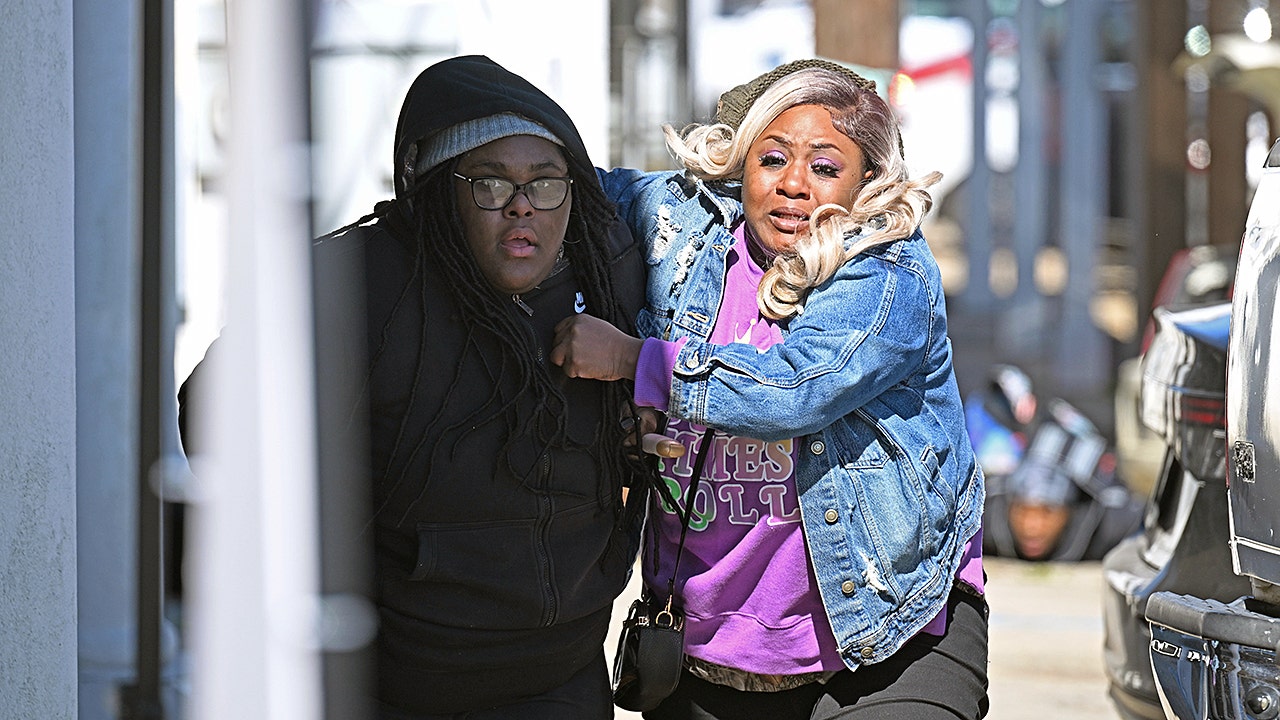
The second story — the Mardi Gras parade shooting in Louisiana — highlights social rather than natural vulnerability. A Fox News piece (“Shooting at Louisiana Mardi Gras parade leaves multiple people injured” https://www.foxnews.com/us/shooting-louisiana-mardi-gras-parade-leaves-multiple-people-injured-local) describes how gunfire broke out during the Mardi Gras in the Country celebration in Clinton on Saturday. Local media report at least three injured, while WBRZ reports possibly six victims, including a child. This did not occur on a “dangerous street at night,” but at a large public celebration near the East Feliciana Parish Courthouse — a place where people expect their safety to be ensured, not only by tradition but by the nearby presence of law enforcement.
While authorities withhold many details, one suspect has been detained, a vehicle linked to the incident is being sought, and both Louisiana State Police and local agencies — the East Feliciana Parish sheriff’s office and Clinton police — are involved in the investigation. Louisiana Governor Jeff Landry called the incident “absolutely horrific and unacceptable” on social media and stressed: “We will not tolerate lawlessness in this state,” while expressing support for the injured and gratitude to law enforcement.
Here, as with the weather, the issue is a sudden crisis in an environment that was supposed to be predictable and safe. Mass events like a Mardi Gras parade require a complex security apparatus: route planning, police deployment, video surveillance, and screening for potential threats. But human factors and the prevalence of firearms create a space where the actions of one person or a small group can instantly turn a celebration into an emergency zone. The news format — “developing story,” uncertain casualty numbers, sparse police statements — demonstrates how law enforcement operates largely after the fact: responding, investigating, calming the public, but essentially forced to chase violence that has already occurred. Unlike meteorology, there is no “emergency warning” issued days in advance here: at best, there are preventive measures and political declarations of “zero tolerance for lawlessness.”
The third story — the discovery of human remains during the search for a missing 19-year-old fisherman on Kauai — adds another dimension of vulnerability. Honolulu Star-Advertiser reports (“Human remains found in search for missing man, 19, on Kauai” https://www.staradvertiser.com/2026/01/31/breaking-news/human-remains-found-in-search-for-missing-man-19-on-kauai/) about Matthew Packard-Asai, a Kapaa resident who disappeared when a wave swept him and a friend into the ocean while fishing from the rocks at the northern point of Kahili Beach. The other person was rescued and brought ashore by emergency crews, but Packard-Asai went missing. The search-and-rescue operation — involving the U.S. Coast Guard, Kauai Fire Department, Kauai Police Department, and Kauai Search & Rescue volunteers — continued, and human remains, believed to belong to the missing young man, were found during those efforts.
Police emphasize that final identification will be made by DNA, the investigation is ongoing, and the active search phase has ended. Official remarks combine sympathy and gratitude. Fire Chief Michael Gibson said, “Our thoughts are with Matthew and his loved ones during this incredibly difficult time. We are deeply grateful to all the agencies and volunteers who worked tirelessly on the search,” and Police Chief Kalani Ke asked for the family’s privacy to be respected. The article also lists other organizations — American Medical Response, the Red Cross, Salvation Army, and the state Department of Land and Natural Resources — that assisted in the operation.
The Hawaii story illustrates another facet: when a person interacts directly with nature — not through anomalous cold but by being physically close to the elements like the ocean, rocks, and waves. The islands are known for dangerous coastal zones where a wave, tide change, or slippery rocks can turn ordinary fishing into a life-threatening situation in an instant. Here it’s not so much that infrastructure is unprepared as that human capacity to assess danger is limited. After the hazard manifests, a complex of rescue agencies and volunteers mobilizes — a response system whose task is then less about prevention and more about locating, saving, or, in the worst case, recovering a body and providing the family some closure.
All three stories follow the same structural pattern: an unexpected crisis — an organized response — an attempt to restore predictability and meaning. In Florida’s cold case this is rigorous preventive communication: Extreme Cold and Freeze Warnings, forecasts of a return to milder temperatures, and detailed descriptions of what to expect in the coming days. From a daily-safety perspective, such communication helps reduce hypothermia cases, accidents, and property damage. Those most at risk are people living at the margins of resources: the elderly, the sick, the homeless, and farmers. The duty of the state and local authorities is to either provide support (from temporary shelters to heating subsidies) or at minimum supply timely information.
In Louisiana, the security system reveals itself through law enforcement and political leadership. Multiple agencies — from local police and the sheriff to Louisiana State Police — coordinate to find the shooter or accomplices, maintain order, and restore a sense of safety among residents. Governor Jeff Landry’s statement in the Fox News piece (https://www.foxnews.com/us/shooting-louisiana-mardi-gras-parade-leaves-multiple-people-injured-local) serves both as a political signal and an attempt to frame public reaction: “horrific and unacceptable,” “we will not tolerate lawlessness,” “we pray for the victims and thank law enforcement.” Such phrases are part of the ritual of public crisis management, especially when an incident strikes a symbolic space (a folk festival, a family event). But they leave open the question: how often does the system prevent such violence before it occurs? And how do we balance freedom, firearm culture, and the need for safety?
On Kauai, the combined actions of the Coast Guard, firefighters, police, rescuers, medical teams, and charitable organizations show a different type of security system — one of support rather than punishment. The key task is to mobilize resources and people as quickly as possible for search, and then to provide the family with everything possible, including psychological support, coordination, and help from organizations such as the American Red Cross and Salvation Army, as Honolulu Star-Advertiser notes (https://www.staradvertiser.com/2026/01/31/breaking-news/human-remains-found-in-search-for-missing-man-19-on-kauai/). But even this mechanism faces an obvious limit: the ocean, currents, and time work against rescuers, and not every story can end in rescue.
Looking at broader trends, several important lines emerge through these three cases. First, the increasing complexity and refinement of safety infrastructure. In meteorology this is an advanced alert system that increasingly segments risks (from ordinary cold to extreme cold and hard freeze). In law enforcement it’s interagency cooperation, from local to state level, and rapid information response through media and social networks. In search-and-rescue it’s comprehensive interagency operations involving volunteers and charitable organizations.
Second, growing public dependence on the quality of communication and trust in that infrastructure. Central Florida residents must trust that an “extreme cold” warning in the subtropics is not an exaggeration. Parade-goers in Clinton must trust that justice will find and punish perpetrators, otherwise their trust in public events and authorities erodes. Matthew Packard-Asai’s family must trust how police and rescuers conduct searches, identification, and communication, or the tragedy may become a source of conflict with the very systems meant to help.
Third, all three stories raise the question of where the boundaries of control lie. Weather, especially amid climate change, increasingly brings such “anomalous” surprises — and adaptation systems must be not only technical (warnings, forecasts) but social (education, public preparedness, infrastructure upgrades). Violence at mass gatherings is not only a matter of criminology but, to some extent, a problem of social organization, firearm prevalence, inequality, and social tensions. Interacting with nature in extreme spots like Kauai’s rocky coasts requires not only personal caution but systematic prevention: warning signs and barriers to educational campaigns.
Finally, all three episodes demonstrate that “security” is no longer a narrowly police-centered concept but an increasingly layered phenomenon: encompassing climate resilience, public order, cultural approaches to nature and water, health care organization, and social support. Record cold in Florida, a Mardi Gras shooting, and a tragedy on Kauai are fragments of one larger picture in which human life continuously balances between everyday routine and sudden crisis. How flexible, honest, and well-prepared public responses are to these challenges determines not only the casualty count in each episode but people’s broader sense that the world around them is at least somewhat predictable and not wholly hostile.