The everyday picture of safety increasingly diverges from reality. People die at sea in Florida in a relatively "ordinary" storm, regions in the Pacific Northwest break temperature records in May, and in Arizona a large-scale, high-tech operation has been unable for months to find a missing elderly woman. These news items outwardly seem unrelated — extreme weather in Florida in an NBC News piece, the mysterious disappearance of Nancy Guthrie in Arizona in a Yahoo report, and anomalous heat around Puget Sound according to KING 5. But together they form a single story about how the very structure of threats people face in modern America is changing, and how society, infrastructure, and law enforcement are trying to respond.
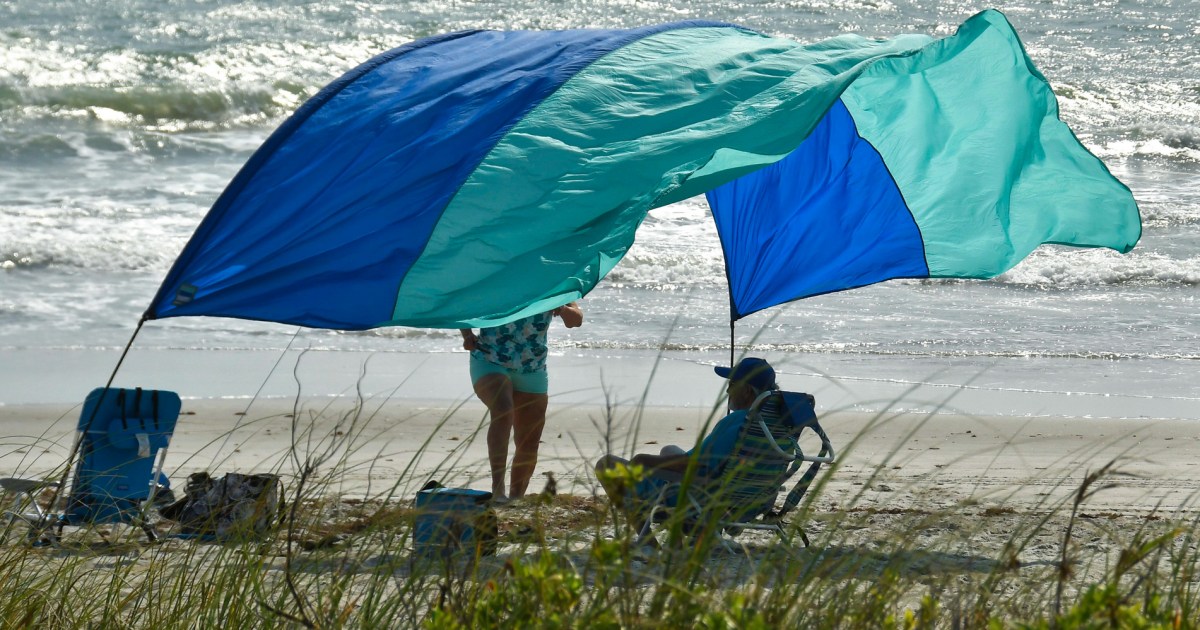
NBC News’s report on the Florida incidents describes, at first glance, a weather situation typical for the state: “days of heavy rain, destructive winds and ‘extremely rough’ seas” along the central coast and the Gulf of Mexico, including Tampa and Clearwater (NBC). Yet the main danger is hidden in that “ordinariness”: people continue to behave as if it’s the usual Florida rain and waves, not a heightened-risk situation. As a result, a 17-year-old teen drowns at Cocoa Beach, where, according to Brevard rescuers’ spokesperson Don Walker, “the sea was extremely rough” on the day of the tragedy. In Daytona Beach a 32-year-old woman drowns after being caught in a rip current only a hundred meters from shore. A rip current is a narrow stream of water carrying people away from shore; it’s hard for an untrained person to recognize, and trying to swim “against” it back to shore quickly exhausts even a strong swimmer. Essentially, this is an example of a so-called hidden risk: swimming looks “almost normal,” people aren’t swept away by a giant wave, but the real probability of death increases manyfold.
The same logic appears in NBC’s weather overview itself. Forecasters note that a tornado that day in central Florida, including the Daytona, Gainesville and Tampa areas, was not recorded, and that “the threat of severe weather in the state then ended.” Formally — the danger passed. But it is during the relatively “mild” stage of a cyclone that deadly episodes occur: destructive wind gusts up to 60 miles per hour (about 96 km/h), downed trees, localized downpours and thunderstorms capable of causing flash flooding. Forecasts down the line call for light but persistent rains in Florida, pockets of thunderstorms with hail and strong winds in Missouri and Illinois, and then another wave of serious storms on Tuesday–Wednesday for the southern plains and Gulf Coast region: from north Texas and Oklahoma to Arkansas on Tuesday, with the risk zone shifting east — from eastern Texas to Alabama on Wednesday — with threats of strong wind, large hail and isolated tornadoes. This “conveyor-belt” shift of danger zones shows that for a significant portion of the US population, weather risks are becoming not an exception but a constantly migrating reality.
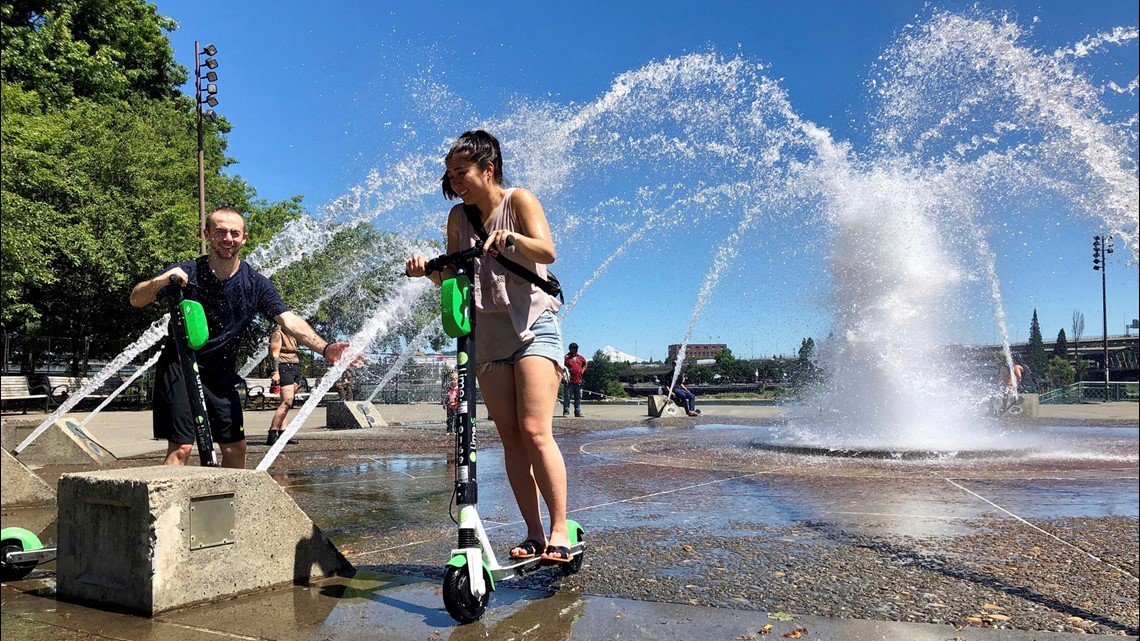
On the other side of the country, KING 5’s coverage records a different kind of weather anomaly: record spring heat around Puget Sound in the Pacific Northwest (KING 5). Where early May is normally associated by locals with mild temperatures just above 50–60 °F (about 10–15 °C), Sunday is expected to reach 77–86 °F (25–30 °C) and higher. Forecasters attribute this to a “strengthening ridge of high pressure” over western Washington and British Columbia and the formation of a “thermal pressure trough” west of the Cascade Range. In simple terms: stable, dry, warm air is intensifying and becoming “locked” over the region, almost preventing clouds and cooler air masses from moving through.
In practice this means Seattle could reach 80 °F (about 27 °C) for the first time since September and break a 34-year record — the previous high for that Sunday was 77 °F in 1992. Olympia is forecast up to 86 °F (roughly 30 °C) against the previous record of 82 °F from 1944; Bellingham, with an expected 77 °F, also risks rewriting its observational history. Here another aspect of growing climatic instability emerges: extremes are becoming a statistical norm. Forecasters candidly note that the heat will be short-lived — a cooldown begins Monday, and by the end of the week temperatures should return to a more typical 64–72 °F (18–22 °C) as onshore (ocean) winds strengthen. But structurally, what matters more is this: the bounds of the familiar climate corridor are shifting. Locals and infrastructure — from air-conditioning systems to rules for water and forest activities — were originally tuned to a cooler, wetter spring and now must adapt to summerlike temperatures in early May.
These two weather stories share a common denominator: people often underestimate risk if it’s “smeared” across everyday life and does not look like a spectacular catastrophe. Extremely rough seas in Florida are not as visually impressive as footage of a Category 4 hurricane, and a May 77–86 °F (25–30 °C) stretch in Seattle does not seem like a natural disaster compared with fires and droughts in other states. But it is precisely these “hidden” and “mild” deviations that create situations in which habitual behaviors — swimming in waves, hiking, walking without adequate hydration and sun protection — lead to fatal outcomes.
Against this backdrop, the story of Nancy Guthrie’s disappearance in Arizona, covered by Yahoo, initially seems of a different order: this is not weather but a criminal mystery (Yahoo). The 84-year-old mother of Today show co‑host Savannah Guthrie went missing on January 31: in the evening, around 9:45 p.m., relatives dropped her off at home in the Catalina Foothills north of Tucson, and the next day she did not show up to watch an online church service with a friend, after which she was reported missing. By May 1 the search had entered its third month, and despite the FBI’s involvement and a combined reward of $1.2 million (from family and law enforcement), there have been no major public breakthroughs.
A key element here is a door that cannot be locked against modern locks: a plastic doorbell camera. On February 10 the FBI released footage showing a “masked and armed person” captured on the door camera the morning Nancy disappeared. That moved the case from the category of “missing” to the realm of suspected abduction. Yet by the fourth month of the investigation authorities have no suspect and no clear motive. The Pima County Police stress that “the investigation remains active and ongoing,” investigators are processing tips coming into the 88‑CRIME line and the FBI, reviewing data and analyzing mixed DNA samples found in Nancy’s home, including hair.
The DNA situation demonstrates how in modern security systems primary hope is increasingly placed on technology. Mixed DNA is biological material containing genetic traces of multiple people; its analysis is complex but, with current methods, can help isolate a possible perpetrator’s profile or at least narrow the field. Nevertheless, even with resources such as the FBI’s federal lab on the case and ubiquitous video surveillance, the fate of one person can remain unknown for months. Pima County Sheriff Chris Nanos has had to expressly debunk social-media rumors about an allegedly detained “new person of interest,” replying to Fox News reporter Michael Ruiz’s direct question with a single word: “Nope.” This is another layer of modern reality: in the absence of official information, rumors immediately emerge and spread across platforms like X, requiring refutation and further complicating the investigation’s work.
Both the weather stories and the Arizona criminal case point to one thing: the sense of security is becoming less intuitive and increasingly dependent on quality information and trust in institutions. A person at the sea can’t visually gauge the strength of a rip current; a resident of a quiet suburb can’t rely solely on a “safe neighborhood” as a guarantee of security; a city dweller in Seattle can’t depend on past climate experience to judge how dangerous a given May heatwave might be. In each case the cost of error rises — and so does the role of early-warning systems, clear communication from authorities and media, and individual readiness to adapt behavior to new information.
Trends emerging from these stories are fairly clear. First, climate instability is not an abstraction or something “elsewhere” but a reality from Florida to the Pacific Northwest: from rough seas and heavy rains with sudden flooding to anomalously early heat in traditionally cool climates. A significant portion of dangerous consequences do not arrive as newsmaking disasters but manifest in localized tragedies: drowned swimmers, heat‑affected vulnerable people, infrastructure operating at its limits.
Second, both weather and criminal stories show increasing dependence on high technologies — meteorological models, video cameras, DNA analysis, online alert platforms and information gathering. Pima County and the FBI in the Nancy Guthrie case ask anyone with information to call special lines at 520‑351‑4900 or 1‑800‑CALL‑FBI; in Florida and on the southern plains millions rely on risk maps, tornado and severe-wind warnings; Seattle residents watch KING 5 and the National Weather Service updates to plan behavior during record heat. But technology also creates new vulnerabilities: from inflated expectations of an all-seeing eye of cameras and DNA forensics to an avalanche of unverified information and rumors on social media.
Third, the uneven perception of risk becomes increasingly apparent. The same objective danger is assessed very differently depending on context. A tourist on a Florida beach perceives “rough seas” as a picturesque natural force rather than a lethal factor; an elderly person may underestimate the risk of an evening route home even in a seemingly well-off neighborhood; Seattle residents might not connect unusual heat with an increased likelihood of wildfires, exacerbations of chronic illnesses, or overheating in homes that traditionally lack air conditioning. Hence the need for more targeted, comprehensible risk communication: explaining that a rip current can look like a calm stretch of water; that early heat requires the same precautions as summer heat; that a safe neighborhood does not eliminate basic vigilance and the necessity of working with police and the FBI when there is any information about a disappearance.
Finally, all three stories raise the question of trust in institutions and what to consider “normal” mortality and risk. On one hand, drownings, abductions and weather records have always occurred, and statistically recent cases fit within a broader picture. On the other hand, the accumulation of indicators — increasing weather anomalies, rising information noise, complicating criminal cases even with video surveillance and genetic evidence — creates the impression that modern security increasingly resembles walking a thin line. In such times it is particularly important that meteorological services, law enforcement and the media, like NBC News, Yahoo and KING 5, not only record facts — from descriptions of “extremely rough seas” to the progress of investigations and meteorological records — but also help society construct a realistic picture of how to live with these risks.
The overarching theme linking these seemingly disparate pieces is a rethinking of personal and collective security in a world where weather, the criminal environment and the information space change faster than our habits. Where we habitually see routine rain, a quiet suburb or “pleasant warmth in May,” a very different reality increasingly lurks. The question is no longer only how to describe it, but how to learn to live in it while minimizing losses.