At the heart of all three news items is a single theme: how the sense of security changes when the familiar order collapses — whether due to a large war, a local crisis, or a personal tragedy. These are stories of different scales — from Donald Trump’s claim of massive strikes on Iran, through widespread disruptions in the global aviation system, to the disappearance of 84‑year‑old Nancy Guthrie. Yet they all show how thin the line is between normal life and chaos, and how societies, institutions and individual families try to restore control relying on technology, the state, the media, and mutual support.
A CBS News piece describes an escalating U.S. war with Iran and the widening conflict across the Middle East. Donald Trump claims that “almost all” Iranian military targets have been hit, while not providing a timeline for the operation’s end. This is a typical example of the modern “endless war”: precise strikes, no clear political resolution, and a growing risk of drawing neighboring countries and civilians into the conflict. The phrasing about “striking almost the entire Iranian military” reflects the logic of total suppression of the adversary, but in the regional reality it is both a show of force and a source of massive instability that cannot be contained solely on the military plane.
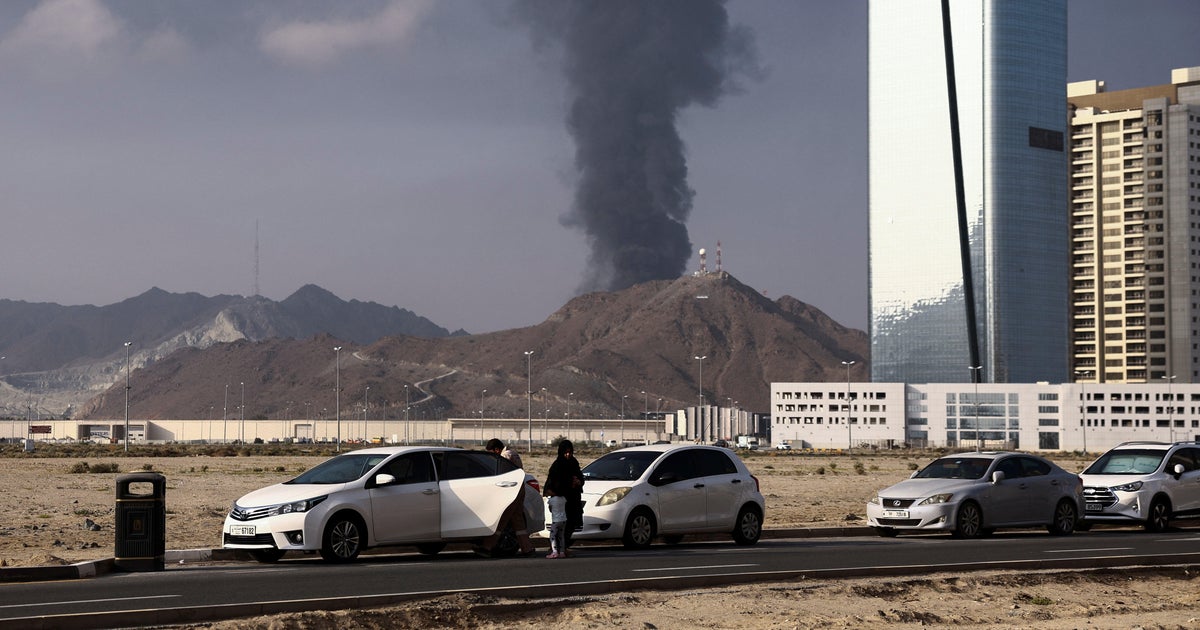
Against this backdrop, the aviation industry story becomes clearer: an Airline Ratings piece on the partial resumption of flights by Etihad, Emirates and flydubai discusses a direct consequence of the military escalation. The closure of airspace due to “military activity and strikes across the Middle East” led to the shutdown of major hubs — Dubai, Doha, Abu Dhabi, Bahrain. According to the article, more than 9,500 flights were canceled since the airspace closures, affecting 1.5 million passengers. This illustrates how strategic risks immediately ripple into everyday life: people cannot fly, goods are not delivered, and global logistics break down.
It is important to understand what “airspace closure” and “controlled corridors” mean. Airspace is essentially all the “air” above a state’s territory, where its jurisdiction applies. In times of war or threat, a state can close it to civil aviation to protect aircraft from accidental or deliberate attacks and to avoid interference with military operations. “Controlled corridors,” mentioned in the Airline Ratings text, are narrow, pre‑agreed routes along which individual flights are allowed under strict supervision by aviation authorities. That is why Etihad, as the UAE’s national carrier and in direct coordination with the General Civil Aviation Authority (GCAA), was able to launch a limited number of flights: EY67 to London, EY843 to Moscow, EY41 to Amsterdam, EY33 to Paris, EY204 to Mumbai, and others. These flights serve not only passenger traffic but also operational functions — crew repositioning, cargo flights, and maintaining minimal necessary mobility.
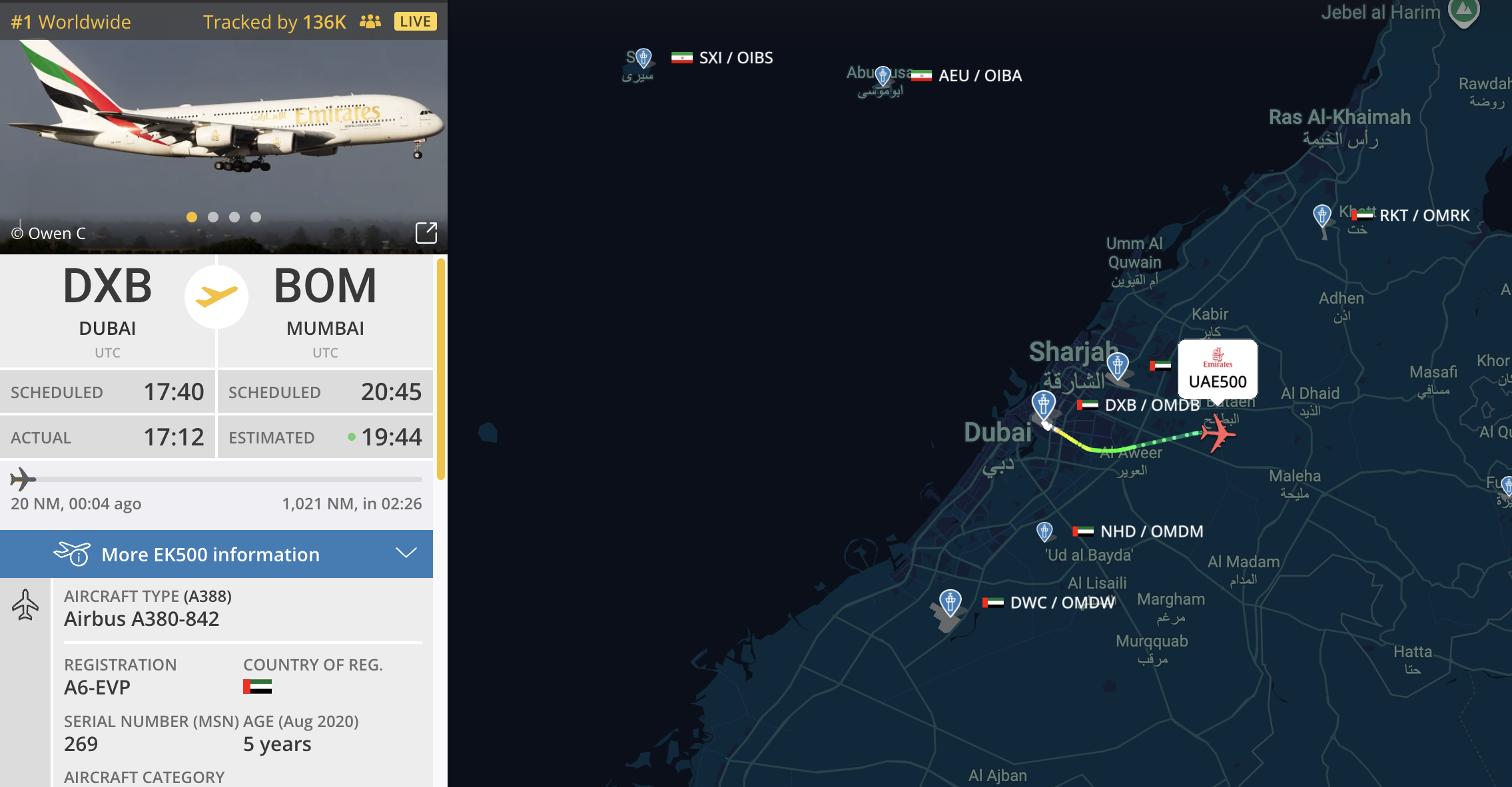
Emirates and flydubai, according to the same article, are also starting with “point” flights: EK500 to Mumbai for Emirates and several routes to Russia and Central Asia for flydubai (Moscow, Kazan, Koltsovo, Novosibirsk). Airlines stress the situation is “dynamic” and that safety is the priority. That is the key signal: in the context of regional military turbulence, safety is no longer perceived as a given; it becomes a subject of constant reassessment, risk evaluation, and rapid decision‑making.
The international conflict reported by CBS News and the paralysis of air travel covered by Airline Ratings are connected by a common logic: large‑scale use of force and the absence of a political horizon make the region chronically insecure. This is a state of “prolonged instability,” in which businesses, governments and ordinary people live without knowing when “this will end.” Trump “gives no timeline” for the conflict’s end; airlines say the restart of flights is partial and temporary; other major players like Qatar Airways remain completely grounded, awaiting new instructions. For the global economy this means the Middle East is transformed from a transport and energy hub into a zone of constant risk.
Against this broad geopolitical insecurity, the story of Nancy Guthrie’s disappearance — covered by Yahoo News — stands out sharply as a case of security at the most intimate, personal level. The 84‑year‑old vanished on the evening of January 31 after being dropped off at her home in a Tucson suburb (Catalina Foothills area). The next day, when she does not arrive at a friend’s for a joint online worship service, she is declared missing. Pima County Sheriff Chris Nanos told Today that the investigation is “definitely closer” to identifying a suspect or suspects: “We have a lot of information, a lot of leads, but now it’s just time to work.”
Here we see another aspect of modern security: the intense involvement of technology and public attention in a private tragedy. The investigation uses a partial DNA profile found in Nancy Guthrie’s home, doorbell camera footage showing a masked, armed figure, video of a fast‑moving car at the time of the suspected abduction, and analysis of a backpack purchase allegedly ordered online. For readers: a doorbell camera is a small camera built into a doorbell that automatically records video of anyone approaching the door. These systems are widespread in the U.S. and often become key sources of evidence in investigations. A partial DNA profile means that not all genetic markers were obtained, only fragments — this may be insufficient for a definitive identification of a specific person but can exclude many others and be compared with databases.
Alongside the technological side, the human and media angles are visible. The family offers a $1 million reward for information leading to Nancy Guthrie’s “return.” Her daughter, Today show host Savannah Guthrie, uses social media and national television to draw attention. In her post she writes: “We feel the love and prayers of our neighbors, the Tucson community and the whole country… Please don’t stop praying and hoping with us. Bring her home.” In a video she says: “We still believe in a miracle. We still believe she can come home. We also know she could be gone. She may already be gone. If that is the way it is meant to be, we will accept it. But we need to know where she is.”
That phrase — “we need to know where she is” — echoes the global agenda of war and aviation crisis. At the macro level, states and societies also “want to know” where their citizens are, where front lines run, which air routes are safe, and how long the threat will last. In Nancy Guthrie’s case, the police say the investigation will be active “until Nancy is found or until all leads are exhausted.” In international politics a similar formulation — “until objectives are achieved” — is used by governments, but there the endpoint is often vague and subject to political interpretation. In a personal tragedy the demand is far more concrete: knowledge, certainty, a possibility for mourning or hope rather than endless waiting.
All three stories demonstrate an important trend: security is increasingly less felt as a stable backdrop and more as a temporary, conditional state that must be continually reproduced by the efforts of institutions, technologies and people themselves. The U.S. military power Trump speaks of in the CBS News report, while providing short‑term battlefield superiority, simultaneously generates long‑term strategic instability across the region. Closing airspace protects aircraft and passengers here and now but paralyzes global supply chains and personal mobility, as seen in the Airline Ratings piece on the partial restart of Etihad, Emirates and flydubai. In Nancy Guthrie’s case, a family’s sense of safety collapses in one night, and restoring even the illusion of control requires extensive searches, public mobilization, and a hope in technology.
There is another important aspect — the role of publicity. In both the war with Iran and the Nancy Guthrie story, the information space becomes a battleground: Trump projects the image of a decisive leader delivering total strikes through the media; Savannah Guthrie mobilizes sympathy and readiness to help via Instagram and NBC. In aviation, public statements by airlines emphasizing safety priority aim to restore passengers’ and partners’ trust. Everywhere the question arises: where is the line between informing and shaping the desired image, between transparency and managing perception?
If one were to single out key takeaways from this set of news items, they would be these. First, contemporary security is multidimensional: military, transport, personal and informational elements are tightly intertwined. Any major military‑political decision we read about in CBS News almost immediately shows up in Etihad and Emirates schedules in the Airline Ratings article and in the sense of security in ordinary homes. Second, technology simultaneously increases vulnerability and protection: drones and precision strikes change the nature of war, but surveillance cameras, DNA analysis and global media offer chances to investigate crimes and find missing people, as in the Nancy Guthrie case reported by Yahoo News.
Finally, when institutional security cannot be guaranteed, solidarity and readiness to act matter more — from international coordination between aviation authorities and airlines to local communities helping search for missing people. These stories show that the human need for certainty and protection is constant, but the means to achieve it are getting more complex and depend not only on the power of states but also on how we build technologies, media, and mutual trust.