Stories that at first glance seem unrelated — a girls' summer camp in rural Texas, a shopping mall in Louisiana, and capital punishment statistics in Nevada — are actually about the same thing. They show how our notions of safety, responsibility, and acceptable risk are changing in peaceful, familiar, “non-heroic” places: where children’s laughter, the noise of a food court, and even the strict routine of the prison system should be the norm. A single thread runs through these accounts: society is less willing to accept tragedies as “accidents” and more likely to see them as the result of someone’s decisions, systemic failures, and ignored warnings.
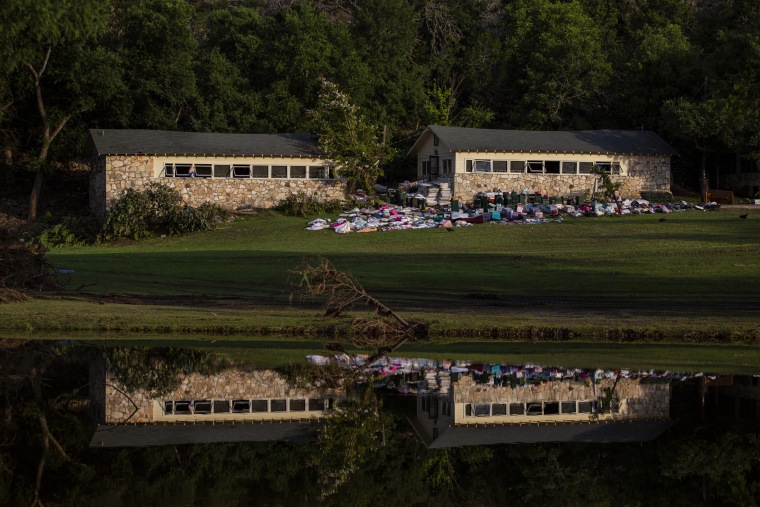
In NBC’s piece about Camp Mystic in Texas, where catastrophic flooding killed 27 people, the focus is not only on the horror of what happened but on redefining what constitutes adequate precautions for organizations that work with children. After July’s heavy rains and the Guadalupe River’s overflow that claimed the lives of 25 girls, two counselors, and the camp owner, the state can no longer be satisfied with sympathy and routine inspections. In a letter about deficiencies, the Texas Department of State Health Services directly ties the camp’s license for the coming summer to meeting a set of clear requirements: from a floodplain map showing where the cabins are located to detailed evacuation plans for fires and natural disasters and an emergency alert system that actually works instead of existing only on paper. Also highlighted is a less obvious but critically important element: the allocation of roles and responsibilities. The department notes in its letter on deficiencies that the camp’s documents lack a clear description of who is responsible for what in an emergency, how to coordinate with local authorities, and how and when to notify parents if part of the property is in a potential flood zone. Requiring the camp to disclose even the fact that it is partially in the river’s floodplain is a step toward rethinking the concept of “informed consent”: parents are being asked not simply to “trust the camp” but to consciously accept or reject the risk.
Notably, Camp Mystic’s attempt to resume operations has sparked not only regulatory but ethical debates. Families of nine of the deceased girls have sued the state, claiming officials failed to enforce evacuation plan requirements. Thus, on the public bench of accusation sits not only the private operator but the state as the guarantor of safety. This is where a broader trend becomes visible: tragedy is seen not only as the force of nature but as the outcome of predictable vulnerabilities that could have been addressed — and therefore, legally and morally, someone must be held accountable.
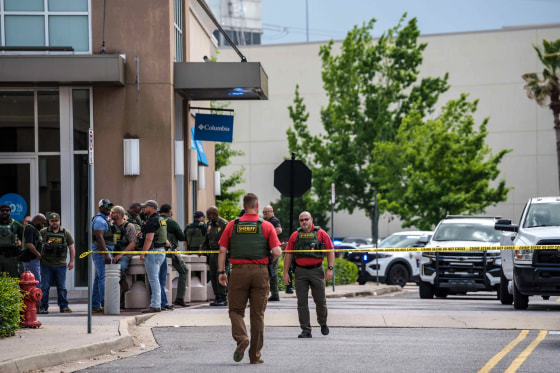
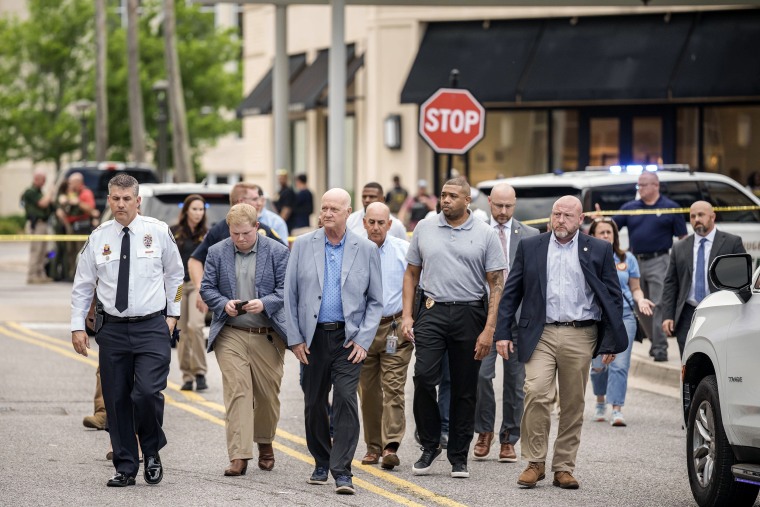
A very similar logic appears around the Mall of Louisiana shooting in Baton Rouge, described in another NBC News piece about the Mall of Louisiana shooting. The emphasis here is not simply on the crime itself but on the shattering of the illusion that a large mall is a “safe public space.” According to Police Chief Thomas Mors Jr., it was not a “random” shooting but a conflict between two groups that turned the food court into a battlefield, killing one person and wounding five others. The officer’s key phrase: “innocent people were caught in the crossfire.” Like the camp story, the tragedy occurs against the backdrop of structures meant to maintain order: the mall already had a designated police officer, a sheriff’s deputy was on the parking lot detail, and cameras began working after the first shots, allowing authorities to identify suspects “almost immediately.”
Here a curious contradiction emerges. On one hand, local officials stress how quickly and professionally police and first responders acted. Mayor Sid Edwards thanks residents for providing videos, participating in hotlines, and stresses that this “saved lives.” Governor Jeff Landry thanks law enforcement and speaks of prayers for the injured. The rhetoric centers on coordinated response and community solidarity. On the other hand, a witness — head of the volunteer group United Cajun Navy Todd Terrel — articulates what feels like a diagnosis of our times: “We live in troubled times now.” His accidental decision not to go to the food court because he’s “on a strict diet” becomes for him a private miracle: “If I had gone for shawarma, I would have been there.” The tacit acceptance that a visit to the mall today carries a nonzero risk of becoming a target becomes part of everyday worldview.
This is the shift: safety is no longer perceived as the natural backdrop of daily life. It becomes a condition that must be constantly proven — via protocols, cameras, rapid response, design, staff training, coordination with local police, and, importantly, through citizens’ participation, who are expected to record videos and hand them over to authorities. The mayor’s phrase, “People are starting to speak now,” underscores that public involvement in investigations has become part of the normal scenario. The line between a “passive citizen” and an element of the safety system is effectively erased.
Against this backdrop, even a brief line from a Las Vegas Review-Journal video segment on executions in Nevada takes on special significance: “In the modern era almost all executed inmates in Nevada were ‘volunteers’ who waived appeals and agreed to be put to death by the state” (Review-Journal segment). At first glance this is hardly about safety, but it actually concerns the same transformation in relationships between individuals and institutions that decide over their lives. The phenomenon of “volunteers” in the death penalty system — inmates who refuse further legal avenues and seemingly give the state consent to carry out the sentence — removes some of the tension around coercion from a legal standpoint. Ethically, however, it raises more questions: can this be considered a genuine choice when a person is in maximal dependence on a system that controls their body and time? This phenomenon reveals a paradox: even where the threat is not an external natural force or a private criminal but the state machinery itself, society seeks forms of “consent” and “procedural correctness” that would allow at least a formal claim that everything happened “by the rules.”
Taken together, the three stories suggest several important conclusions and trends. First, demands on formal protective systems are increasing: evacuation plans, risk-zone maps, parent communication protocols, and coordination with local authorities can no longer be mere formalities. Texas officials made this explicit with Camp Mystic, giving the camp 45 days to fix its plans before children can return. Beyond obvious measures — maps, evacuation diagrams, alert systems — what becomes key is what was often underestimated before: clear allocation of responsibilities and transparent information for those whose lives are affected by risk. The requirement to notify parents if any part of a camp lies in a flood-prone area is not just bureaucratic wording but an attempt to create an honest dialogue about risk.
Second, the line of responsibility is becoming multilayered. In the camp case, victims’ families sue the state itself, alleging it “failed to ensure compliance” with its own requirements. In the mall shooting, local authorities emphasize that they did everything they could, highlighting rapid response and cooperation with citizens. Society is increasingly discerning: when a tragedy could truly have been prevented by prior preparation, when it could have been mitigated by more effective response, and when it involves violence or punishment whose responsibility is shared among participants and the system at large.
Third, perception of timing and chance plays a growing role in discussions of safety. For Baton Rouge it matters that everything happened at 1:22 p.m., not in the evening: the mayor and witnesses stress that “it could have been much worse” because of prom season and the potentially larger number of people in the mall. In Todd Terrel’s case, his private choice not to go for food is meaningful. In Camp Mystic, fundamentally, the issue was insufficient preparation for a rare but predictable event — a slow storm and river overflow. All of this shapes a new public mindset: less tolerant of the “one-off accident” argument and more inclined to ask which pre-event decisions determined the scale of the consequences.
Finally, a fourth trend is the growing role of “moral infrastructure” — norms and expectations not codified in law but becoming criteria for public judgment. For many parents the very idea that Camp Mystic could reopen next summer is morally unacceptable, even if legal conditions are met. For part of public opinion, the mall that became a shooting scene will lose its reputation as a safe place for a long time — despite police efforts. And in debates over the death penalty, increasing weight is given not only to legality but to the human dimension of a “voluntary” waiver of appeals, when the very right to life has already been conditioned by a sentence.
All three cases show that safety today is not a given but an ongoing, negotiable contract among individuals, private organizations, and the state. When children go to camp, teens go to a mall, or an inmate makes a decision within the death penalty system, they enter a complex web of mutual expectations and obligations. Society demands that this web become denser: more transparency, more pre-planned scenarios, greater attention to the human factor, and paradoxically, more genuine consent from people exposed to the risks imposed on them. In that sense, the stories of the Texas flood, the Louisiana mall shooting, and the Nevada execution are parts of one larger conversation about how we learn to live in a world where danger can emerge in the most peaceful settings and responsibility for it can no longer be written off as fate or “bad people.”