Behind this week’s disparate headlines — from a spike in jobless claims to a gondola accident at a ski resort and a death after a fight in a small town — a common, rather unsettling theme emerges. It is not a “crisis” in the usual macroeconomic sense, but a sense of fragility in everyday stability: formal indicators still look decent, yet people increasingly encounter localized failures — at work, at home, in public‑safety systems. Each of the episodes described — in the labor‑market analysis from ABC News, in the rescue report from FOX Weather about people trapped on a lift in New York (FOX Weather), and in the criminal chronicle from provincial Raymond in Chinook Observer — the story, essentially, is about failures of systems we take for granted: the labor market, leisure infrastructure, and public and personal safety.
The ABC News piece reports that U.S. jobless claims for the week ending Jan. 31 jumped by 22,000 to 231,000. Formally, this remains a “historically low” level: economists often stress that such claims are far from the mass waves of layoffs seen in a recession. But context matters: analysts had expected 211,000 claims, and the actual figure was noticeably above the forecast. For macro indicators, a 20,000 difference is already a signal that something is shifting in labor‑market dynamics.
Jobless claims are usually viewed as a highly sensitive indicator of layoffs: if firms are cutting staff en masse, claims rise. That helps explain why the article highlights a chain of high‑profile layoffs: UPS, Amazon, chemical giant Dow, and, as a particularly symbolic touch, large cuts at The Washington Post, where, according to ABC News, the sports desk, several foreign bureaus and the books column were eliminated in a single day. Even if quantitatively this is only a fraction of a percent of total U.S. employment, such events carry disproportionate weight in public perception: when media organizations that themselves report on crises and trends become subjects of “optimization,” it intensifies a sense of instability.
One key paradox the article describes is the divergence between a low official unemployment rate and weak employment growth. The unemployment rate fell to 4.4% in December — lower than in many Western economies and formally close to the so‑called “natural” rate (the level at which the labor market is considered balanced). Yet only 584,000 jobs were created in 2025 — roughly 50,000 per month. By comparison, more than 2 million jobs were added in 2024, nearly 170,000 per month. The ABC News authors rightly emphasize that such weak growth is the smallest since 2020, when the pandemic shattered the labor market; outside recessions, there hasn’t been such a “lean” year since 2003.
This is important: the labor market, formally “healthy” by unemployment rate, is effectively sliding into stagnation. Jobs are not disappearing en masse, but few are being created. According to the Labor Department, the number of open vacancies fell in November from 7.4 million to 7.1 million, meaning companies are not rushing to expand payrolls even amid modest economic growth. It resembles a state of “cautious pause”: employers aren’t confident enough about the future to hire aggressively, but neither do they see the need for large‑scale layoffs.
Here the link to macro policy matters. The piece reminds readers that the Federal Reserve raised interest rates in 2022–2023 to “dampen” the inflation surge after the pandemic. Higher rates make borrowing more expensive for businesses and households and typically cool demand — and, with it, the labor market. Late last year the Fed cut its policy rate by a quarter point three times in a row in an attempt to “support a weakening labor market,” but, as ABC News notes, it left the rate unchanged last week amid an “improving overall economic outlook” and a “stabilizing labor market.” The paradox is that the same data can be interpreted differently: for the Fed, a mild easing of labor‑market pressures looks like desirable cooling after overheating; for an ordinary worker, weak job growth and rising reports of layoffs are cause for worry.
Trade policy adds another layer of uncertainty: the article mentions “Trump tariffs” as a source of instability for business. Higher import duties create risks for supply chains and production costs, making companies more cautious about investment and hiring. That provides a backdrop against which each individual layoff or hiring freeze is perceived not as an isolated event but as part of a potential systemic shift.
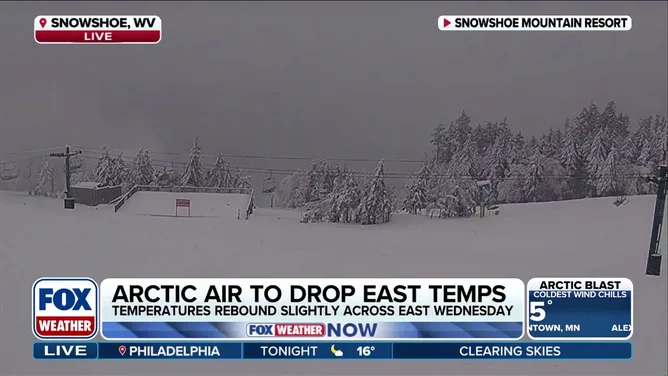
The subjective sense that “something is off” in the economy intensifies when unexpected failures appear in other spheres — and this is where the connection to the other two stories logically arises. The FOX Weather report describes how a gondola lift at Gore Mountain ski resort in New York stopped, leaving between 60 and 70 people stranded in cabins. The usual chain of response occurred: at about 10:30 a.m. local time a 911 call came in, state police, forest rangers, Department of Environmental Conservation personnel and resort staff responded. New York Police Department officer Stephanie O’Neil said there were roughly 20 cabins (referred to in the text as “baskets”), each suspended in the air with passengers. A key detail stressed by resort management: the stoppage was caused not by a power outage but by a “mechanical issue.” All people were safely evacuated, and the resort remained open.
At first glance, this is simply an example of emergency response working as designed: coordinated agency action, no fatalities, minimal harm. But in the context of the broader theme of fragility it shows something else: even in tightly regulated and generally well‑maintained infrastructure (U.S. ski lifts are a highly regulated field with regular inspections), failures are inevitable. The mechanical malfunction, explicitly distinguished from a power failure, illustrates the difference between external, “force majeure” risks and internal, systemic risks. In light of economic news, it is an apt metaphor: no system is entirely safe, whether it’s the labor market or leisure infrastructure; the question is how well society and institutions are prepared to minimize the consequences of breakdowns.
The rescue at Gore Mountain illustrates how a “localized crisis” becomes a managed incident: there are established protocols, multiple agencies, coordinated actions, and a relatively quick return to normal. For those in the cabins it was still a stressful experience, but the system as a whole showed resilience. In the economy, “rescue services” include unemployment benefits and policy measures by the Fed and government to support demand. It’s important to explain one key term mentioned in the ABC News article: the four‑week moving average of jobless claims. This statistical technique averages data over the last four weeks to smooth out random fluctuations. The report says it rose by 6,000 to 212,250 claims. So it’s not only “one bad week” — a modest deterioration trend is confirmed, though it remains within historically low values.
The third story — the Chinook Observer report on a death following a fight in the small town of Raymond, Washington — brings the conversation about fragility down to everyday personal safety. According to the paper, at about 7:45 p.m. a 911 call reported “a patient who had come in himself, unconscious, unresponsive” to the Raymond fire station. A local resident said he saw a man lying on the concrete floor of the fire bay connected to an automated cardiopulmonary resuscitation device performing CPR. The victim was taken to Willapa Harbor Hospital, where he died; his name was not released.
Almost simultaneously, a South Bend police officer, per Chinook Observer, responded to a trespass call at a McKinley Street home in Raymond and immediately suspected the two calls might be related. From what was known at the time of publication, the deceased had gone to that house, engaged in a physical altercation with another man, and then, experiencing breathing difficulties, been taken to the fire station. The second participant, Bo M. Bohorkas, was arrested and booked into the county jail on a charge of second‑degree manslaughter. In U.S. criminal law, that term typically denotes causing death through gross negligence or disregard for an obvious risk, but without premeditated intent to kill.
This episode, despite its local character, highlights another facet of social fragility. There are no signs of large‑scale crime — it was not organized violence or terrorism — yet an apparently ordinary argument between two people escalated into tragedy. As with the gondola, emergency systems responded: emergency call, resuscitation attempt, rapid hospitalization, investigation, arrest of a suspect. But unlike those who were rescued from cabins at Gore Mountain, this person did not “return to normal” — for him the system became the final barrier that could not be crossed. Journalists emphasize the lack of detailed information at the time of press, which itself illustrates how difficult it is in real time to reconstruct the chain of events and causal links.
Viewed together, the three stories reveal several key trends and consequences. First, the sense of normalcy in the U.S. today is often sustained by well‑oiled response mechanisms rather than by the absence of risk. In the labor market, this means unemployment insurance and flexible monetary policy: even amid sharp swings in claims or slowing employment growth, those displaced receive a financial buffer, and the Fed can adjust rates to soften downturns. In leisure infrastructure, it means trained rescue crews and multiagency coordination that let Gore Mountain evacuate stranded riders without fatalities and, as FOX Weather notes, keep the resort open. In public safety, it’s the cooperation of firefighters, police and medical services seen in the Chinook Observer report.
Second, the gap between statistical pictures and subjective perception is widening. The ABC News text states plainly that despite historically low unemployment and layoffs, “increasing reports of layoffs and weak government employment reports have made Americans more pessimistic about the economy.” This is an important shift: even if formal indicators don’t signal a crisis, people living in an information environment dominated by stories of cuts at UPS, Amazon, Dow and The Washington Post perceive the situation differently. Similarly, singular news of “people stuck on a lift” or “a fatal fight in a small town” amplifies an anxious background, even though each event is statistically isolated.
Third, the chief challenge in the coming years is less eliminating risks (which is impossible) than strengthening trust in the institutions that must manage those risks. When the Fed says the labor market is “stabilizing” while statistics show the weakest job growth outside recessions since 2003, cognitive dissonance arises. When a resort insists a lift issue was “only mechanical” and not due to a power outage, for passengers dangling above the slope the distinction is largely theoretical. When police and firefighters act by protocol but someone nonetheless dies after a domestic scuffle, faith that “the system will protect us” is eroded.
Finally, all three stories remind us that resilience is not a static state but an ongoing process of adaptive management. The Fed balances fighting inflation and supporting employment; businesses weigh layoffs against hiring amid tariff uncertainty and post‑pandemic shocks; infrastructure operators balance maintenance costs and safety; law enforcement balances incident response and violence prevention. The key risk is that as local failures — economic, technical, social — accumulate, society may begin to read them not as isolated incidents but as signs of systemic decline. In that scenario, working on expectations, data transparency (including concepts such as moving averages or employment levels) and honest acknowledgment of any system’s limits become no less important than the “rescue operations” themselves, whether a rate cut, evacuation from a ski lift, or emergency CPR in a rural firehouse.