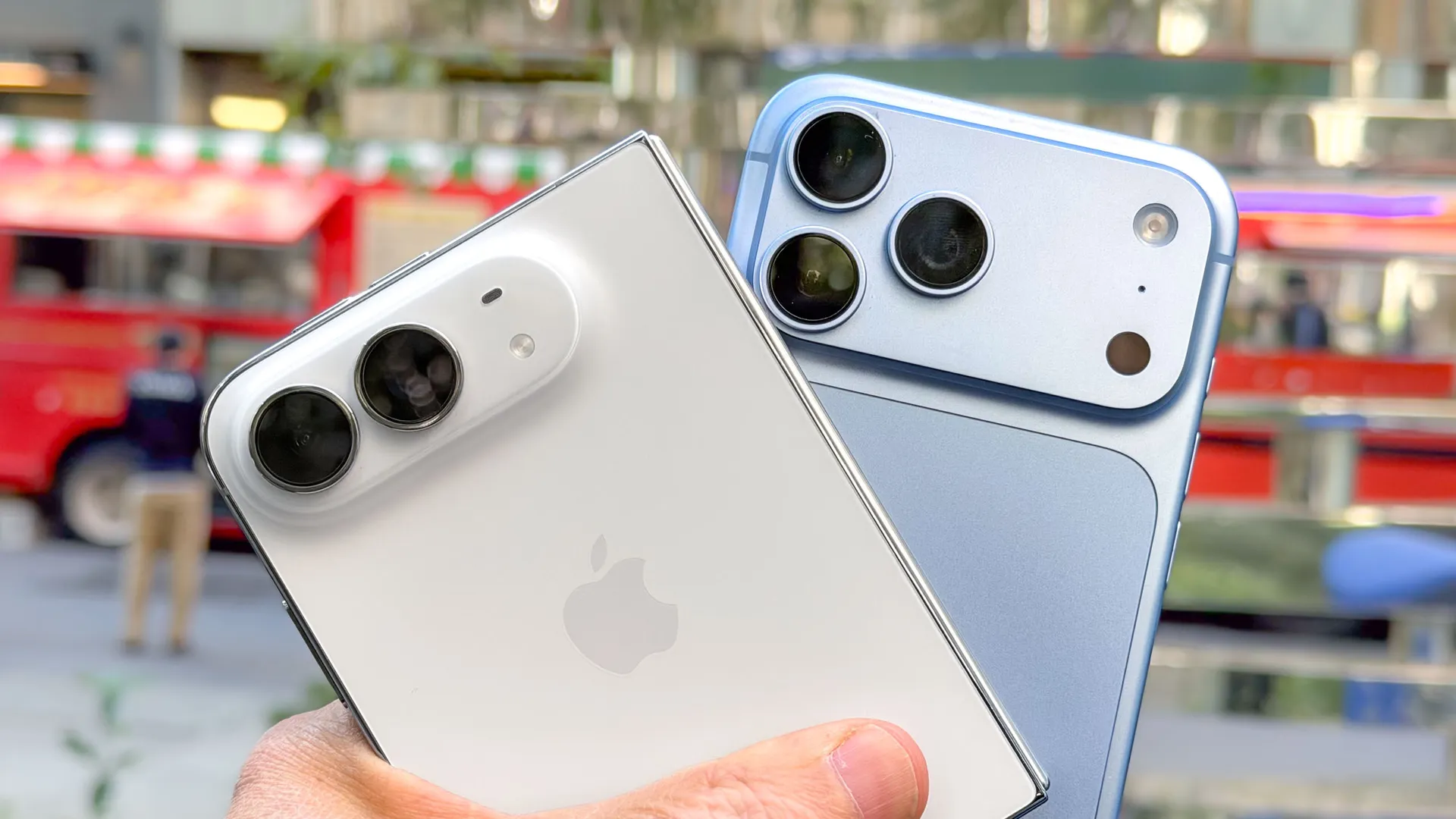
The arrival of foldable phones is turning the familiar contest for the best specifications into a more complicated choice: get a large screen and new ways to use your device, or opt for a more mature smartphone with better battery life, a better camera and a lower price. A comparison of the iPhone Duo and iPhone 18 Pro Max shows that a foldable design still requires significant compromises. Reports about Samsung’s upcoming devices point to another way to compete: improve specific features and bring them to other product lines, even if the form factor itself remains a compromise.
In Tom’s Guide’s testing, the iPhone Duo proved to be more than just a large iPhone that folds in half. It offers a distinct way of using the device. Unfolded, its 7.6-inch screen approaches tablet proportions; it supports split-screen apps, a task sidebar and the Apple Pencil USB-C. Meanwhile, the standard iPhone 18 Pro Max, with its 6.9-inch display, retains the advantages of a traditional design: a larger battery, a dedicated telephoto camera and a considerably lower starting price—$1,299 versus $1,999.
The test results show exactly where the trade-offs lie. Both devices use the same A20 Pro processor, and the Duo and Pro Max cameras deliver similar quality in everyday photography. But the Pro Max has a telephoto camera with 4x optical zoom, giving it a clear advantage at high magnification: digital cropping on the foldable model is no substitute for a dedicated lens. The difference in battery life is even more pronounced: the Duo lasted 13 hours and 20 minutes in testing, compared with 17 hours and 31 minutes for the Pro Max. In other words, the foldable screen expands what the phone can do, but puts a greater strain on the battery.
The comparison between the Duo’s inner camera and the under-display camera that Samsung may bring back in the Galaxy Z Fold 9, according to SamMobile, is particularly telling. In the first case, the hidden camera is part of the foldable screen’s design; for Samsung, this would not be an entirely new technology but a return to a feature used from the Galaxy Z Fold 3 onward and dropped in the Fold 7. Samsung previously replaced the under-display camera with a conventional hole in the display to improve selfie quality. Now, according to the publication’s source, the company is considering bringing back UDC—a camera hidden beneath the display panel—in the next-generation Fold. This could make the inner screen look more seamless, while once again forcing manufacturers to balance aesthetics against image quality.
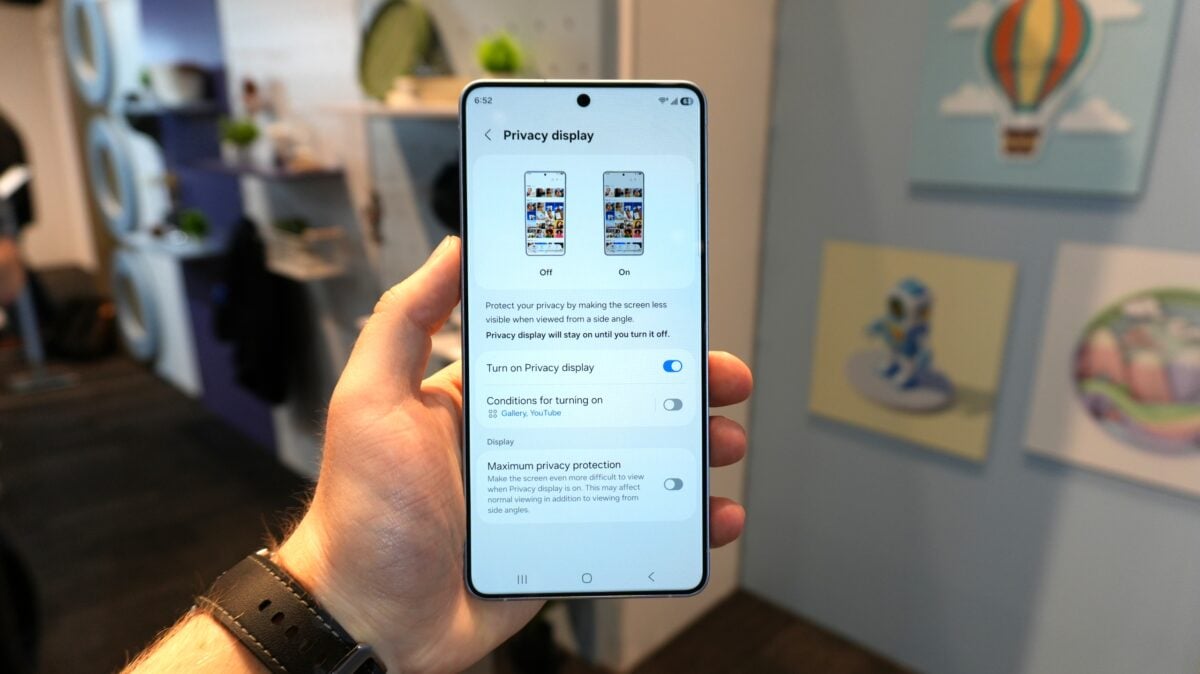
The same thinking is evident in Samsung’s plans for the Galaxy S27 series. SamMobile reports that the Galaxy S27 Pro and S27 Ultra will get an improved version of Privacy Display, a screen technology that limits visibility to people viewing the display from the side. If the report is confirmed, it would mark the feature’s first expansion beyond Ultra models. Here, the company is developing not so much a new device form as a practical feature designed to keep screen content from prying eyes. It is important to note that the article describes exclusive information about future models, not officially announced specifications.
Taken together, these reports show how competition in the high-end smartphone market is changing. The foldable screen remains the main source of novelty, but an unusual design alone is not enough: buyers also want a good camera, long battery life and apps adapted to the larger display area. Tom’s Guide notes that the Duo’s software already offers multitasking and features that make use of the large screen, but app optimization still needs work. That makes a foldable phone especially appealing to people who genuinely use the screen as a workspace or mini-tablet, rather than simply wanting a larger image.
At the same time, manufacturers are looking for ways to stand out without radically changing a device’s form factor. Samsung’s privacy mode addresses a specific everyday need, while bringing back an under-display camera could make a foldable screen look more seamless. These are different approaches, but they share the same goal: make the device more convenient without improving one feature at the expense of another. An under-display camera frees up space on the panel but may deliver lower image quality than a conventional camera; a large foldable screen expands functionality but uses more power and makes app optimization more complex; and protection from side viewing enhances privacy, but its value depends on how well it works and how comfortable the screen is to use at different angles.
For buyers, the takeaway is practical: choosing between a foldable and a conventional flagship is not about which model is “better overall,” but about how much the additional functionality matters to you. According to the test, the iPhone Duo justifies its high price primarily with its screen and multitasking; the Pro Max is the more practical choice for those who value battery life, long-range zoom, price and availability. Samsung’s upcoming features should be judged cautiously for now: reports about the Galaxy Z Fold 9 and S27 are based on leaks, not confirmed specifications. But the direction is already clear: premium smartphones will compete not only on megapixel counts or processor power, but also on how skillfully manufacturers manage the trade-offs between privacy, camera quality, screen usability and battery life.
UDC (under-display camera) refers to a camera positioned beneath the display panel. It does not require a visible cutout, but light has to pass through the display layer, so image quality may be worse than that of a conventional front-facing camera. Optical zoom uses a dedicated optical lens system, while digital zoom usually crops and enlarges an image that has already been captured. Software processing can improve the result, but it cannot fully replicate the advantages of a telephoto camera. Privacy Display is a side-viewing restriction technology: the screen remains readable to the person directly in front of the device, while its contents become less discernible to someone viewing it from the side. Sources: SamMobile on Privacy Display in the Galaxy S27 Pro and S27 Ultra, SamMobile on a possible under-display camera in the Galaxy Z Fold 9, Tom’s Guide’s comparison of the iPhone Duo and iPhone 18 Pro Max.