The stories cover different markets, but they share one question: how much are companies and consumers willing to pay for a technological edge? Samsung touts its longstanding leadership in foldable phones while releasing an especially expensive model for China. In artificial intelligence, by contrast, investors are demanding ever stronger evidence that record investments in infrastructure will pay off. Together, these stories show how technological promises become marketing arguments and pricing strategies—and, ultimately, a matter for the market to scrutinize.
Samsung is using its rivalry with Apple to emphasize that foldable phones are not an experiment for the company but an established category. In an ad created by the studio FOREAL, the new Galaxy Z Fold dramatically “slices” a shiny green apple bearing a “NEW” sticker—a transparent reference to Apple’s upcoming foldable device. The joke rests on the contrast: Samsung points to several generations of its Fold, while the apple cannot fold. The company says it is “years ahead” in the foldable-phone segment. Creative Bloq notes, however, that the ad drew attention not just for taking a jab at a rival: viewers also praised its visual effects and the fact that every frame was created by people rather than generated by AI (Creative Bloq).
This kind of marketing both reinforces Samsung’s image and sustains interest in the category as a whole. By teasing Apple, the brand reminds audiences of foldable devices and its experience making them. But advertising leadership does not automatically mean unquestioned technical superiority or broad affordability. Samsung’s W27, described by Android Authority, makes this especially clear: the device is positioned as a luxury take on the Galaxy Z Fold 8 Ultra, not as an attempt to make foldable phones more accessible (Android Authority).
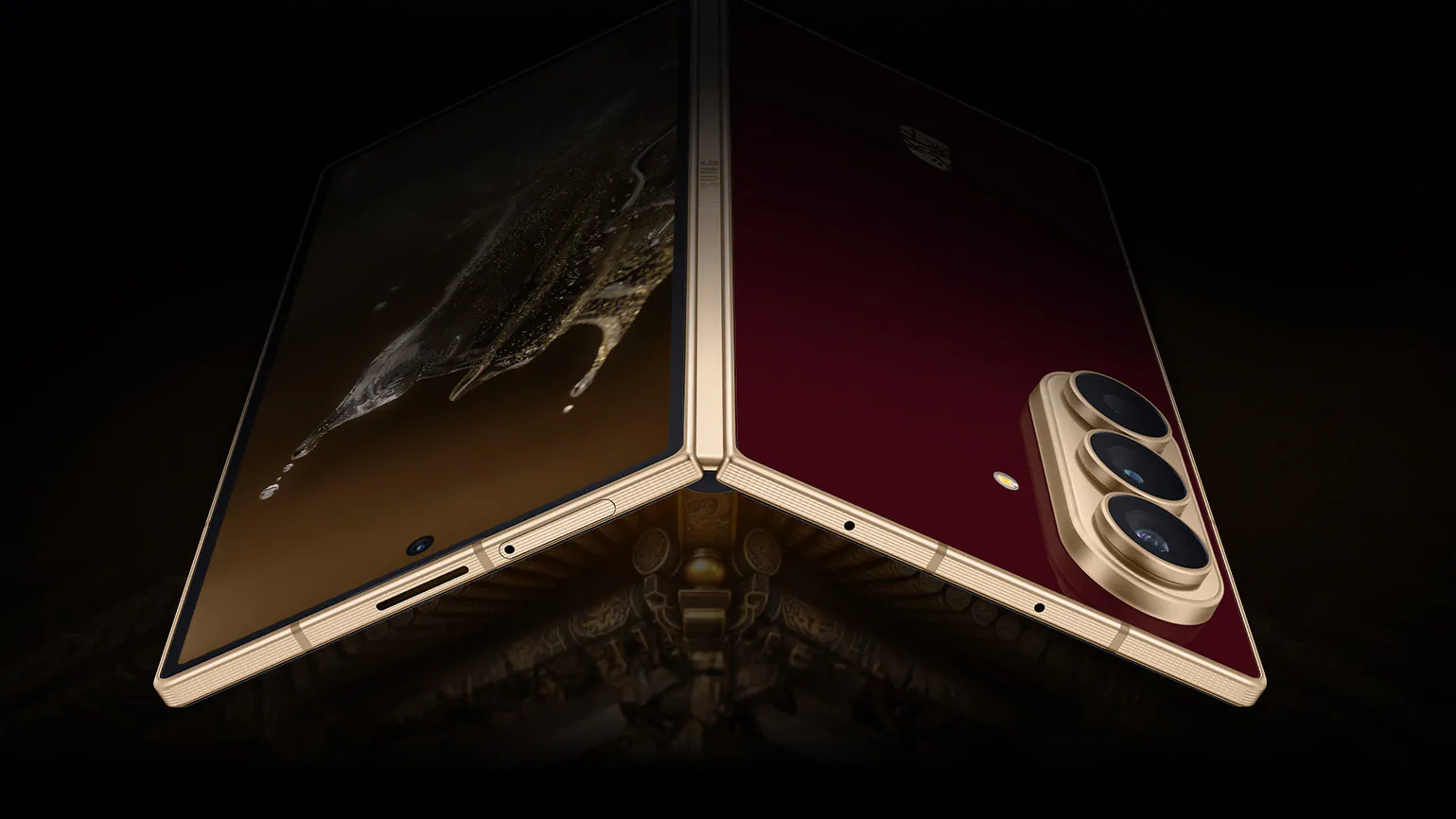
The W27 features gold-tone accents, a textured frame, and a choice of dark red or dark blue back panels. Its core specifications are similar to those of the Z Fold 8 Ultra: an 8-inch foldable OLED screen, a 6.5-inch outer display, a Snapdragon 8 Elite Gen 5 for Galaxy processor, a 5,000 mAh battery, and a 200-megapixel main camera. Yet the specifications cited in the report do not point to a radical technological leap: the phone is 8.9 mm thick when folded, weighs 215 grams, and has an IP48 dust- and water-resistance rating. The main difference is the memory configuration: the W27 is available only with 16 GB of RAM and either 512 GB or 1 TB of storage.
The price underscores the model’s premium positioning: 18,999 yuan, or about $2,852, for the 512 GB version and 21,999 yuan, or about $3,303, for the 1 TB version. By comparison, the 1 TB Z Fold 8 Ultra costs about $2,700 in the United States, according to Android Authority. In China, the W27 is also more expensive than the iPhone Duo configurations mentioned in the article: about $2,401 for 256 GB and $2,702 for 512 GB. This creates an intriguing contradiction: Samsung mocks the expected foldable iPhone while releasing a model that costs more than some versions of Apple’s device. That does not necessarily mean the two products compete directly across all configurations—the W27 is a special Chinese edition with premium styling—but it does show that the battle for the high end can be fought not only through new features but also through design, status, and price.
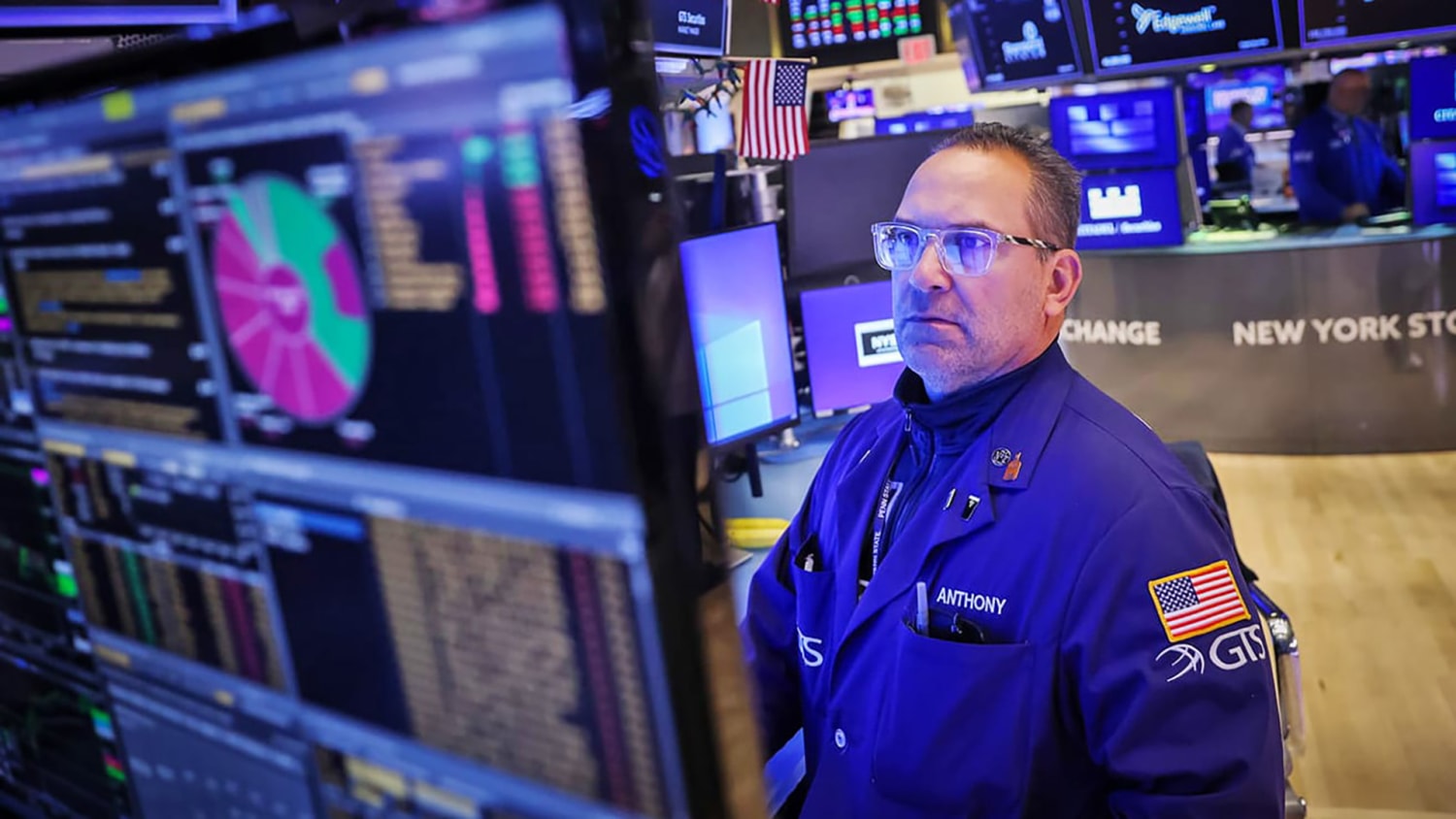
It is price that connects the smartphone stories to the broader technology market. While consumers are offered ever more expensive devices on the basis of promise and prestige, investors are weighing whether even larger spending on AI is justified. NBC News reports a sharp sell-off in technology stocks: the Nasdaq 100 fell 3.4% in a day, while the S&P 500 technology sector dropped more than 4.2%. The combined loss in company market value exceeded $1 trillion. Chipmakers were among the hardest hit: Intel shares fell 29%, while AMD, ARM Holdings, Qualcomm, and Marvell shares dropped by about 10% (NBC News).
The sell-off was not driven by investors giving up on AI, but by growing doubts about the balance between costs and future returns. The largest technology companies are investing hundreds of billions of dollars in data centers, servers, and related infrastructure. But market participants want a clearer picture of when those investments will start generating revenue and how durable demand for AI services will be. Amazon, for example, said its capital expenditures for 2026 would amount to about $220 billion, mainly for the expansion of AWS, and warned that spending would rise significantly in 2027. At the same time, growth in the company’s core online retail business has slowed. That creates tension for investors: spending on AI is rising rapidly, while the commercial returns visible so far do not always match the scale of the promises.
Intel provided a separate warning sign. The company forecast weaker-than-expected profits and sales, citing manufacturing and supply problems, a memory shortage, and weakening demand for personal computers. CEO Lip-Bu Tan acknowledged that the company had been unable to meet strong customer demand. This matters across the industry: even when demand for computing power remains strong, meeting it depends on complex supply chains and the availability of components. Investment in AI infrastructure does not automatically translate into results; it takes production capacity, memory, equipment, and customers willing to pay for the services.
The terms used in these stories describe different aspects of the technology economy. A “foldable” phone is a device with a flexible inner screen that unfolds to the size of a small tablet; the outer display lets users operate the phone without opening it. The IP48 rating describes the device’s protection: the first digit refers to protection against solid particles, and the second to exposure to water. It does not mean the phone is fully waterproof. Capital expenditures are a company’s investments in long-term assets such as buildings, servers, and data centers. “Neocloud” companies, mentioned by NBC News, build specialized computing capacity and rent it out to other companies. A “correction” in the stock market usually means an index has fallen at least 10% from a recent high. The Nasdaq 100 came close to that threshold, but its decline alone did not mean it had reached it.
The broader takeaway is that technological leadership is increasingly judged by more than a product’s novelty. For Samsung, accumulated experience, recognizable design, and the ability to hold the audience’s attention matter; for buyers, so do a costly device’s practical value and whether its price is justified. For investors, the decisive question is whether companies can turn large-scale AI investments into sustainable revenue without running into component shortages or weakening demand. Advertising can present an advantage as self-evident, but the market demands proof—in specifications, sales, supply, and financial results. That is why Samsung’s confident mockery of a future rival can coexist with investors’ nervous reaction to promises of a technological revolution: in both cases, the question is who can prove that the price of leadership is worth paying.