American news about shootings long ago stopped being seen as isolated tragedies and read like a daily chronicle of the same crisis. In three seemingly unrelated stories — a nighttime shootout in Wilkinsburg, a mass shooting outside a bar in Austin, and a murder followed by suicide at an Alabama hospital — the same motif repeats: ordinary, peaceful settings turn into battlefields in seconds, and people who came to relax or to receive care suddenly become targets. These accounts, published among others on the sites of WTAE, NBC News and WVTM 13, together show how deeply firearm violence has penetrated everyday life in the U.S. and how varied its forms are, yet uniform in its consequences: fear, shock, political disputes, and a sense that no one is truly safe anywhere.
In Wilkinsburg, a suburb of Pittsburgh (Allegheny County, Pennsylvania), according to WTAE, a man was shot multiple times around 1:20 a.m. on the 500 block of Ardmore Boulevard. First responders arrived and took him to the hospital; his condition is described as critical. No information about suspects or motives has been released, and there were no arrests at the time of publication. This story is typical of urban crime statistics: a precise address, a specific time, a brief summary followed by links to download the news app. The violence itself is presented as a short note about “another incident,” without context — and it is precisely in that laconic reporting that the scale of the problem is felt: such episodes are so frequent that they become part of the routine crime feed.
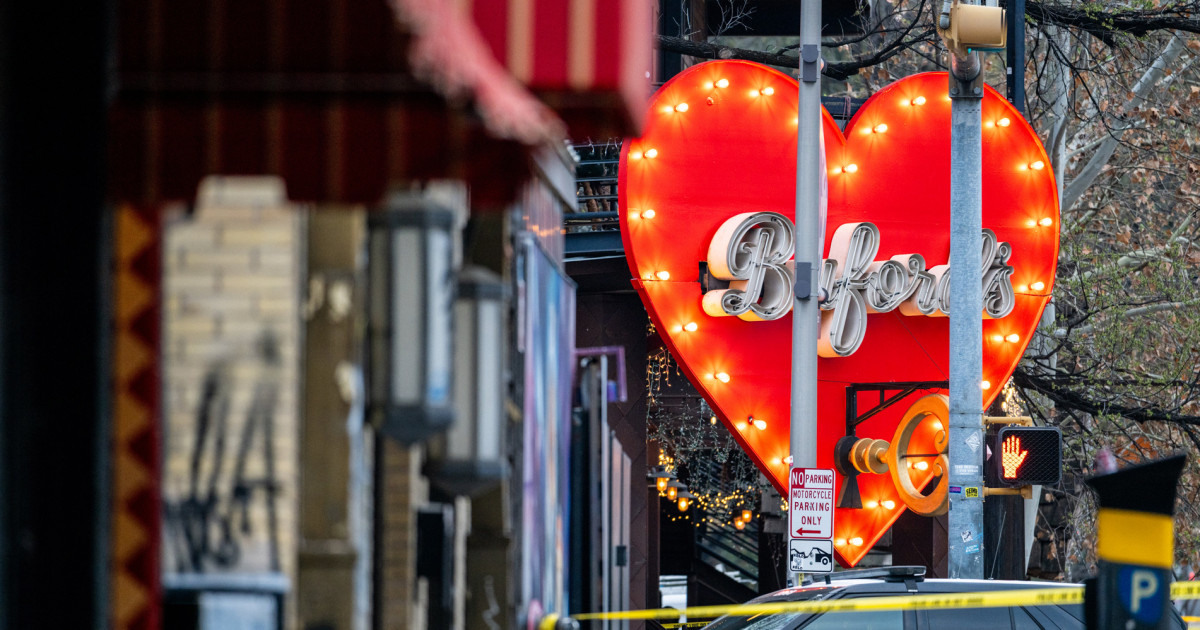
At the other extreme is the thoroughly detailed mass shooting in Austin, Texas, reported by NBC News. Here the tragedy unfolds almost like a movie script: the popular beer garden Buford’s in the city center, late at night, people celebrating birthdays, someone stepping out to get pizza across the street. At that moment 53-year-old Ndiaga Diagne, a native of Senegal and naturalized U.S. citizen, opens fire on bar patrons from a handgun inside a car with its hazard lights on, then exits with a rifle and continues shooting at bystanders. Two people were killed, 14 wounded, three in critical condition. Police, according to Austin Police Chief Lisa Davis, soon engaged the shooter in a shootout and killed him on West Sixth Street.
This piece adds a layer of political and ideological tension to the shooting. The attacker wore a sweatshirt reading “Property of Allah” and a T-shirt with Iranian flag motifs; the FBI, through agent Alex Doran, speaks of a “potential nexus to terrorism” but notes the investigation is in its early stages, and Diagne appears to be a lone actor without ties to state structures. A complex term for the general audience appears: “nexus to terrorism” — often used to describe any indicators suggesting motivation inspired by extremist ideologies or foreign conflicts. In other words, it doesn’t necessarily mean an organized terrorist plot directed from above, but a possible ideological link that still needs to be established or ruled out.
Federal and regional authorities take center stage in this story. The shooting, NBC News reports, was even relayed to former President Donald Trump. Texas Governor Greg Abbott issued a statement that, on the one hand, expresses condolences and promises that “this act of violence will not define us,” and on the other ties the incident to the international situation: he warns anyone who “thinks to use the current Middle East conflict to threaten Texans,” and announces increased patrols of energy facilities, ports, the border, as well as heightened cybersecurity measures and the use of drones to protect critical infrastructure. The subtext is a fear of “importing” conflicts and radicalization amid U.S. and Israeli military actions against Iran, which Abbott emphasizes resulted in the death of Iran’s supreme leader Ayatollah Ali Khamenei.
The political dimension also emerges in the domestic agenda: Senator John Cornyn praises the “life-saving quickness” of police and medics, while his potential challenger, Democrat James Talarico, quoted on X in the same NBC News piece, calls for action: he criticizes the habit of “asking God to solve a problem we’re not prepared to solve ourselves,” implying stagnation in gun control legislation. Here firearm violence becomes an arena for the old but still acute debate: where does the right to bear arms end and the state’s responsibility to ensure citizens’ safety begin?
The third story is the murder-suicide at Baptist Health Brookwood in Jefferson County, Alabama, described by WVTM 13. The actors here are 24-year-old Precious Johnson, who died of multiple gunshot wounds, and 19-year-old Kinat Terry Jr., who, according to the coroner, took his own life by gunshot, in what is characterized as a “domestic murder-suicide.” Police say the incident occurred in the hospital’s women’s center; when authorities arrived both individuals were already dead and there were no other victims. Baptist Health’s leadership said the hospital was locked down “out of an abundance of caution,” stressed there was no active threat to patients and staff, and that it is fully cooperating with the investigation.
The term “murder-suicide” itself requires explanation: in English-language criminology it denotes a situation where one person kills another (or others) and then immediately kills themselves. When the adjective “domestic” is added, it indicates a household, family, or close-relationship context: partners, ex-partners, family members. Such incidents are among the most tragic intersections of domestic violence and easy access to firearms. In this case the setting is especially symbolic: a hospital, a place associated with care and protection, becoming the scene of a fatal personal drama.
Looking at all three cases together, an important common narrative emerges: gun violence in the U.S. is not limited to one form or one type of space — it covers the street, entertainment venues, and medical facilities; it can be a targeted attack on an individual in Wilkinsburg, a mass attack on random people in Austin, or the result of destructive personal relationships in an Alabama hospital. Essentially, these are different facets of the same phenomenon: access to firearms multiplied by personal crises, mental illness, conflicts, and political or religious narratives yields predictably lethal outcomes.
One structural detail stands out in all three stories: an extremely short interval between the attack and emergency services’ intervention. In Wilkinsburg, WTAE reports that “medical personnel arrived first and transported the victim to the hospital,” which likely gave him a chance to survive. In Austin, as county emergency services chief Robert Chacko notes in NBC News, paramedics were already in the area and arrived within minutes, and police prevented an even larger massacre: student Nathan Como describes that if the shooter “had made it back into Buford’s,” where hundreds were sheltering, the consequences would have been far worse. In the Alabama hospital, staff also implemented a lockdown procedure, though there was no active threat by then; Baptist Health said this in a statement cited by WVTM 13. This shows that the American response system to such incidents is honed and effective, but it largely operates “on the aftermath” rather than preventing the outbreaks of violence themselves.
It is also noteworthy how different levels of authority and institutions frame these events and respond. In Wilkinsburg, only county police and local news outlets are involved, without political commentary or big names. In Austin, federal agencies (the FBI, Department of Homeland Security), national politicians, and major media like NBC News become engaged immediately; theories about terrorism, the shooter’s migration path (a tourist visa in 2000, a green card through marriage in 2006, citizenship in 2013), and some prior run-ins with the law are discussed. In Alabama, according to WVTM 13, the emphasis is on classifying the incident as “domestic” and reassuring the public that there is no further threat.
From this flows an important conclusion: the scale of attention and degree of politicization depend not only on the number of victims but also on possible interpretations of motive. Where terrorism, immigration, and international politics can be invoked, there are immediate spikes in interest, heightened rhetoric, and debates about border and infrastructure security. Where the case is a more typical U.S. street crime or a domestic conflict — even if it results in multiple deaths — public reaction is substantially quieter. This creates a paradox: the most sensational, “spectacular” attacks shape the perception of threat, even though statistically the lion’s share of firearm deaths is linked to everyday conflicts, domestic violence, and individual acts of aggression, like those described by WTAE and WVTM 13.
Another through line in all three stories is mental health and emotional crises. In the NBC News piece sources directly mention a history of mental illness for Ndiaga Diagne. In the Alabama murder-suicide details aren’t disclosed, but such incidents are often linked to emotional breakdowns, jealousy, controlling behavior, and a sense of “ownership” over a partner, compounded by access to a firearm. The Wilkinsburg case contains little information about motive, but the fact the victim was “shot multiple times” could indicate either personal animosity or a criminal settling of scores. In any case, behind each episode is a human conflict or internal fracture that, with different access to weapons, might have ended as a scandal, a fight, threats — but not fatal shootings.
It’s also important to understand how such events change everyday behavior and the architecture of public spaces. An Austin student told NBC News that at first people didn’t take the shots seriously — in a night city noises can be mistaken for fireworks or other sounds until police arrive and panic sets in. In the Alabama hospital an immediate lockdown is already standard procedure. Bars, universities, schools, hospitals, and churches routinely rehearse active-shooter plans; surveillance cameras, metal detectors, and staff training have become the invisible background of urban life. What a couple of decades ago was considered exceptional is now seen as a scenario to always be prepared for.
If we try to extract key takeaways from the combination of these three stories, they are as follows. First, gun violence in the U.S. has become a systemic, multifaceted problem that goes far beyond isolated terrorist acts or “criminal disputes.” Wilkinsburg, Austin, and Brookwood show three different types: a street attack, a mass shooting, and a domestic murder-suicide, but they merge into a common picture of constant threat. Second, state and public responses still focus either on the loudest, most politically charged events (as with the possible terrorism link in Austin, covered by NBC News) or on swift and competent action after an attack begins, while preventive measures — from limiting access to weapons to mental health services and domestic violence intervention — remain contested and unfinished policy areas. Third, at the level of everyday experience this means any seemingly safe place — a suburban street, a popular bar, a hospital’s women’s center — can potentially become a shooting scene, and people must live with that knowledge.
Finally, one cannot ignore how the language media use to describe such events shapes a certain perception of reality. In the WTAE item the Wilkinsburg shooting reads almost like a technical bulletin: facts, time, address, victim’s condition, no arrests. In the WVTM 13 piece the key emphasis is “no active threat” and “hospital on lockdown,” i.e., calming the audience is the priority. The NBC News report adds dramaturgy, the shooter’s biography, political reactions, and an international context. But in all cases the presence of firearms is treated as a given, as something so habitual it almost doesn’t need explaining. That, perhaps, is the most troubling trend: normalization of a constant risk, where shooting reports become not exceptions but typical news feed content.
Thus, the three separate incidents described in the publications by WTAE, NBC News and WVTM 13 form a coherent narrative about a country where cries of “Oh my God!” amid another burst of gunfire, hospital lockdowns, and politicians congratulating police for “instant response” have become part of a new everyday language. And while the political debate stalls between calls to “pray” and statements that “we must act,” this new “normal” — the constant risk of gun violence — remains the main, invisible protagonist of American daily life.