In five news bulletins from different areas, the same logic is at work: an external political crisis can quickly push up commodity prices and intensify uncertainty, but it doesn’t always immediately break the internal economy. As the United States increases its military presence in the Middle East in the wake of strikes on Iran, the labor market in the country shows unexpected resilience: the number of initial jobless claims has fallen to the lowest level since 1969. Against this backdrop, separate regional and corporate stories — from Eli Lilly’s massive pharma project in Virginia to disputes over the power transmission line needed to launch it — suggest that big investments are still moving forward, but increasingly run into constraints tied to infrastructure, energy, and political decisions. As a result, the picture that emerges is of an economy that is still holding up, but growing ever more dependent on the cost of energy, the availability of capacity, and the government’s ability to make decisions quickly.
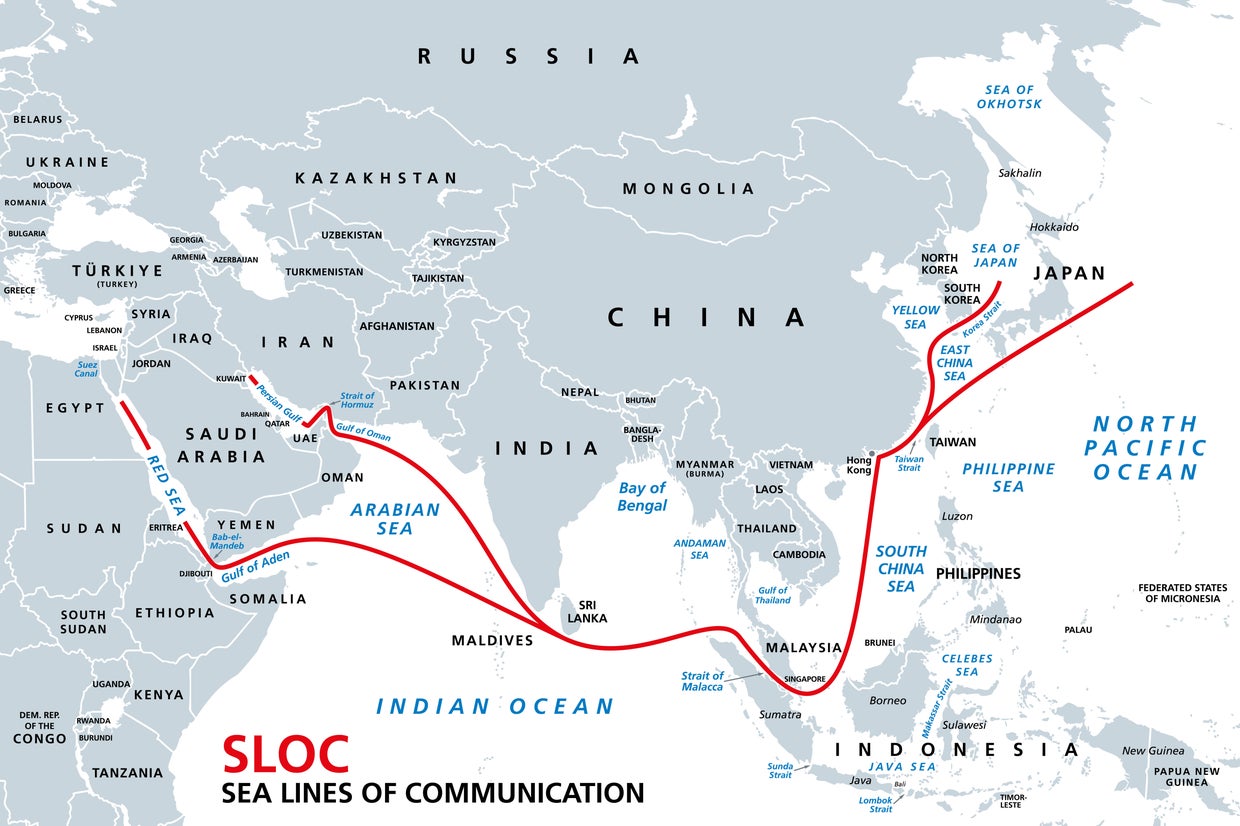
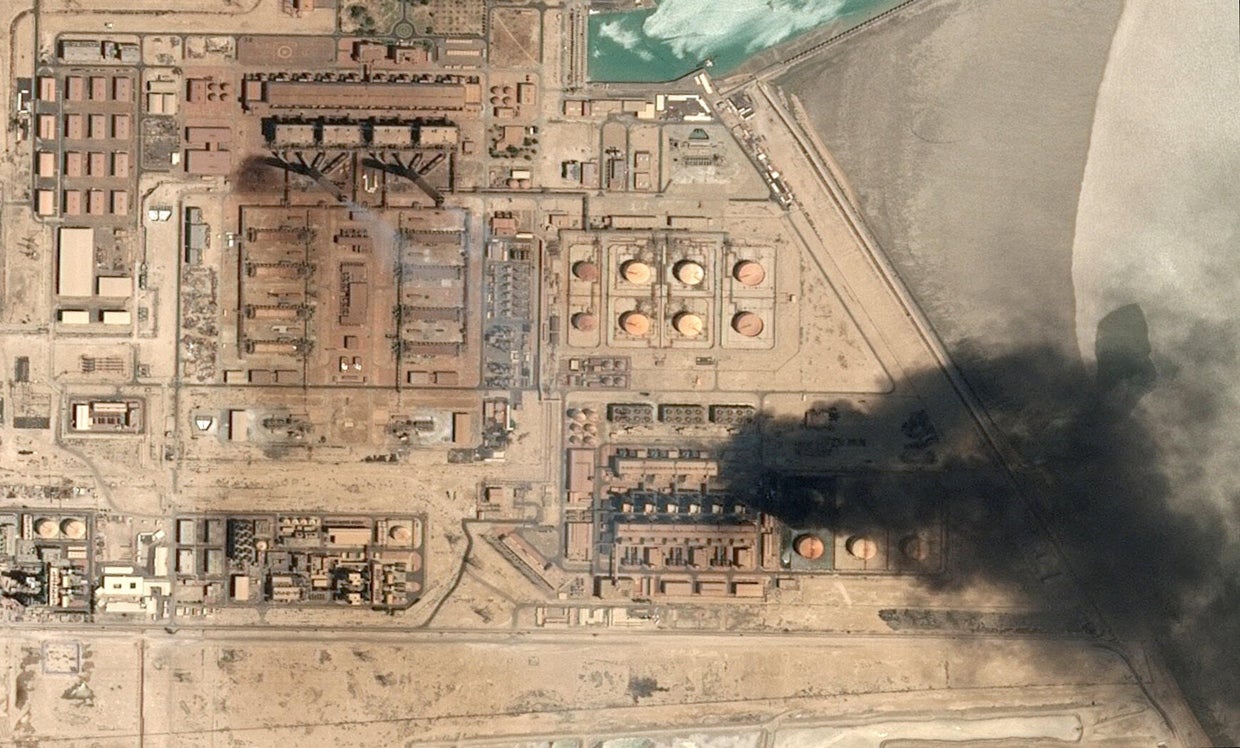
The main storyline in these materials isn’t simply “war,” and it isn’t only “unemployment benefits statistics.” It’s a test of the American economy’s resilience at a time when geopolitical risk is beginning to feed through into fuel prices, investment plans, and potentially employment. In a report from CBS News, the focus is on the conflict expanding and the United States boosting its military presence in the Middle East — a development immediately tied to risks for oil flows and shipping routes. Even a brief rundown — “U.S. bolsters military in Middle East amid 12th night of strikes on Iran” — sets the tone: the market receives a signal that the crisis is not local and could affect global supply chains, especially if tensions spill over toward the Strait of Hormuz or the Red Sea, through which critical energy supplies and goods pass.
That’s why the news from ABC News looks paradoxical at first glance. While oil prices are rising and analysts warn about the risk of an energy shock, the number of initial jobless claims in the United States fell to 187,000 — “the fewest number of weekly applications since the week ending Sept. 6, 1969.” This isn’t just a strong indicator; it’s a sign that companies are not rushing to cut jobs en masse. Still, ABC News stresses an important caveat: “The economic crisis caused by the energy supply shock is not over yet,” and goes on to explain that a prolonged war and higher energy prices could gradually push businesses to reduce spending and headcount. In other words, today’s labor-market stability isn’t a guarantee — it’s more of a delay.
What’s especially important is that in the ABC News piece, economic resilience isn’t presented as endlessly solid. It says plainly that rising oil prices — to more than $91 per barrel — and the return of the average gasoline price above $4 per gallon are already squeezing consumers’ wallets and companies’ costs. This is a typical transmission of an external shock into the domestic economy: first, the cost of fuel and logistics rises; then business margins get squeezed; and only after that do layoffs become possible. In this sense, the labor market always lags behind the price shock. That’s why low weekly jobless claims don’t erase the concerns — they only show that an immediate collapse has not yet occurred.
The clearest example comes from a regional story in Richmond BizSense. Eli Lilly paid $38.39 million for 227 acres of land in West Creek to move closer to building a massive $5 billion pharmaceutical complex. In scale, this isn’t just a corporate deal, but an infrastructure and industrial project of national importance: a 1 million-square-foot plant is expected to produce bioconjugates and monoclonal antibodies to treat cancer and autoimmune diseases. The company promises 650 permanent jobs, and describes the facility as “first dedicated, fully integrated, active pharmaceutical ingredient and drug product facility for cancer, autoimmune conditions and other advanced therapies.”
Here, what matters is not only the investment itself, but how dependent it is on external conditions. As Richmond BizSense notes, the project is running up against the need to bring in power: at hearings, a representative from the local economic development board said directly, “we don’t have power to provide to (Eli Lilly).” That’s a telling line because it shifts the conversation from corporate publicity to basic economics: a modern plant is built not only on land and capital, but also on access to electricity, substations, transmission lines, and rights of way. In other words, industrial growth can no longer be planned separately from energy infrastructure.
The story about the transmission line needed for Lilly also highlights another important trend: large investments create competing interests at the local level. Dominion Energy is offering multiple route options, but the dispute isn’t about a technical detail — it’s about whose economic interests will be affected more. One option would cross through the Asgard Broad Street Properties project, which argues that without route adjustments, development of the site would become “unviable.” On the other side, local business Gardener Nursery opposes changing the route because of the impact on itself. In situations like this, infrastructure stops being neutral and becomes a field for reshuffling the future value of land, building density, and investment attractiveness.
The recommendation by the case’s expert, hearing examiner Mathias Roussy, to choose Route 3 is also interesting not only as an engineering solution, but as an economic compromise. He writes that the project’s need is driven by “the large projected load of a new manufacturing facility in West Creek Business Park announced by Eli Lilly,” as well as rising load in Goochland County. So this industrial megaproject requires not abstract “support,” but a literal expansion of the region’s energy framework. At the same time, the focus on Interstate 64 and Route 288 shows a logic of minimizing conflicts with private property and existing commercial sites. The planned cost of the project — about $98 million, including $87 million for the line itself — underscores that even the “tie-in” to the plant becomes a major investment undertaking.
Taken together, all these materials point to an important reality: the U.S. economy is now operating under dual pressure. On the one hand, domestic demand and the labor market remain resilient. Weekly jobless claims are just 187,000, and the number of people continuing to receive benefits is also at historically low levels. On the other hand, external shocks from the Iran conflict quickly raise the cost of energy, which can hit logistics, production costs, and corporate investment decisions. In this environment, large companies like Eli Lilly continue investing in production, but their projects are becoming increasingly dependent on permitting procedures, grid infrastructure, and electricity prices.
There is also a broader takeaway. Even a war far from American factories and offices still finds its way into the economy through oil, gasoline, and electricity prices. This isn’t an instant collapse — it’s a slow squeeze. While the labor market is holding up, businesses are already feeling the pressure. If the energy shock drags on, it can gradually change how companies behave: hiring freezes, shifting investments, cutting costs, and revising production plans. That’s why today’s unemployment data should be read not as a sign of complete normalcy, but as a snapshot of a moment when the consequences of the global crisis have not fully unfolded yet.
The terms that are especially important in these materials are worth clarifying separately. “Initial jobless claims” is a weekly indicator often used as a quick barometer for layoffs: more claims generally means companies are cutting workers more often. “Four-week moving average” is an averaging of data over a month that helps smooth out random fluctuations and reveal a trend. “Megawatt” is a unit of power that measures the grid’s ability to supply large industrial facilities; for a pharma plant, it’s a critical parameter. “Bioconjugates” and “monoclonal antibodies” are complex biopharmaceutical drugs used in oncology and for autoimmune diseases; producing them requires high technological precision and stable power supply. “Right of way” for a transmission line means the legal authorization to use a piece of land for infrastructure, even if it doesn’t belong to the utility company itself.
The key insight here is that employment resilience can last longer than it seems, but it doesn’t eliminate growing structural risks. The second takeaway: big industrial investments in the U.S. are already impossible without a large-scale energy overhaul on the ground. Third: geopolitical crises are no longer “external” to the domestic economy — they feed through instantly into fuel, logistics, and corporate decisions. And finally, these stories show that real economic security today is determined not only by the number of jobs, but by whether the country has the infrastructure to create and sustain those jobs.
Sources: CBS News, Richmond BizSense, ABC News.