The main trend across all three articles is that Black Friday sales are increasingly stretching beyond a single day. Retailers are rolling out discounts early, giving shoppers more time to choose but also exposing them to an overwhelming number of offers and artificial urgency. The teams at Mashable, What Hi-Fi? and IGN help readers navigate the flood, highlighting deals on tech, audio equipment, TVs, games and physical media. Their roundups differ, though: some emphasize the breadth of choice, while others focus on expert assessments of specific products and whether the savings are genuine.
In Mashable’s roundup of early deals, the sale is presented as a chance to buy popular gifts and tech ahead of time, without waiting for the official Black Friday, which falls on November 27 in 2026. Featured products include a MacBook Air with an M5 chip for $989.10, Bose QuietComfort headphones at 53% off, AirPods Pro 3 for $149, and QLED and OLED TVs, with some models marked down by as much as half. The roundup also mentions the 2024 Kindle Paperwhite for $129.99, Amazon smart devices, the Ninja Crispi air fryer, LEGO sets, the Nintendo Switch 2 console and Pokémon products.
Mashable openly states that its editorial team earns an affiliate commission when readers buy products through its links. That does not negate the value of its recommendations, but it is worth bearing in mind: the article is both a roundup and part of the publication’s commercial model. The authors say they track record-low prices, the first discounts on new products and notable markdowns on previous-generation models. The examples themselves show why it is worth comparing more than just the discount percentage: the actual price, model and age all matter. For instance, the editors recommend the 2024 Kindle Paperwhite rather than the latest version, noting that an older model may be the more sensible choice for many shoppers.
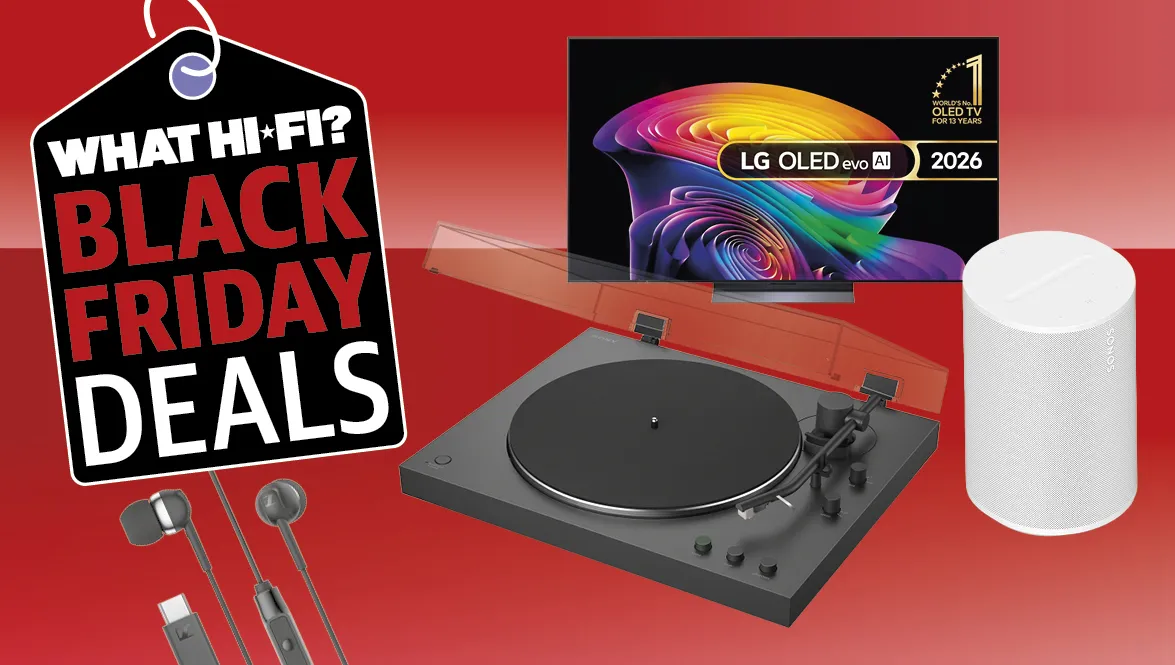
What Hi-Fi?’s roundup draws on its expertise in audio and video equipment: its editors promise not just to find discounts, but also to flag deals that only look appealing. In the available excerpt, a promotion from HMV gets particular attention: two films in collectible Steelbook cases for £40. The offer includes more than a hundred titles, including Alien: Romulus, which costs £35 on its own. The deal shows that Black Friday is about more than electronic devices: discounts and bundles also extend to physical media and collectibles.
IGN’s article on early gaming deals highlights a particular challenge in the gaming industry: consoles, games and accessories are getting expensive, while major platforms’ sales campaigns stretch across November and often continue into December. The author notes that early prices often match the offers available on Black Friday itself, but popular products may sell out sooner. Among the top offers is a Nintendo Switch 2 bundle with Mario Kart World and a three-month Nintendo Switch Online subscription for $499.99, down from $549.99. It is the first official discount on the console, which launched in June 2025, making it a particularly notable exception to the small markdowns typically seen on gaming hardware.
Gaming deals also include steep discounts on games. For example, Ghost of Yotei for PS5 is on sale for $34.99, down from $69.99, while Final Fantasy VII: Rebirth for Switch 2 costs $24.99, down from $49.99. IGN specifically points out that some of these offers apply only to physical copies, including the discount on Ghost of Yotei. So whether a buyer has a disc drive may directly determine whether they can take advantage of a deal. Discounts on controllers and some digital games are more modest; the author presents these less as exceptional sales and more as reasonable opportunities to buy now.
Taken together, the articles show how the early start to sales is changing shopping habits. Black Friday is becoming not the start of discounts, but the culmination of a long shopping period in which deals appear gradually and may disappear before the official date. This is convenient for consumers: they can spread out their purchases, compare products in advance and avoid trying to make every decision in a single day. But the model also has an opposite effect, creating a constant sense that a good price must be snapped up immediately. IGN explicitly warns of a “false sense of urgency,” while Mashable advises shoppers to start early to offset price increases over the year.
The practical takeaway from these articles is to judge a purchase by its value, not by the volume of the promotional pitch. A discount percentage alone says little about whether a deal is worthwhile: the product’s regular price, previous lows, model generation, features and terms of sale all matter. A discount on flagship tech may be substantial, but a previous-generation device may better fit the budget; a small price cut on a hard-to-find console may be more meaningful than a steep markdown on a game that has been widely available for a long time. Finally, physical editions of games and collectible films can offer advantages not found in digital stores, though they require compatible hardware and may be limited to available stock.
The articles use several terms that help explain the differences between products and discounts. QLED and OLED are two types of TV display: QLED uses quantum dots to boost brightness and color, while OLED produces images with self-illuminating pixels, allowing for deep blacks. ANC stands for active noise cancellation in headphones: microphones pick up ambient noise, and the electronics generate a sound signal that partially cancels it out. A Steelbook is a collectible metal case for a Blu-ray or 4K Blu-ray disc. A “physical copy” of a game is a disc or cartridge that the buyer receives separately from a digital download; some prices and offers are available only in this format.
The point of early sales is not that every purchase made before November 27 is automatically a better deal, but that they provide a longer window for comparing offers. Mashable covers a broad range of home appliances and gifts, What Hi-Fi? says it checks the quality of audio and video products, and IGN examines the specifics of gaming discounts and physical editions. Together, these articles offer a more useful picture than a simple list of discount percentages: the best deals tend to be those where a genuine need, a verified price and the right version of a product for the individual buyer all come together.