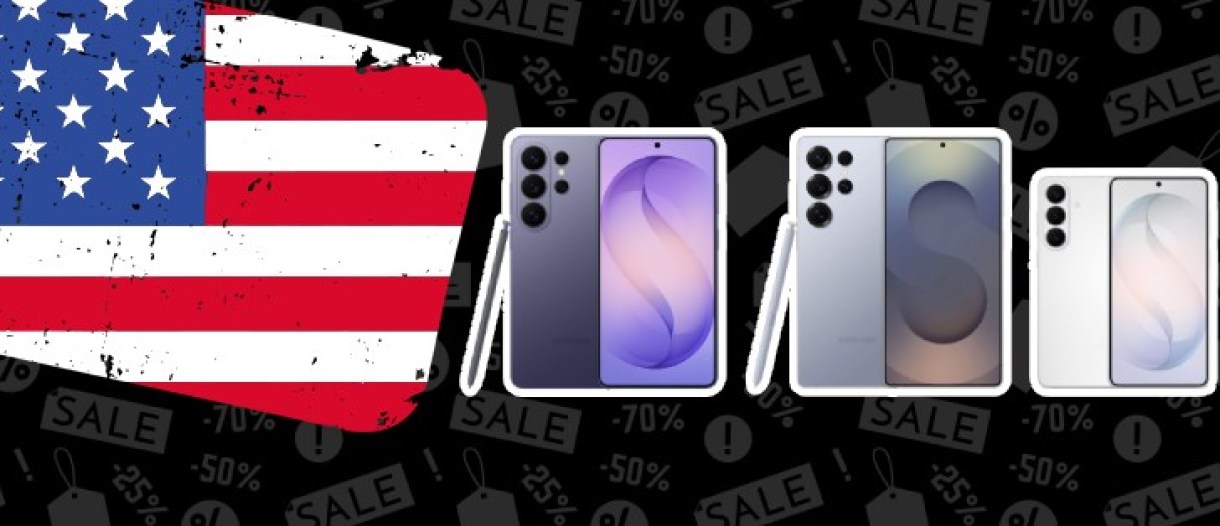
There are still several weeks to go before Black Friday on November 27, 2026, but sales have already begun: stores are cutting prices on Apple and Samsung products, while Best Buy is rolling out a series of major promotions. The picture is mixed: some devices are already seeing record discounts, but the biggest offers on smartphones often depend on trading in an old phone, signing up for a plan, or receiving the discount gradually through monthly bill credits.
The main trend in early sales is that shoppers are offered several ways to save, rather than one universal discount. Some products have direct price cuts, while the “savings” on others depend on meeting carrier requirements or joining a loyalty program. So it’s worth comparing not just the advertised price, but also the final cost, restrictions, and how long it will take for credits to be applied.
According to MacRumors’ roundup of early Apple deals, some discounts have already reached record lows. The Apple Watch Ultra 4 is selling on Amazon for $699.99, down from $799—matching its previous lowest price, even though the model only launched in September. Best Buy has cut the price of the previous-generation Ultra 3 to $549 from $799, while the AirTag 2 is down to $23 from $29. The Mac mini starts at $779, and the Mac Studio with an M5 Max, 36GB of memory, and a 512GB SSD is $2,299, down from $2,499.
MacBook Air discounts are less record-breaking, but still substantial: Amazon is taking about $199 off most M5 configurations. The 13-inch model with 512GB of storage starts at $1,099.99, while the 15-inch model starts at $1,299.99. The 15-inch laptop with 1TB of storage is selling for $1,549, down from $1,799—a new low, according to the publication. AirPods Pro 3 and AirPods Max 2 are available at prices close to their second-lowest recorded levels, with discounts of up to $100.
The biggest advertised discounts on the new iPhones come from carrier promotions and require a careful read of the fine print. T-Mobile is offering up to $1,200 off the iPhone 18 Pro, Pro Max, and iPhone Duo with an eligible trade-in and qualifying plan. AT&T is offering similar amounts, but the discount depends on the plan and the estimated value of the phone being traded in. For example, the maximum $1,200 discount on the iPhone Duo requires a Premium 2.0 plan or higher and a trade-in device worth at least $230; the discount is lower on cheaper plans. In both cases, the discount may be paid out as bill credits over 36 months. Best Buy is matching carrier offers when customers activate through AT&T or Verizon. In other words, “up to $1,200 off” does not necessarily mean an immediate price cut: the buyer takes on the plan requirements and the obligation to stay enrolled long enough to receive all the credits.
Another source of discounts is Best Buy’s sale, which has now begun. 9to5Toys’ coverage of the store’s sale highlights a nearly $100 price cut on the Apple Watch Ultra 4 and a $50 discount on AirPods Pro 3. The campaign is split into several stages, including new “doorbusters”—limited-time or limited-quantity deals. Plus and Total members can also get a $25 certificate with purchases of $500 or more, in addition to the usual 1% reward. This can be useful for regular customers, but it is not the same as a direct discount: the certificate can only be used according to the store’s rules.
Samsung’s deals are less about a holiday campaign and more about price cuts on individual models. In GSMArena’s roundup of Galaxy deals, the 256GB Galaxy S26 Ultra has dropped from $1,105 to $1,000; it previously fell as low as $950. The version with twice the storage costs another $150. The Galaxy Z Fold8 is also down by $100: the 256GB base model costs $1,600, while the 512GB version is $1,800. These are still expensive devices, but the trend is notable: even foldable flagships and conventional premium smartphones are drawing closer in price.
The comparison between generations and device tiers is particularly interesting. GSMArena considers last year’s Galaxy S25 Ultra a more appealing buy than the current S26+: it is slightly cheaper, but offers a more advanced camera system, with a 200MP main camera and two telephoto lenses, while the S26+ has a simpler camera setup. The S25 Ultra is larger and heavier, however, and its processor is older. The comparison shows why “newer” doesn’t always mean “better value”: a discount can make a previous-generation flagship more competitive than a newer mid-tier model. The Galaxy S26, on the other hand, has gone up in price since the previous week, so the publication advises those looking specifically for a compact phone in the series not to rush into buying one.
Samsung’s Galaxy S26 FE is positioned as a more affordable alternative to the S26+, but choosing it involves significant trade-offs. The 8GB/256GB version has a more substantial discount, but it has 4GB less RAM, its Exynos 2500 processor lags behind the Snapdragon 8 Elite Gen 5 in performance and energy efficiency, and its display is more basic: 1080p+ LTPS instead of the S26+’s 1440p+ LTPO. The price gap between the two has narrowed to $110, changing the value equation: with such a small saving, the higher-end model may be the more sensible choice.
It’s worth understanding a few terms that affect the real value of these offers. “Record low” means the lowest price a retailer or publication has recorded for a particular product, but it does not guarantee the price won’t go lower. Trade-in means exchanging an old device for a discount; the savings depend on its model, condition, and the program’s rules. Bill credits are discounts spread across monthly payments, not an immediate refund of the full amount. Finally, labels such as LTPO and LTPS refer to display technologies: LTPO generally allows the refresh rate to be adjusted more flexibly and can save power, while actual image quality depends not only on the panel type, but also on the resolution and device settings.
Taken together, these reports show that early Black Friday is not a single moment when prices drop across the board, but an extended campaign with different kinds of offers. Headphones, trackers, watches, and computers are already available with direct discounts, some of which match previous lows. The biggest savings on iPhones depend on carrier plans and trade-ins, while the value of Android flagships depends on comparisons involving not just price, but also generation, cameras, displays, and performance. With better offers still possible before the end of November, buying early makes sense mainly when a product has already hit a record low or is needed now. Otherwise, it’s worth comparing the total cost, checking the terms of the deal, and remembering that today’s discount may not be the best of the season.