Below is an overview of three very different pieces of news at once, but they share one important theme: in conditions of limited time and high uncertainty, decisions are made under pressure from the circumstances. In one case, it’s the baseball trade market—teams rushing to strengthen themselves before the deadline and forced to pay ever-higher prices for a scarce resource. In another, it’s a brief transportation emergency, where information is updated quickly and within a few hours the situation shifts from a complete road shutdown to the road reopening. In the third, it’s an obituary for Vincent Pastore—a reminder of how fast public memory changes: a person becomes a symbol of a role, and then their biography is assembled from fragments, interviews, and colleagues’ recollections. In the end, all three texts point to the moment when “now” matters more than “later”: MLB clubs must act immediately, road services need to respond quickly, and the cultural industry must rapidly sum up a life and career.
The main and most meaning-dense story is ESPN’s piece on the last surge before the MLB trade deadline. Here, especially, you can see how the trade market turns into a game of scarcity. The springboard for the entire logic is the deals surrounding Tarik Skubal: ESPN directly writes that his move to the “Los Angeles Dodgers” late Saturday evening “held up the massive market for starting pitchers,” meaning it effectively delayed the formation of the entire starting-pitcher market. Buster Olney describes the following hours almost grotesquely: “it’ll feel like Oprah handing out goodies to an audience: And you get a starting pitcher, and you get a starting pitcher…”. The point isn’t the joke—it’s that scarcity finally starts giving: several teams—Cubs, Braves, Phillies, Rays, Brewers and others—are supposed to each get a pitcher, and in some cases, two.
Jeff Passan, in turn, shifts the conversation from the emotional level to the economic one. His central point is that prices are ultimately forced to go down, “because they have to.” Over the course of the week, teams that wanted to add pieces complained about inflated asks, while sellers understood that the market itself helps them: there are few options, many buyers, and therefore you can “shoot high.” But by the deadline, Passan emphasizes, “posturing and information-gathering needs to end and deals need to win the day.” That is the core deadline mechanism: the less time remains, the less room there is for performative trading, and the higher the likelihood of deals that yesterday still seemed like bad bargains.
From this grows a second important line—that not all trades are equally important, and the loudest ones aren’t necessarily the most influential. Olney notes that Milwaukee has “The Miz”—Jacob Misiorowski—and that means that if the Brewers want to truly threaten the “Dodgers,” the starting pitcher they acquire could become the decisive figure. The wording is precise: the future newcomer doesn’t have to be a Skubal-level star, but he could be that “Robin to The Miz’s Batman”—a functional, yet critically important second option, without which the postseason rotation can’t handle the workload. In the playoffs, these kinds of players often matter more than their media profile: a series isn’t won by one big name—it’s won by how well all the links are balanced.
Passan, however, broadens the perspective and reminds readers that in the current season, the most meaningful deals might not happen in the National League—where the leaders are already pulling away—but in the American. This is crucial: if NL division races are already “sure trending toward” coming to an end, in the AL the line between division leaders and wild-card contenders is almost erased. Hence the special aggressiveness: Yankees want to add a reliever and a right-handed bat, Rays continue operating after the Freddy Peralta deal, the Red Sox are looking for a shortstop, and the Astros, Cubs, Phillies, and others plug specific holes. In this configuration, the deadline becomes not just an exchange of assets, but a way to affect the entire balance of power in the league.
If you look at individual teams, ESPN’s text especially well shows that the deadline isn’t an abstract “strengthening the roster,” but targeted work on painful weak points. According to both insiders, the Phillies need a starter and a reliever; the Yankees need a reliever and a right-handed hitter, and then—probably—a catcher as well; the Cubs need “pitching, pitching and more pitching”; the Diamondbacks need a first baseman; the Red Sox need a shortstop. This specificity matters: clubs aren’t trying to “get better in general”—they’re finding a player for a particular problem and within a particular window of time.
Philadelphia is especially intriguing in the piece. Olney says that Bryce Harper has already said publicly that the team needs help, which means he wasn’t only talking about the Phillies, but essentially about the Braves, Yankees, Brewers, Rays, Cubs, and everyone else who is planning to take a step forward. For Philadelphia, this turns into a question of the front office’s reputation: Davy Dom-browski is known as a leader unafraid of big decisions, and Olney even allows that the Phillies could “shock us.” The scenario of moving Trea Turner to the outfield to strengthen defense at shortstop is an example of how the deadline can trigger not cosmetic but structural changes in the lineup.
Another separate topic is short lists of available players and the high price of controllable players. Passan names CJ Abrams, Zach Neto, Otto Lopez, Adley Rutschman, Adrian Morejon, and others. Here it’s important to explain the term: a controllable player is one who remains under the club’s contractual control for several more years—not just for the remainder of the season. That’s why his price is sharply higher than for a “rental” player—someone who will soon become a free agent. That’s also why, if the Red Sox decide to make a big move, they may end up paying particularly dearly for a shortstop. But the potential upside is higher too: such a trade can fill a position not for a month, but for several seasons.
Yet another noticeable line is the possibility of a partial “sell-off” by teams that aren’t meeting expectations. Seattle, according to Passan, is considering whether it would be better to partially unload and capitalize on demand for right-handed hitters, and is therefore listening to offers for Randy Arozarena. Giants, Reds, Mets, Rangers, Padres, Cardinals, Nationals, Marlins—all are mentioned as teams with varying degrees of readiness to shed players. This shows that the deadline is not only a buyers’ market, but also a market of accepting reality. When a season isn’t going to plan, clubs begin converting current players into future flexibility, prospects, and payroll space.
Against this backdrop, the news about Highway 82 near Carbondale looks almost like a micro-model of the same logic: the incident abruptly halts traffic, then authority and services respond, and after a few hours the road is open again. In the Post Independent text, it’s first stated that Highway 82 is closed in both directions between mile markers 11.5 and 15.7, “from the Carbondale traffic light to Catherine Store,” and later an update says that travel has been restored. It’s a simple item, but it reflects the same value of timely information: first, an accident makes the stretch impassable; then comes a notice from the Garfield County Emergency Communications Authority, and the public receives a signal that the restriction has been lifted. These updates are valuable precisely because of their speed, not because of interpretation.
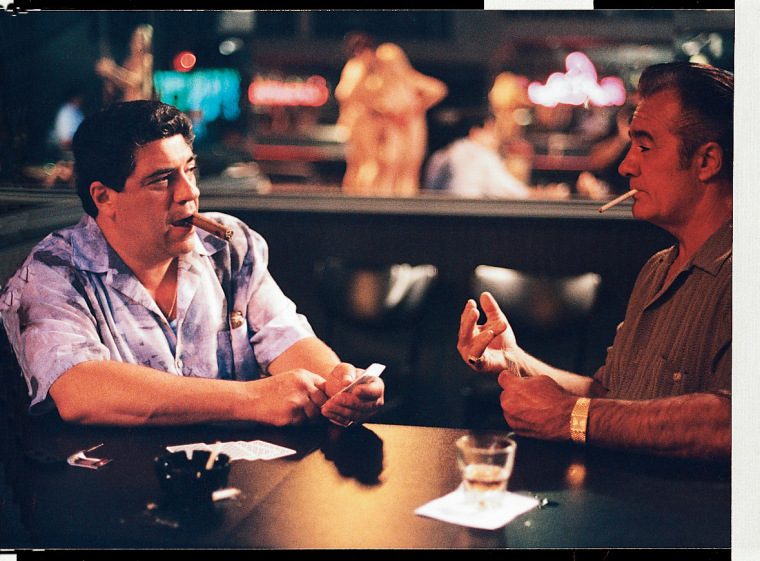
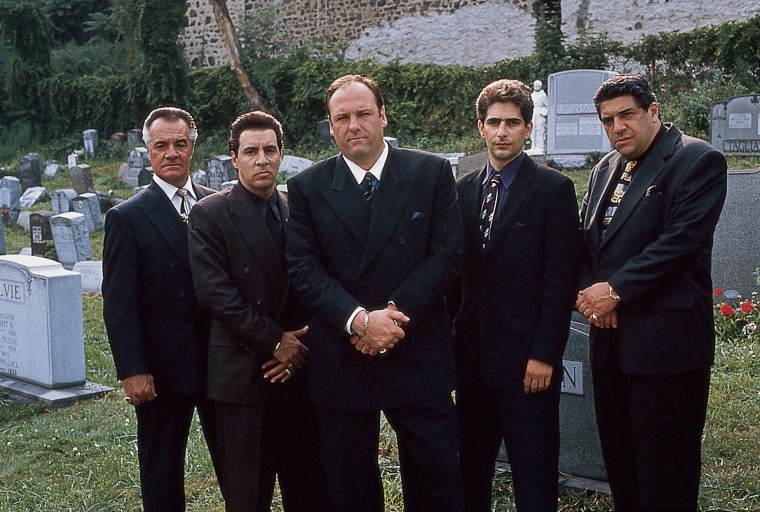
NBC News’ obituary for Vincent Pastore, in turn, shows a different kind of ending—not a trade and not a road closure, but a human biography. Pastore, known most of all as Salvatore Bonpensiero, or Big Pussy, in The Sopranos, died at age 80. What matters here isn’t only the death itself, but how the piece assembles the actor’s image: he grew up in the Bronx, served in the Navy, studied at Pace University, worked in the nightlife industry, then entered the world of film and television, and eventually became permanently associated with New York criminal stories. NBC quotes his representative, who emphasizes that Pastore was “so much more” than just a famous character, and colleagues remember him as “kind hearted brother,” “a beautiful soul,” a man who was patient with fans and generous to those around him.
This is also important in a cultural sense: public identity often gets compressed into a single vivid role, but after death, a fuller portrait emerges. Pastore was not only an actor from Sopranos, but also a musician, who led the Renegade Theater NYC project, performed with the Gangster Squad, appeared in other crime dramas, and his life turned out to be tightly intertwined with New York—both as a place and as a cultural environment. The way he’s remembered by Steven Van Zandt, Michael Imperioli, and Lorraine Bracco adds not just a mourning layer, but almost a documentary one: Pastore’s career is part of television history that, in the late 1990s, changed perceptions of the mob-drama genre.
If you combine all three pieces into one big picture, it becomes clear that they all talk about the cost of time. In MLB, time is converted into money, opportunity, and a shot at the title: a delayed decision can cost a playoff spot, and a successful trade can change the course of a season. On the road, time is measured in minutes until the highway reopens, and the value of the news is that it lets people adapt immediately. In Pastore’s story, time turns a career into a legacy, and a living person into cultural memory. In each case, there is scarcity: a scarcity of pitchers, a scarcity of passage, a scarcity of the very ability to relive an ended life. And in each case, the system responds as it knows how: the market accelerates, the road service updates the status, the media records biographies and the voices of those who knew the person personally.
The key trend here is the growing dependence of major decisions on the rarity of a resource. In MLB, this is especially obvious: “starting pitcher” has become the scarcest commodity, and therefore the deadline market looks like a series of near-forced purchases. Another tendency is the increasing role of teams that don’t just buy, but can identify exactly where their own weakness will become critical in October. And finally, there is the broader takeaway: in sports, in news about emergencies, and in cultural obituaries, publicness is built around the moment when the past becomes an accessible version of the present. That’s why these texts read not as a set of unrelated messages, but as a chronicle of how societies, teams, and individuals cope with the inevitability of time.
Complex concepts here are worth explaining separately. The MLB trade deadline is the cutoff after which clubs can no longer make trades for players for the current season; essentially, it’s the final chance to quickly reshape the roster. A rental player is someone acquired for the short term without long-term obligations. A controllable player is the opposite: someone who still has several years of club control remaining under contract, which is why he’s more expensive. A wild card is a playoff spot for a team that didn’t win its division but qualified via the overall standings. A no-trade clause is a contract provision that gives a player the right to reject a trade; that’s why the mention of Jacob deGrom is especially important—because even with market interest, such a deal can’t be automatic.
In short, ESPN shows a market where shortages of starting pitchers and shortstops force clubs to act quickly and pay dearly; Post Independent shows how timely information changes everyday logistics; NBC News reminds readers that cultural legacy is built out of roles, voices, and memories. All three texts, in their own way, say the same thing: in a moment of uncertainty, the winner is the one who can turn information into action faster than anyone else.
Sources: ESPN, Post Independent, NBC News.