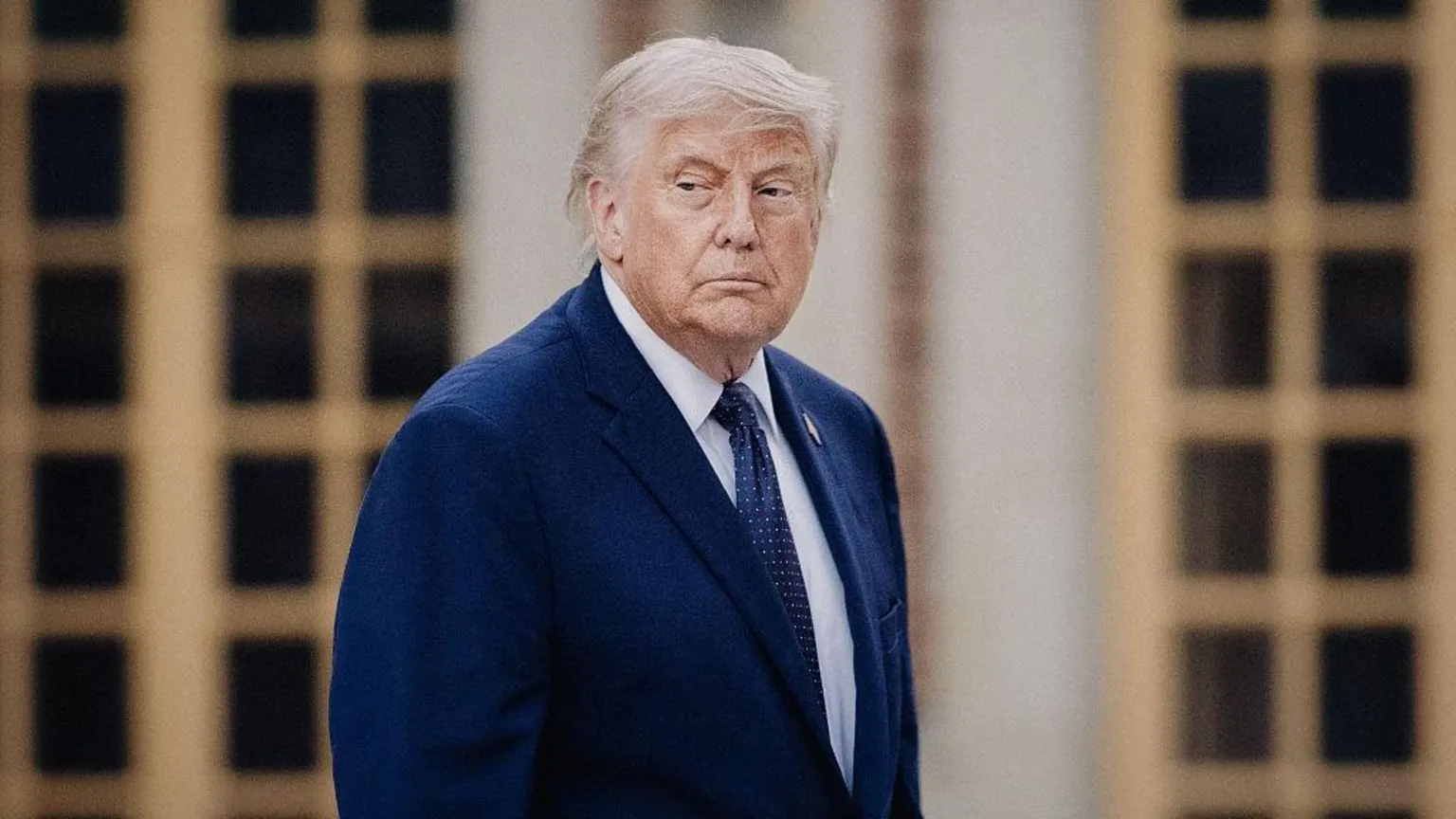
In all three pieces—on Washington, on NATO, and on an earthquake in Northern California—one and the same theme comes to the fore: how large systems respond to a sudden shock. It may be a military, diplomatic, or natural blow, but the logic behind it is surprisingly similar. Where there is tension, any disturbance instantly tests the strength of ties, the ability to coordinate, and readiness for the consequences. In one case, it is about fissures within U.S. politics around Iran and the president’s powers. In another, it is about NATO allies’ nervous reaction to Donald Trump’s unpredictability. In the third, it is a very literal jolt of the earth that tested local infrastructure and people’s everyday lives.
If you put these stories together into one picture, you get a story about the fragility of order. CNN describes how after the dispute over a war with Iran, Trump is still “seething” at allies who did not join him, while NATO chief Mark Rutte travels to Washington hoping to “smooth out” his irritation ahead of a summit in Turkey. Against this backdrop, BBC reports an important political shift: for the first time, Congress has adopted a measure on war powers, in effect marking a break with Trump on Iran. And KCRA shows an entirely different level of crisis—a 5.6-magnitude earthquake that disrupted shops, power lines, water mains, and possibly gas networks in Mendocino County.
What links these events is that in all cases the system is tested for resilience. In politics, it is allied obligations, the balance between Congress and the White House, and trust within NATO. In the case of an earthquake, it is communal infrastructure, emergency services, and the ability of local authorities to quickly contain the fallout. And in both types of crisis, what is critically important is not only what happened, but how the participants in the system respond to what happened. Response—often—matters more than the shock itself.
CNN’s storyline is especially telling. The piece emphasizes that Rutte arrives to see Trump at a time when he is “seasonally” wavering on NATO, but is currently at an especially low point in relations with the alliance. Trump, according to the text, alternates between threatening to leave NATO, questioning the value of U.S. membership, and—on the other hand—praising allies for increases in defense spending and confirming commitment to Article 5—the principle of collective defense. That inconsistency turns the summit in Turkey not just into a diplomatic meeting, but into a test of whether the security architecture can survive. Unsurprisingly, allies fear that, amid irritation over Iran, Trump may use the summit to “announce major changes” in U.S. support. Even the formula that the meeting will be closed-door matters: in such an atmosphere, publicity does not soften the conflict—it can, in fact, intensify it.
BBC, meanwhile, records not just another episode of a dispute over war, but an institutional response to presidential power. The report that Congress for the first time has adopted a “war powers measure” on Iran is important precisely as a precedent: the legislative branch signals that it is ready to rein in the executive if it is too freely handling matters of war and peace. This is a serious shift, because war often expands the president’s authority, whereas here the movement is in the opposite direction—an attempt to reclaim control and to remind that decisions about military action cannot belong to a single person. The addition about Rafael Grossi, head of the International Atomic Energy Agency (IAEA), saying that inspectors will visit Iranian sites as part of a “war deal,” only underlines the point: even after hostilities end, there remains a long diplomatic and verification phase, where the question of inspectors’ access becomes not a technical detail, but part of political bargaining.
Against this backdrop, the California earthquake looks like a different kind of jolt, but in essence it is the same resilience test. In KCRA’s report, multiple signals point to a system-level hit: “downed power lines,” “water line breaks,” possible gas leaks, more than 6,000 customers without electricity, and roads that are blocked or dangerous. Geography also matters: the epicenter was in a comparatively sparsely populated area, which, according to the meteorologist, helped avoid greater damage. She notes that “if it had happened in a more populated area,” the consequences would have been significantly worse. This echoes an important principle of crisis analysis: the scale of an event is not only about magnitude or political force, but also about the density of the system being hit. Where infrastructure and people are concentrated more tightly, even a relatively moderate event can produce a serious catastrophe.
There is also another shared motive—anticipation of the next shock. In politics, it is anticipation of the summit in Turkey, possible statements by Trump, and a potential reassessment of the U.S. role in NATO. In the diplomacy around Iran, it is anticipation of inspections, final agreements, and clarification of “modalities,” meaning the practical terms and procedures for access. In California, it is anticipation of aftershocks—repeated tremors after the main earthquake. In both cases, people and institutions live not only in the moment, but in a state of extended uncertainty. The main threat often lies not in the first event, but in the chain of secondary risks it sets in motion.
It is also important that all three pieces show different levels of how manageable the crisis is. In politics, Trump acts impulsively and personally: his reaction to allies refusing to join a war against Iran is emotional, and his relationship with NATO is described as “hot and cold,” meaning abrupt swings. That reduces predictability for partners. Congress, by contrast, shows an institutional instinct for self-preservation: even if the executive acts sharply, the legislature tries to set boundaries. In California, crisis management is built on standard mechanisms: power shutoffs, inspection of lines, recommendations not to drive on roads, and the work of emergency crews. In other words, in one case the crisis is politicized, while in the other it is handled procedurally.
Hence a broader conclusion: system resilience depends not only on the strength of external impact, but also on the quality of internal connections. Today, NATO is not experiencing mere diplomatic discomfort; it is undergoing a stress test of trust in the United States as a security guarantor. U.S. institutions face the question of how far the president can go in matters of war without explicit consent from Congress. Local communities in California face the question of how quickly energy and utilities infrastructure can be restored after a seismic hit. In all cases, the answer is the same in meaning: resilience is tested not in a moment of perfect calm, but in a moment of malfunction.
Even terms that might be less obvious here matter. Collective defense is NATO’s principle under which an attack on one ally is considered an attack on all. War powers measure is a legislative measure that limits or clarifies the right of the U.S. president to conduct military action without direct approval from Congress. Aftershocks are repeated underground shocks after the main earthquake; they are usually weaker, but can finish off already weakened buildings and communications. Modalities in a diplomatic context are not “fashion,” but the practical conditions and order by which something will happen—for example, inspectors’ access to sites.
In the end, the overall meaning of all three publications boils down to one thing: the world is currently living in a mode of heightened fragility. The same nerve—system vulnerability to a sudden shock—runs through international security, through internal U.S. politics, and through ordinary infrastructure life. CNN shows that even alliances with decades of history can start to tremble because of one irritated president; BBC shows that institutional mechanisms still have the ability to resist excessive concentration of power; and KCRA shows that even a natural event of moderate strength can remind us how dependent everyday life is on invisible networks of electricity, water, and transport. And this, perhaps, is the key takeaway: resilience is not a given—it is continuous work to keep the system from falling apart.