Across different corners of American life — from congressional districts in Virginia to tariff policy in Washington and even road conditions in Pennsylvania — a single theme runs through: how much people's fates and those of entire parties depend on how courts and authorities interpret procedures and laws. In the news about the blocking of Virginia’s new congressional map, the finding that Donald Trump’s global tariffs are unlawful, and local decisions in Pennsylvania, we see the same storyline: formal “rules of the game” — deadlines, definitions, legal interpretations — are not a technical detail but the main instrument in the struggle for power, resources, and influence.
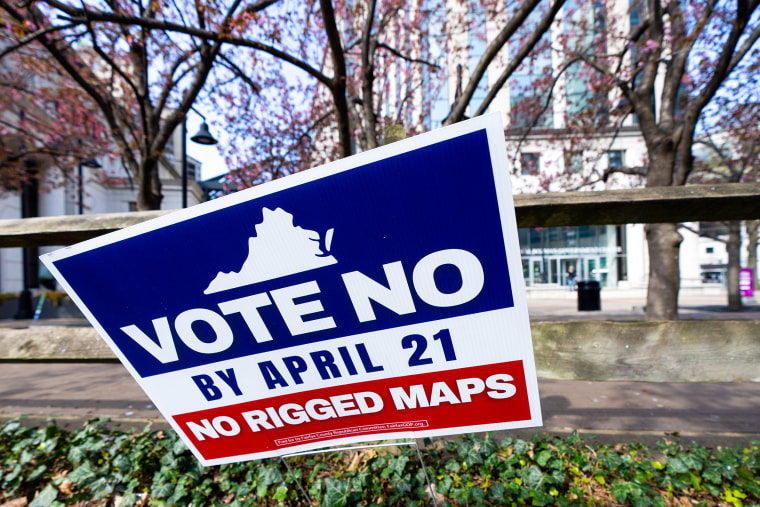
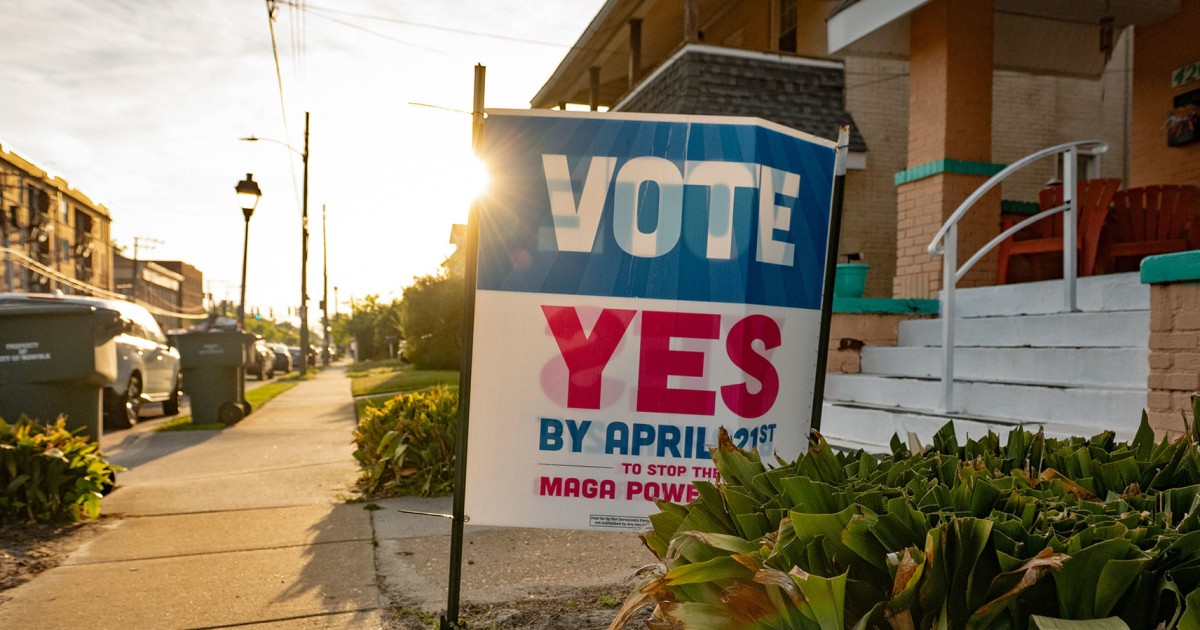
An NBC News piece on the Virginia Supreme Court’s decision (https://www.nbcnews.com/politics/2026-election/virginia-supreme-court-blocks-democratic-drawn-congressional-map-voter-rcna342687) describes how the state court blocked a new congressional map drawn by Democrats and already approved by voters in a referendum. At first glance this looks like a classic partisan fight: Democrats tried to gain up to four additional House seats, Republicans resisted. But the court’s key argument was not the political consequence but procedural violations: the legislature, the judges said, began the process of proposing the constitutional amendment too late, and that “irreparably undermines the integrity” of the vote that took place.
In U.S. state constitutional law, the procedure for proposing an amendment is usually precisely regulated. In Virginia, as NBC notes, an amendment must be passed in two consecutive legislative sessions with an election between them, and then put to a referendum. Republicans argued that Democrats first voted for the amendment after early voting began ahead of the 2025 election, which, they said, violated the “session before the election” requirement. Democrats tried to redefine the key reference point, arguing that the important date was the day of the general election, not the start of early voting. This is an example of how even within the concept of “election” competing legal interpretations can exist — each carrying enormous political consequences.
The Virginia Supreme Court’s decision to nullify the referendum results and thus block the new map means the fall midterm elections will use the old map, where Democrats control 6 of 11 districts. That deprives them of potential seat gains and, as NBC emphasizes, fits a broader trend: in a number of states Republicans gain a significant edge from redistricting, amplified by a recent U.S. Supreme Court ruling that weakened anti-racial (more precisely, anti-race-conscious) constraints on gerrymandering under the Voting Rights Act. Altogether, the new maps could give Republicans up to 14 additional House seats versus roughly six for Democrats, although outcomes in particular districts will still depend on actual vote results.
It’s important to understand the term gerrymandering, which appears implicitly in the NBC piece when it mentions Democrats’ “carefully crafted” map and an attempt to bypass a bipartisan commission approved by voters in 2020. Gerrymandering is the practice of redrawing district boundaries to maximize the chances of one party or group — for example, “packing” opponents’ voters into a few districts or “cracking” them across many. On paper districts look lawful but in practice distort representation. Virginia Democrats decided to change the constitutional architecture itself — to bypass a bipartisan commission meant to check exactly such abuses — and that required an amendment. The court, relying on procedural technicalities, stopped that attempt after millions had voted and tens of millions of dollars had been spent on the special April 21 referendum.
Notably, opponents of the Democrats frame their victory in terms of democracy and fairness even as they are fighting to preserve political advantage. In a statement from Virginians for Fair Maps cited by NBC News (https://www.nbcnews.com/politics/2026-election/virginia-supreme-court-blocks-democratic-drawn-congressional-map-voter-rcna342687), co-chairs Jason Miyares and Eric Cantor (both Republicans, a former state attorney general and a former House majority leader) say “in 2020 Virginians made clear that voters should choose their representatives, not the other way around,” and accuse Democrats of “deceptive rhetoric” and an “unconstitutional attempt to redraw the state to benefit themselves.” The rhetoric of “fair maps” is thus used to legitimize a court decision that almost certainly benefits Republicans.
Schematically, this story shows how the judiciary becomes an arbiter not only of legal but also of political strategies. The parties argue about when an “election” legally begins — with the opening of polling places for early voting or with Election Day — and the answer to that seemingly technical question determines the fate of a constitutional amendment, a multimillion-dollar referendum, control in the federal House, and even the national party balance.
A similar storyline, though in a different sphere, appears in an ABC News report on a U.S. Court of International Trade decision (https://abcnews.com/US/trade-court-trumps-10-global-tariffs-unlawful/story?id=132761523) that found Donald Trump’s 10% global tariffs unlawful. This case is not about district boundaries but trade policy, yet again interpretation of a legal term is central. The Trump administration cited Section 122 of the Trade Act of 1974, which allows tariffs in case of “balance-of-payments deficits.” To extend that basis to a wide range of trading partners and goods, White House lawyers treated “balance-of-payments deficits” as essentially synonymous with “trade deficits” — that is, imports exceeding exports.
The balance of payments is a broader concept than the trade deficit. In economics, the balance of payments is a comprehensive record of all a country’s international transactions: trade in goods and services, capital flows, financial movements, changes in reserves. The trade balance (goods trade deficit) is only a part of that complex. Judges at the Court of International Trade emphasized that Congress in 1974 deliberately used specific types of deficits — “current account deficits, liquidity deficits, and basic balance deficits” — and did not equate them automatically with the current trade balance. The majority of judges explicitly noted: “Congress was aware of differences in the words it used,” and the government’s attempt to fit an older term to today’s account structures does not accord with the statutory text.
Thus the central issue in this case is not the economic advisability of tariffs or even the U.S.’s international obligations, but the literal and historical interpretation of phrases in a half-century-old statute. The court acknowledged that the term “balance-of-payments deficits” “causes some confusion,” but it is in that zone of ambiguity that the political battle plays out: the president seeks to expand his powers using a “modern” reading of the term, the court returns it to the 1974 lawmakers’ intent emphasizing specific types of financial deficits rather than a general trade imbalance. As ABC recalls, a similar situation happened earlier: the U.S. Supreme Court this year upheld another Court of International Trade decision blocking the first wave of Trump’s tariffs. Here too, as with Virginia’s district maps, courts ultimately define what a statutory term means and how far the executive may go.
A key detail is plaintiffs’ standing — the right to challenge government actions in court. In the trade case the court granted relief to only two small companies and the state of Washington, but rejected a suit from a broader group of states, finding they lacked adequate grounds to claim direct injury from the measures. This is another procedural filter that limits who can contest federal government actions and thus shapes legal strategy.
Likewise, standing and procedural aspects appear in the Virginia story: the state Supreme Court earlier allowed the April referendum to proceed but specifically reserved the right to later evaluate the amendment’s legality. In his criticism, Justice Arthur Kelsey, cited by NBC News (https://www.nbcnews.com/politics/2026-election/virginia-supreme-court-blocks-democratic-drawn-congressional-map-voter-rcna342687), reproached state authorities for effectively trying to deprive the court of the ability to consider the case both before and after the vote — which, from the perspective of checks and balances, would look like undermining judicial review.
Against this backdrop, the third source — a WGAL report from Pennsylvania — seems far removed from high political and economic battles. It is local news: on WGAL’s page (https://www.wgal.com/article/pennsylvania-water-main-break-lebanon/71251725) they simultaneously report on a water main break in Lebanon County and police asking drivers to detour, a nighttime rescue operation on the Susquehanna River near Three Mile Island, roadwork on I-81 and I-78, rising fuel prices after the war with Iran, the arrest of an arson suspect, officials’ plans to discuss rising motorcycle accidents, and Governor Josh Shapiro’s visit to farmers hurt by freezes. At first glance there is no “big” politics here, but in reality we again see how formal procedures and government decisions shape everyday life.
Reports of lane closures, bridge repairs and police detours are the result of infrastructure policy and bureaucratic safety protocols. When PennDOT (the Pennsylvania Department of Transportation) announces bridge clearing or repairs, it is implementing preapproved programs, and the TV station functions as the conduit between authorities and citizens, explaining the effects on their routes. The decision to mount a water rescue on the Susquehanna — where a boat ran aground on rocks but was successfully recovered — is governed by norms that determine which services, from which jurisdictions and under what conditions are called to respond. Noting that no one was injured is also part of an established public reporting standard.
When the report mentions rising gasoline and diesel prices linked to the war with Iran and how a small business (landscaping company Red Rose Landscaping) is forced to “reinvent” its logistics because of fuel cost increases, it shows how global geopolitics and national energy policy filter down into expenses for particular families and companies. Decisions on sanctions, oil export regulations, or tariff policy (similar to what the Court of International Trade considered in the ABC News story on Trump’s 10% tariffs) ultimately show up as numbers on gas station price boards, and local media capture that grounded side of high-stakes economic disputes.
Governor Shapiro’s visit to Lancaster County to meet farmers damaged by the freeze and his efforts to press the federal government to speed up insurance payments and damage assessments is another example of how formal administrative procedures (disaster designation criteria, insurance payout algorithms, inspection timelines) determine whether a particular farm survives. In the tariff case the Trump administration tried to broaden “balance-of-payments deficits” to gain access to a powerful instrument of economic pressure. In the Virginia map case Democrats tried to flexibly interpret when “an election” began to get their amendment through in time. In the farmers-and-insurance story described by WGAL (https://www.wgal.com/article/pennsylvania-water-main-break-lebanon/71251725), state and federal agencies can interpret aid criteria strictly or more flexibly. In each instance what’s at stake is whose interests are protected and at whose expense.
Trying to highlight key trends that unite these stories yields several important conclusions.
First, the role of courts as arbiters in politics and the economy is growing. The Virginia Supreme Court, the U.S. Supreme Court, the Court of International Trade — all have increasingly become arenas for partisan clashes where the main arguments are not slogans but legal definitions. Courts do not simply “apply the law”; they effectively set a confident direction for the rules of the game, defining where the zone of permissible interpretive flexibility for legislators and presidents ends.
Second, formal procedures are becoming a strategic resource. The Virginia case shows that even the question of which day counts as the start of an election can be used to block an entire reform approved by voters. In the trade case the dispute over tariffs turned on the meaning of a single phrase in the 1974 law, and that determined the legality of broad global tariff policy. In Pennsylvania’s everyday agenda, how emergency response procedures or farmer aid are formalized determines concrete lives and businesses.
Third, tension is rising between direct voter will and constitutional‑legal constraints. In Virginia three million people voted in a referendum to change redistricting rules, but the state Supreme Court declared the result invalid because the process start was unconstitutional. This raises a thorny question: what matters more — procedural purity or carrying out the “people’s will”? The American system traditionally leans toward the former: the constitution and statutes are the framework that cannot be violated even for good intentions. But the political consequences of that stance — growing polarization and mutual accusations of “usurpation” — become clear.
Fourth, in a highly competitive political environment both parties actively use legal and procedural mechanisms to strengthen their positions. Democrats in Virginia and California, NBC News reports, have themselves used tactics once more often associated with Republicans — attempts to bypass bipartisan commissions and craft favorable maps. Republicans, meanwhile, use courts to undo unfavorable amendments and benefit from U.S. Supreme Court decisions that weaken constraints on gerrymandering. The same dynamic plays out on the economic front: the Trump administration seeks to “stretch” the meaning of “balance-of-payments deficits” to justify wide tariff use, and courts trim its wings.
Finally, these stories illustrate that for citizens the consequences of legal battles appear very concretely and materially: in what district boundaries they have and how much weight their vote carries; in which goods will become more expensive as tariffs are imposed and lifted; in which roads are closed for repair or accident; in whether farmers receive insurance payments in time after a freeze; in how quickly rescuers arrive at a river at night if a boat runs aground.
Legal terms — standing, balance-of-payments deficits, procedural requirements for constitutional amendments — may seem abstract, but in contemporary America the political landscape is being shaped around them. Those who can read and interpret the law precisely and then persuade courts of that reading gain a huge advantage. And, as reporting from NBC News (https://www.nbcnews.com/politics/2026-election/virginia-supreme-court-blocks-democratic-drawn-congressional-map-voter-rcna342687), ABC News (https://abcnews.com/US/trade-court-trumps-10-global-tariffs-unlawful/story?id=132761523) and WGAL (https://www.wgal.com/article/pennsylvania-water-main-break-lebanon/71251725) shows, that advantage is measured not only in seats in Congress or billions of dollars in trade, but in the very fabric of daily life — from a morning commute route to the fate of a small business or family farm.