The materials presented share a common theme: the legal limits on power amid intense political and social conflict. In one case, a court attempts to preserve the transparency of proceedings and reach a decision despite disagreement among jurors; in another, military action threatens civilians and requires states to explain their conduct; in a third, a federal court blocks a presidential order, finding it almost certainly unconstitutional. In all three stories, the central question is who may make decisions affecting people’s lives, how those decisions may be made, and which institutions can halt or correct government action.
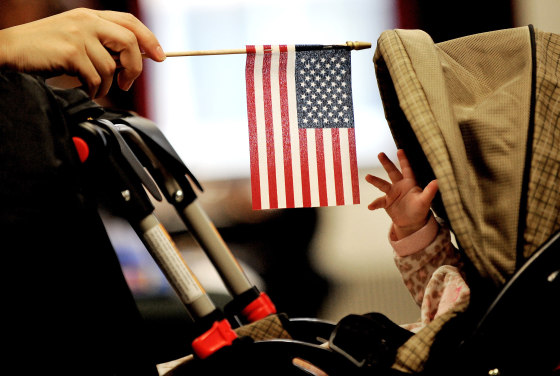
This issue is explored most extensively in the case concerning the restriction of birthright citizenship in the United States. U.S. District Judge Deborah Boardman suspended the latest order issued by Donald Trump aimed at narrowing the category of people who automatically receive American citizenship at birth. As NBC News reports, the judge called the order “almost certainly unconstitutional” and again stated that the president was attempting to “rewrite the exceptions to citizenship with the stroke of a pen.”
The issue concerns so-called birthright citizenship—the principle under which a child born in the United States and subject to U.S. jurisdiction is generally considered a citizen, regardless of the parents’ citizenship or immigration status. This right is established by the Citizenship Clause of the Fourteenth Amendment to the U.S. Constitution: “All persons born or naturalized in the United States and subject to the jurisdiction thereof, are citizens of the United States.”
Trump’s first order, signed at the beginning of his second presidential term, sought to broadly restrict this principle. Following immediate legal challenges and subsequent intervention by the Supreme Court, the administration prepared a narrower document, signed on August 6. Among other things, it concerns children whose parents are considered “enemy aliens” or who work in foreign diplomatic missions. Judge Boardman found that the new version did not resolve the constitutional problem but merely changed the wording.
From a legal standpoint, this is a dispute not only over immigration policy but also over the limits of presidential power. An executive order is a presidential directive binding on federal executive agencies, but it cannot override the Constitution or existing law. That is why the Trump administration is attempting to portray the new document as consistent with the Supreme Court’s June ruling, while the plaintiffs argue that the president is effectively circumventing the court’s injunction by altering the details of the earlier order.
Attorney General Todd Blanche said the judge’s decision came as no surprise. According to him, the administration “drafted the order with” the Supreme Court’s position in mind and would continue the fight, including by returning to the nation’s highest court. A White House spokesperson, meanwhile, called Boardman an “activist judge” appointed by Joe Biden. This rhetoric is characteristic of American political and legal conflicts: the administration seeks to portray the decision not as a neutral interpretation of the Constitution, but as part of a political struggle between the president and the judiciary.
Yet the structure of the case itself shows that judicial review continues to serve as an institutional counterweight. The court is not issuing a final ruling on the administration’s entire immigration policy, but is temporarily prohibiting enforcement of the disputed order while the case proceeds. A preliminary injunction is a measure designed to prevent potentially irreparable harm before a final decision is reached. In this case, such harm could include the denial of documents to children, uncertainty over their legal status, and the practical deprivation of citizenship before the court has definitively determined whether the order is lawful.
A similar issue of transparency and legitimacy arises in the BBC report on the Lindsay Clancy trial. Clancy’s attorney, Redding, asked that further discussion of the situation with the jury take place in open court rather than in a closed format—in what is known as a sidebar, a brief conference between the judge and attorneys outside the immediate participation of the public. “I want the public to know what’s going on,” he said. At the same time, the attorney expressed hope that a verdict could still be reached, although the jury foreperson had previously reported a serious disagreement. Redding did not confirm the exact 11-to-1 split and said he did not know what position the lone dissenting juror held.
This episode demonstrates another aspect of the same institutional problem. The court must preserve the secrecy of jury deliberations so that jurors can freely discuss the evidence and remain free from outside pressure. At the same time, court procedures must remain understandable and subject to public scrutiny. The question of what may be discussed publicly and what must remain confidential therefore becomes part of the public’s trust in the verdict. The attorney’s request does not mean that the substance of the closed deliberations should be disclosed; rather, it concerns how the court explains what is happening and what procedural decisions it makes.
The jury situation also shows how fragile the process of reaching a collective decision can be. Even if a majority favors a particular verdict, one or more dissenting jurors can result in a hung jury—a jury unable to reach a unanimous decision. Depending on the jurisdiction, this may lead to a mistrial and a retrial. Redding’s words, “I hope,” therefore reflect not confidence in the outcome but recognition that the judicial process is not yet complete and that the result remains uncertain.
Unlike the internal American court proceedings, the third material describes an international crisis in which decisions are made amid armed conflict and profound uncertainty. The Al Jazeera live blog on the war between Iran and the United States reports that Kuwait said it had repelled missile and drone attacks it attributed to Iran. According to the headline and updates, Tehran claims it launched strikes on Kuwait and the United Arab Emirates because of their military support for the United States, while Washington says it is not conducting “major” operations against Iran, although it is keeping various courses of action open.
Here, the question of the limits of power takes on a far more dangerous character. During wartime, statements by the parties often serve not only as sources of information but also as instruments of strategic communication. The phrase “major operations” may indicate a limitation on the scale of military action, but it does not necessarily mean that strikes, intelligence operations, or preparations for new attacks are absent. Iran’s accusations and the Gulf states’ statements require independent verification, since the military environment makes it difficult to establish the facts and each side has an incentive to portray its actions as defensive and unavoidable.
States that may not be direct participants in the conflict but provide military, logistical, or political support play an important role in this story. Tehran claims that such support made Kuwait and the UAE targets. This demonstrates how quickly a regional war can expand: an initial confrontation between the United States and Iran creates risks for neighboring countries, infrastructure, air travel, and civilians. Air-defense systems may intercept missiles and drones, but the attacks themselves increase the likelihood of accidental escalation and retaliatory strikes.
When all three sources are considered together, they reveal different mechanisms for restraining power. In the citizenship case, that mechanism is the federal court, which reviews the presidential order for compliance with the Constitution. In the Clancy trial, it is the rules governing open proceedings, the independence of the jury, and public oversight of the process. In an international conflict, formal constraints are weaker: restraint depends on military calculations, diplomacy, alliance commitments, and the parties’ ability to avoid further escalation.
A broader trend is that the legitimacy of decisions increasingly depends not only on their substance but also on the transparency of the procedure. Judge Boardman supports her decision by citing the text of the Constitution and the Supreme Court’s earlier position. Attorney Redding calls for a public explanation of what is happening in court. In a military crisis, states seek to shape their own version of events, but the absence of independent verification increases the risk of disinformation and mistaken decisions.
Another important conclusion concerns the conflict between a political mandate and institutional constraints. Trump is seeking to fulfill a longstanding political promise to restrict birthright citizenship, but presidential powers are limited by the Constitution and the judicial system. In a criminal trial, the parties want to obtain a verdict, but they cannot simply eliminate disagreement among jurors through an administrative decision. In an international conflict, governments may declare a right to self-defense, but every new strike can alter the political and military calculations of neighboring states.
Thus, the articles are connected not by a specific subject—migration, a criminal trial, or war—but by the question of how institutions make decisions under pressure and uncertainty. The American citizenship dispute shows that the executive branch cannot unilaterally alter the constitutional order. The Clancy trial underscores that public trust requires both confidentiality and clear public oversight. Events surrounding Iran demonstrate how quickly a lack of transparency and mutual distrust can turn a regional conflict into a broader crisis.
The main consequence of these developments is the growing importance of independent procedures. Judicial injunctions, public explanations, fact-checking, and limits on political rhetoric are not mere formalities but mechanisms for preventing irreversible decisions. Where these mechanisms function, conflict can be shifted into the legal sphere. Where they weaken, disputes over power risk becoming struggles whose consequences will affect not only the parties to the proceedings but the public at large.