If you look at these three pieces together, one big theme comes into view: in today’s politics and sports, it’s no longer enough to simply “win the primary round.” After that comes a more complex test—whether you can gather, hold, and correctly allocate the resources around you. In a Michigan senatorial race, this becomes a proving ground for Abdul El-Sayed: after winning the primary, he must demonstrate that a progressive agenda can unite a wider electorate. In the story about appointing a new CDC director, the question is whether Dr. Erica Schwartz can be more than a formally approved figure—and become a real defender of scientific autonomy inside a system where politics is increasingly interfering with healthcare. And in the analysis of the New England Patriots’ training-camp situation, the same logic plays out at the roster level: it’s not enough to have strong players—you have to build a working setup in which competing talents don’t get in each other’s way, but instead reinforce each other.
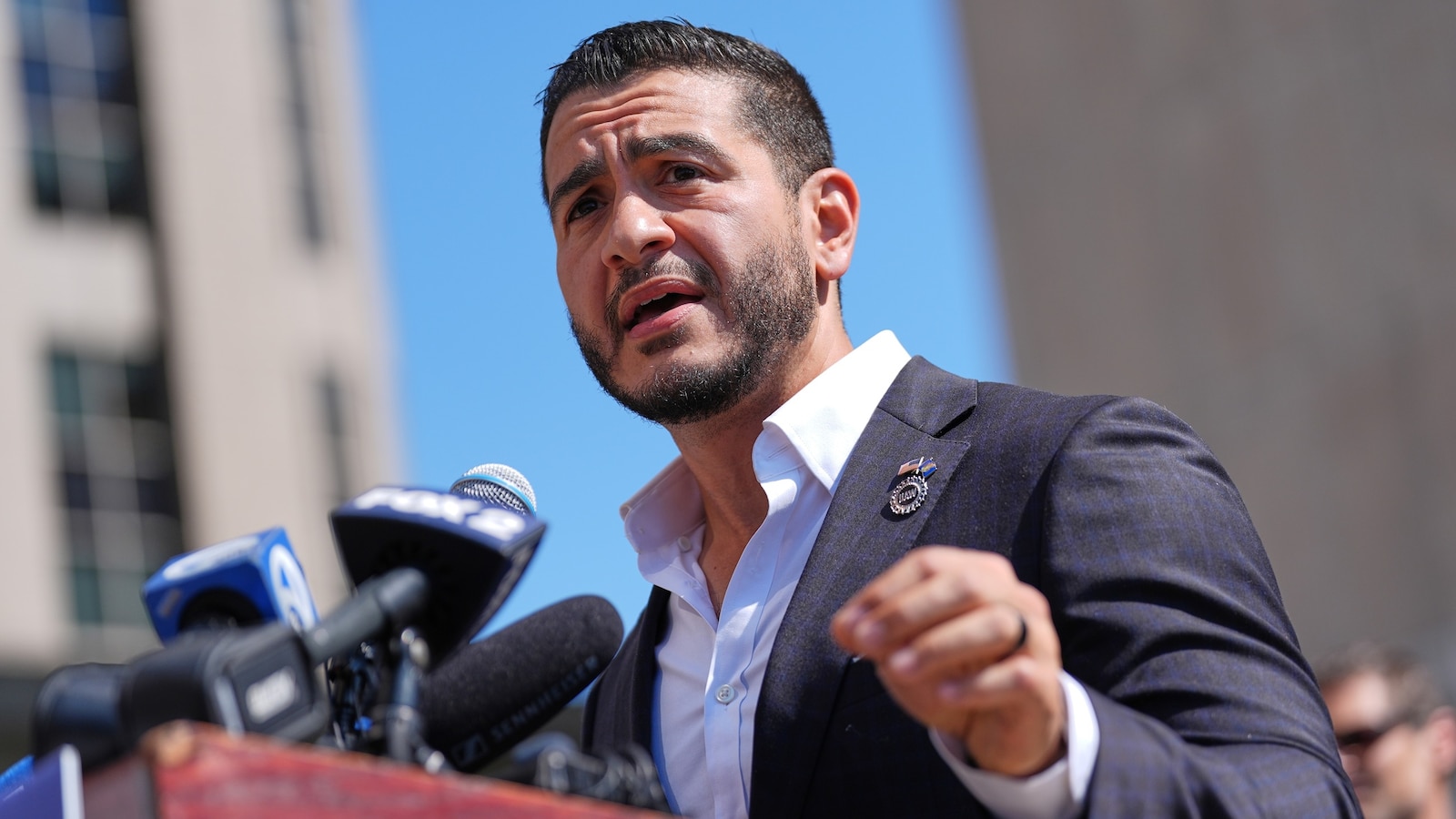
Abdul El-Sayed’s primary win in Michigan, ABC News reports, was an important demonstration that a progressive candidate can prevail in the intra-party fight in one of the key swing states. But the very wording of the analysis—“Now comes the coalition test”—is especially precise: the main exam begins not after the win, but because of it. El-Sayed managed to mobilize young voters, progressives, and many Arab American voters by leaning on economic issues—housing affordability, healthcare, and limiting corporate influence. However, the narrow nature of the initial coalition automatically raises the question of scaling up. In November, he will have to persuade not only those who were already with him, but also wavering Democrats, independents, and possibly part of the disappointed Republicans. He understands this himself, which is why in his victory speech he tried to move the conversation from intra-party conflict to shared interest: “There is so much more that unites us now.” That is an important political gesture, because in a fragmented environment voters often vote not only for a platform, but also against the feeling that a candidate belongs only to one side.
It is telling, too, that El-Sayed, as ABC News notes, praised his opponent Haley Stevens as “one of the most committed public servants” and said their disagreements “pale in comparison to what unifies us.” That rhetoric isn’t just politeness after a hard-fought campaign. It’s an attempt to defuse—up front—the fears of some moderate Democrats, for whom an overly hard-edged progressive image of the candidate can look like a risk of losing in the general election. Senator Gary Peters, who backed Stevens in the primary, is making the same point, saying Democrats “have to win Michigan,” while the differences between El-Sayed and Mike Rogers are “very small compared to the differences between Abdul and Mike Rogers.” In other words, party discipline now has to make room for electoral pragmatism. For El-Sayed, the task is not only to preserve the energy of his base, but to prove that his economic populism doesn’t fragment support—and can, instead, become a common language for different groups of voters.
Against this backdrop, the story about the confirmation of Erica Schwartz as CDC director looks like the institutional version of the same problem. NBC News reports that the Senate confirmed her by a vote of 51 to 44, and the split again largely tracked party lines. Formally, the CDC finally has a permanent leader after nearly a year of acting management, but the appointment itself shows how shaky the place of science has become in the U.S. political system. Schwartz is arriving at a time when the agency has to respond simultaneously to the largest outbreak of measles in 35 years and to the rise of cyclosporiasis—a parasitic infection linked to contaminated iceberg lettuce. This isn’t a calm, bureaucratic post. It’s a role where any decision can affect the public health of millions of people.
But the key intrigue here isn’t only the appointment itself—it’s how much resistance the CDC director can offer to political pressure from the Secretary of Health Robert F. Kennedy Jr., whose reputation has long been tied to anti-vaccination rhetoric. NBC News reminds readers that Kennedy has already changed the child vaccination schedule, disbanded the vaccine advisory board, and fired the CDC’s previous head, Susan Monarez, after 29 days on the job. Against that backdrop, expectations for Schwartz included a clear distance from controversial decisions and a public willingness to defend evidence-based medicine. Critics felt her responses at the hearings weren’t forceful enough. Senator Bill Cassidy, himself a doctor who leads the HELP committee, said bluntly: “We need a CDC director that will actually stand up to crazy, stupid things being said that undermine faith in immunization.” This isn’t just an emotional line; it reflects a deep worry within part of the medical community, which fears that even appointing an “ordinary” specialist won’t guarantee institutional independence.
At the same time, Schwartz tried to build the same logic as El-Sayed: to reassure a broad audience that her work will rise above factional and political interests. Her remarks that “my sacred responsibility is to provide the American people with public health guidance that is clear, honest and evidence-based” and that she “will never betray the science” set a framework for professional legitimacy. Yet it’s precisely here that the complexity arises: when public trust has already been undermined, declarations alone aren’t enough. Even the “good faith” amendment Cassidy mentioned after HHS changed the CDC page about the link between vaccines and autism shows that the dispute is about more than facts—it’s also about symbols. If a government page is rewritten in a way that suggests scientific consensus can be blurred through political editing, then the director’s main job becomes not just to restore healthcare policy, but to restore the very idea of authoritative knowledge.
In the New England Patriots material, the same theme of competition for trust—and the system role it plays—unfolds in football language. At first glance, it’s a different arena. But the logic is strikingly similar: in a team, you have too many top-level performers at the same position, and now the question isn’t who is talented—it’s how to assemble a working coalition on the field. A Patriots analyst describes the “crowded wide receiver room” as an “embarrassment of riches” for Drake Maye and offensive coordinator Josh McDaniels. The team has seven receivers competing for a spot on the roster: A.J. Brown, Romeo Doubs, DeMario Douglas, Kayshon Boutte, Mack Hollins, Kyle Williams, and Efton Chism III. In professional sports, this is a classic problem of an overabundance of quality: too many contenders, too few practice reps, and a limited number of roster slots.
The most interesting part here is the way internal hierarchy is built. Brown already looks like the primary outside receiver, building an increasingly natural rhythm with Maye on short and intermediate routes as well as in the red zone. Doubs, who in camp was viewed as a “power slot” or a moving inside-flanker type, is only now adapting to the role. Douglas, by contrast, remains underappreciated, even though—by description—it’s him who gives the team speed from the slot and separates well from coverage. Boutte maintains a rare chemistry with Maye on deep passes, Hollins brings physicality, blocking, and versatility in formations, Williams stays a project with potential, and Chism handles the second-string workload—useful and concrete, but not always noticeable to the general public. It’s a reminder that this isn’t just a fight for a roster spot—it’s competition between models of usefulness: someone wins with explosive speed, someone with reliability, someone with the ability to play without the ball and help the system as a whole.
A key takeaway from the Patriots piece is that even on a team with a clear surplus of offensive talent, nobody is guaranteed. The presence of stars doesn’t eliminate questions about fit, targets, and roles. The author notes that early in the season, Brown, Doubs, Douglas, Boutte, and Hollins are the most likely options—but even that depends on the scheme, contractual circumstances, and possible trades. For Kyle Williams, for example, the issue isn’t a lack of physical traits—it’s that in the pecking order there are already more experienced and more ready alternatives. And again, a familiar idea from the other two materials comes back: organizational success is determined not by a collection of individual strong figures, but by the ability to create a stable system in which different interests don’t tear the overall project apart.
If you line up all three texts, it becomes clear that modern public life demands the same set of qualities from leaders: build a broad coalition without losing the core of support; maintain institutional trust without diluting professional standards; and, in a team environment, turn excessive competition into an advantage rather than a conflict. El-Sayed needs his progressive momentum to not look narrowly partisan. Schwartz needs to prove that the CDC can remain a pillar of science even in a politically contaminated environment. The Patriots have to decide how to distribute roles within an overloaded corps of receivers so it strengthens the quarterback and the entire offense. In every case, the question is the same: can you assemble a shared structure out of fragments that will hold up under the pressure of reality?
There is also a deeper meaning. In politics, healthcare, and sports alike, what increasingly wins isn’t the person who declares their rightness most loudly—it’s the one who knows how to work with diversity and difference. The coalition in Michigan, the CDC’s independence, and the Patriots’ roster composition are different forms of the same task: align competing interests without losing the goal. And that’s where the main modern trend shows itself: trust is becoming a scarce resource, and leadership is increasingly measured not by slogans, but by the ability to keep people together who, by default, wouldn’t have been in the same camp.
The key concepts needed to understand these pieces are also tied to the same logic. “Coalition” isn’t just a group of supporters—it’s a temporary alliance of different electoral segments that must be wide enough to win in general elections. “Primaries” are intra-party elections where a candidate often wins by mobilizing an active base more effectively, but isn’t necessarily the most convenient choice for a broad audience. “Evidence-based medicine” means relying on verified scientific data rather than political preferences or personal beliefs. “Red zone” in American football is the area near the opponent’s end zone, where reliable and physically strong receivers are especially valuable. And finally, a “slot” is the receiver position closer to the center of the formation, where speed, agility, and the ability to find open space quickly matter.
In the end, all three articles say that winning in the first round is rarely the final win. El-Sayed still has to prove that his campaign can go beyond the primaries; Schwartz has to show that the CDC can restore its authority under political pressure; and the Patriots have to show that depth at receiver won’t turn into chaos. And in every case, the deciding factor will be not only talent, but the ability to unite, persuade, and allocate trust so it works toward the overall result.