At first glance, these three pieces are about different things: unprecedented wildfires in Europe, a shooting at a food festival in Seattle, and a quiet reshaping of war statistics by the Pentagon. But if you look more closely, they share an important theme—how modern crises become simultaneously physical, political, and informational, forcing society to live through events whose cost is measured not only by immediate casualties, but also by the scale of disorganization, evacuations, trust in institutions, and disputes over who should respond—and how.
The most obvious, and by far the largest-scale, storyline is the historic wildfires in France and Spain. In an ABC News report, it says that extreme heat and near-total lack of rainfall have turned large areas of southern Europe into an effectively ready-to-ignite environment. What matters here is not only the fact of the fires themselves, but also that, according to climate scientists, Europe is warming faster than any other region on the planet. This is not an abstract scientific formula—it is already an observable reality: in France, June became the hottest on record, with temperatures averaging 3.8 degrees Celsius above normal and rainfall nearly 50% below average. Under these conditions, vegetation loses moisture and becomes fuel for fire. That is why the fires are described as record-setting in both area and consequences: in total, according to estimates by the European system Copernicus and national authorities, more than 300,000 hectares burned across the two countries, and more than 300,000 people were evacuated. The European Union’s wording about “one of the largest evacuation operations in Europe” does not seem exaggerated in this context.
But it is not just a natural factor. The material also shows that wildfires in Europe can no longer be treated as a typical seasonal risk of the Mediterranean. In Spain, for example, long-term changes in land use—decline in agriculture and industries that previously used forest materials—have led to large areas becoming overgrown and to the creation of what is known as a “fuel” landscape. That means a fire does not merely start in a forest—it instantly gets nourishment from dry biomass and spreads faster than it can be contained using traditional methods. A line from Spanish firefighters—that the blazes were so “violent” that they could not be attacked head-on—captures the character of the current crisis well: governments are not battling a single isolated hotspot, but a system of conditions that made catastrophe nearly inevitable. Even help from the European Union—aircraft, helicopters, coordination through Copernicus—looks less like an auxiliary measure and more like a sign that national resources are no longer enough.
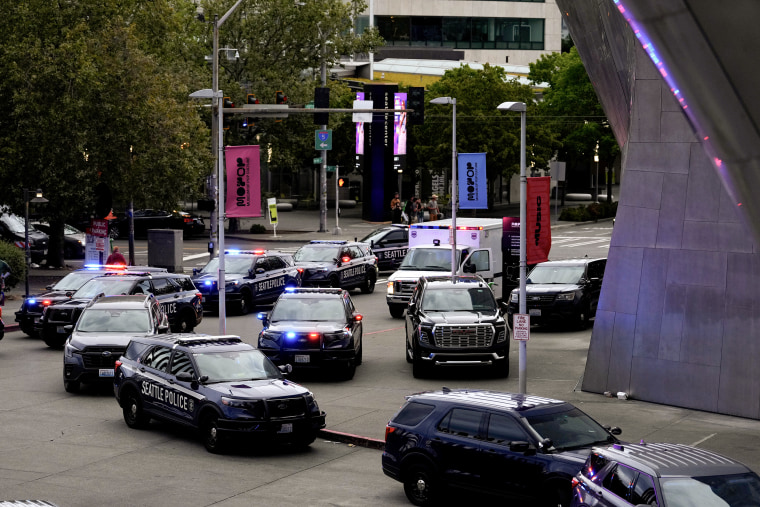
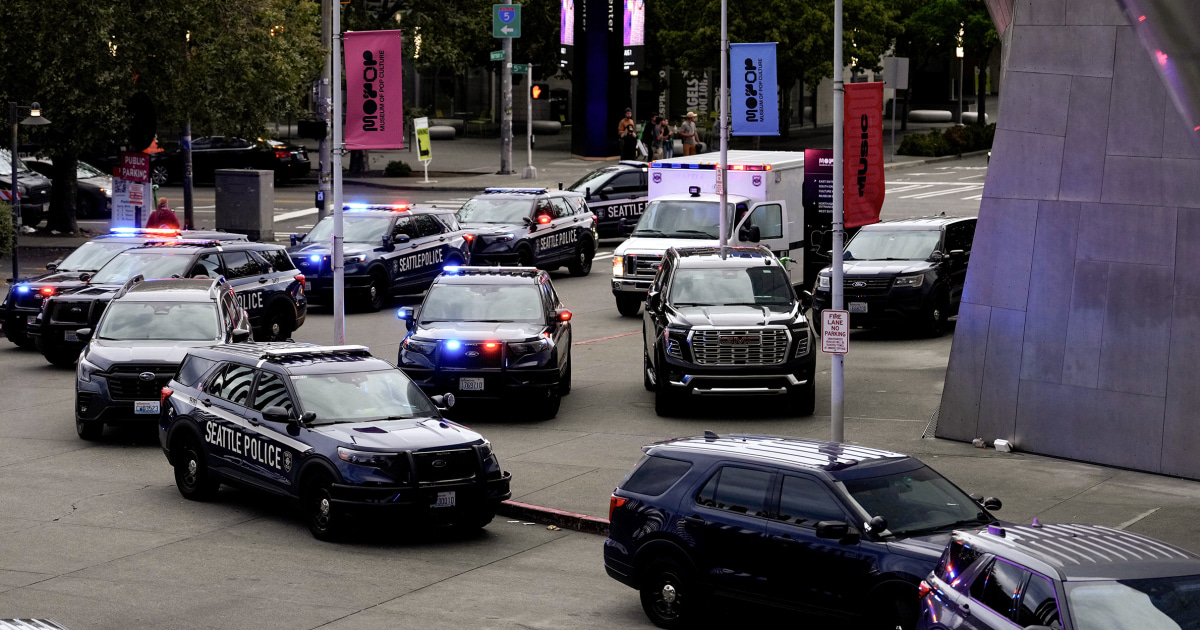
The second piece, about the shooting at the Bite of Seattle festival, might at first seem to belong to a different type of emergency, but it too shows how quickly an ordinary urban event can turn into a stage for deadly destabilization. Three people died, and four more were injured; a child was among those hurt. Police believe that the gunfire was opened by two men and describe what happened as a shootout between them. This detail matters: it is not a random mass shooting in a crowd in the classical sense, though the tragedy is no less severe. It appears that the violence began as a conflict between armed individuals and then struck random visitors at a crowded city festival. In other words, a public space intended for leisure, food, and mass socializing proved vulnerable to a sudden burst of armed violence.
Here, the factor of scale and vulnerability is especially clear. Bite of Seattle is not a closed venue; it is an open-air celebration in the Seattle Center area near the Space Needle—the city’s symbolic and tourist core. That is why the response from authorities is built not only around the investigation, but also around quickly telling the public that the “immediate threat” is over. Yet the fact that two weapons were found on site and that one young suspect was detained, while the second suspect fled, underscores a problem common across the United States: even with police, emergency response services, and a developed medical infrastructure, sudden armed violence remains hard to control. The mayor’s rhetoric matters too, describing what happened as an “unbelievable tragedy, a horrific act of violence.” It is language that both conveys shock and reflects the nearly familiar, day-to-day American need to comment on yet another shooting as a recurring—though not normalized—phenomenon.
The third text, about how the Pentagon quietly changes the categorization of losses in the war with Iran, in essence shifts the crisis from the realm of physical violence into the realm of institutional accounting and political control. The central storyline is not only the number of killed and wounded, but also how the state keeps track of them. ABC News reports that the U.S. Department of Defense first reduced the number of deaths in the operation Operation Epic Fury from 18 to 14 and removed dozens of wounded from the table, and then, in effect, began accounting again under a new category: Overseas Operations. This is an extremely important detail: if the framework for counting changes, so does the public perception of the war. Formally, this can look like a technical correction, but in practice it affects political oversight, legal interpretation, and public memory.
This is where the most sensitive aspect appears: transparency. DCAS, the Defense Casualty Analysis System, is not just a database—it is an official public registry of U.S. military losses. If changes are entered without a clear explanation, and if the logic of counting suddenly breaks into new categories, society receives a signal that even the most basic figures of war can become the subject of administrative manipulation. The piece directly states that such “splitting phases of war within a broader campaign” is unprecedented and makes it harder to understand the real number of killed and wounded. This is no longer just a dispute about statistics. It is a dispute over whether civil society can oversee the executive branch when it comes to military action.
That theme is reinforced by the political context: the House of Representatives passed a resolution on war powers regarding Iran, which was a rare rebuke to President Donald Trump, and later the Senate blocked the initiative. A remark from Representative Thomas Massie—calling what is happening an “absurd ruse” and accusing the Pentagon of pretending there were “two wars with Iran, separated by a short ceasefire”—shows that this is no longer only about numbers, but also about Congress’s right to authorize war. In other words, casualty accounting becomes part of a political dispute about the legitimacy of the very U.S. role in fighting.
If you combine all three materials, a common picture emerges: a world in which crises are both bigger and harder to interpret. In France and Spain, the climate factor amplifies wildfires to the level of a national emergency. In Seattle, a local armed confrontation instantly shatters the sense of safety at a mass urban event. In Washington, the state tries to reshape reporting on casualties so that it can manage the conflict’s perception politically and legally. In all three cases, it is not only about the event itself, but about how society counts it, classifies it, and experiences it.
The hidden common pattern is that a modern crisis rarely exists as a single, isolated incident. Wildfires are intensified by climate, land use, and administrative readiness. Shooting tragedies are not only about the weapons—they are also about the fact that public spaces remain open and vulnerable. Military losses are not just a sum of killed and wounded, but an object of political design. And in every case, a question of trust arises: trust in science when climate is involved; trust in the police and city authorities when it comes to safety; trust in the Pentagon and Congress when it comes to war.
It is worth explaining several terms separately, without which these texts may not read fully clearly. A “heat wave” is an extended period of abnormally high temperatures, which sharply increases the risk of droughts, wildfires, and infrastructure overheating. “Dry conditions” mean not just heat, but a shortage of moisture in the soil, vegetation, and air—making the landscape more combustible. Copernicus is a European satellite program that provides maps and data for emergency response; in crises, it matters because it allows authorities to quickly assess fire hotspots and the direction of fire spread. DCAS is the Pentagon’s database for combat losses, meaning the official accounting of killed and wounded U.S. service members. And “war powers” in Congress is a constitutional and political question of who has the right to start and continue a war—either the president as commander in chief, or the parliament representing the public.
The main takeaway from these materials is that the 21st century increasingly requires states not only to respond to disasters, but to explain them in real time. People want to understand why the fires became historic, why a shooting occurred at a mass leisure site, and why the military department changes the rules for counting casualties after the campaign has already begun. That also points to a broader trend: crises are no longer assessed only by physical damage. They are assessed by the quality of institutions, by the honesty of public accounting, and by the ability of those in power not only to put out fires, provide aid, and conduct war, but also to maintain public trust.
Sources: ABC News on wildfires in France and Spain, NBC News on the Seattle shooting, ABC News on the Pentagon’s review of casualty accounting.