Three articles cover different events—the U.S. sanctions policy toward Iran, the death of a former police officer convicted of killing Sonya Massey, and the battle for control of the House of Representatives. Taken together, however, they reveal a common picture: American politics is increasingly built around coercion, institutional accountability, and the struggle to maintain public trust. Washington is simultaneously trying to influence foreign partners through economic threats, address failures in the law-enforcement system, and preserve its political majority amid extreme partisan polarization.
In CNN’s article on Iran, sanctions are the main instrument used by the United States. Treasury Secretary Scott Bessent warned countries maintaining economic ties with Iran that they would be given a deadline to halt operations identified by Washington. If they failed to do so, he said, the United States would “act unilaterally through the authorities of the Treasury Department.” The wording is important: this is not only about punishing Iran itself, but also about pressuring third countries that purchase Iranian oil, engage in trade, or depend on Iranian energy supplies.
Washington did not name specific countries, but experts believe China, India, Turkey, Iraq, and the United Arab Emirates could be affected. China remains the most significant target. According to the U.S.-China Economic and Security Review Commission, it is Iran’s largest trading partner and its principal oil buyer. In 2022, Iran exported $22.4 billion worth of goods to China and imported $15.6 billion worth of products from it. As Atlantic Council expert Daniel Tannebaum noted, China is the country most capable of “having the greatest impact on Iran’s ability to continue financing its activities.”
But this is where the limitations of the sanctions strategy become apparent. China is not a small economy that can easily be isolated through the threat of secondary sanctions. Secondary sanctions target foreign companies and banks that do business with a country already subject to U.S. restrictions. Applying them against Beijing could trigger a serious conflict between the world’s two largest economies. Experts therefore doubt that the administration will actually impose harsh measures on China, particularly at a time when a visit by Xi Jinping is expected.
The circumstances of the other countries vary. Last week, the UAE announced that it was suspending trade and financial operations with Iran “until further notice,” partially reducing its immediate exposure to U.S. sanctions. Turkey, by contrast, remains an important trading partner of Tehran: bilateral trade exceeded $5 billion in 2024, while Iran accounted for approximately 13% of Turkey’s natural-gas imports last year. Iraq also depends on Iranian gas and electricity supplies, meaning that fully complying with Washington’s demands could threaten its energy stability. India’s trade with Iran has declined, reaching approximately $1.6 billion in 2025–26, but New Delhi, too, may face a choice between its relations with Washington and its own economic interests.
Thus, U.S. sanctions policy faces a contradiction: the broader the list of countries under pressure, the greater the risk of diplomatic and economic consequences for the United States itself. Washington seeks to cut Iran off from money and markets, but must recognize that different countries have their own interests, energy needs, and strategic relationships with Tehran. Sanctions are becoming not merely an economic instrument, but part of a broader rivalry between the United States, China, Turkey, and other regional players.
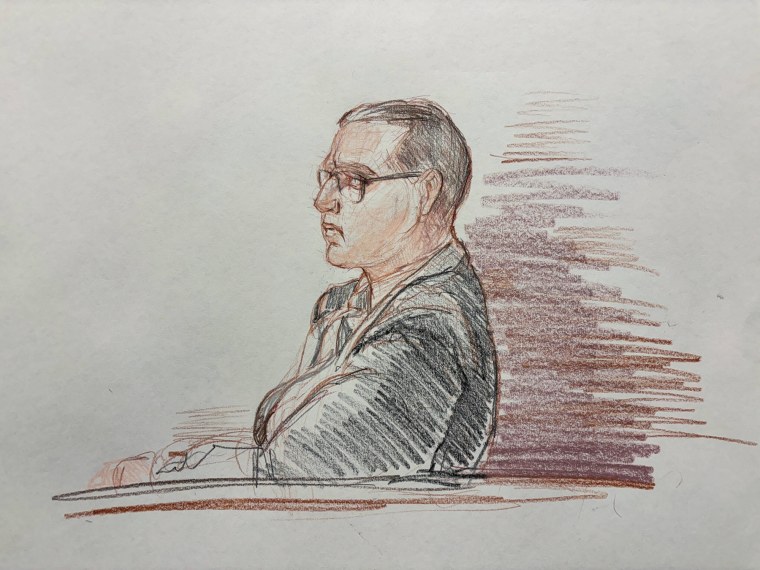
Within the United States, the question of accountability takes a different form through the case of former Illinois sheriff’s deputy Sean Grayson. According to an NBC News report, Grayson died after serving approximately six months of a 20-year sentence for second-degree murder. He died following a serious illness: in 2023, he was diagnosed with stage-three colon cancer, which later spread to his liver, lungs, and rectum. The exact cause of death had not been determined at the time of publication.
Grayson’s death does not change the substance of the case. In July 2024, he responded to a call from Sonya Massey, a 36-year-old woman who had contacted 911 to report a suspicious person near her home. During the conversation, Massey picked up a pot of boiling water. Grayson said he perceived this as an attempt to pour it on him, particularly after she said, “I rebuke you in the name of Jesus.” However, body-camera footage showed him pointing his weapon at the woman and threatening to shoot. After she apologized and got down on the floor, he shot her three times.
The case became a symbol of a broader problem: law-enforcement agencies are meant to protect people, but in some situations they themselves become a source of deadly danger. The fact that Massey called the police specifically for help is especially significant. The prosecution emphasized the tragic sequence of events: “‘I’m sorry’ were the last words Sonya Massey said before the defendant killed her, just as he promised.” According to the prosecutor, Grayson also refused to provide her with medical assistance, and she later died in the hospital.
The killing was followed by protests, public demands for justice, and legislative changes. Illinois Governor J.B. Pritzker signed the Sonya Massey Act, strengthening background checks for candidates seeking employment in law enforcement. In early 2025, county authorities agreed to pay Massey’s family $10 million. Yet compensation and a new law do not resolve the central question: why was someone authorized to use a firearm placed in a situation where, in the court’s view, he used deadly force without sufficient justification?
Against this backdrop, the convicted man’s death may prompt a mixed reaction. On the one hand, his serious illness explains why he requested a medical release, which was denied. On the other, public attention is understandably focused not on his fate but on what happened to Massey and what institutional conditions made the tragedy possible. The case underscores that trust in government depends not only on punishing those responsible, but also on the system’s ability to prevent similar incidents.
The third publication—a Fox News report on the New Jersey election—shows the political dimension of the same trust problem. The congressional district where Donald Trump’s golf club in Bedminster is located could become one of the key battlegrounds in the fight for control of the House of Representatives. Republican Tom Kean Jr. is seeking reelection, while Democrats have nominated former military pilot Rebecca Bennett.
The district is particularly important because of its narrow partisan margin. In 2024, Trump won it by just two percentage points, while in 2025, Democratic Governor Mikie Sherrill won it by the same margin. Such areas are known as “swing” or competitive districts: their residents do not consistently vote for one party, so a small shift in public sentiment can determine control of the entire House of Representatives.
Republicans view Kean’s campaign as part of the struggle to continue Trump’s presidential agenda. House Speaker Mike Johnson said it was one of the three most important races—not merely one of the ten priority districts. In his view, a Republican victory would allow lawmakers to pursue plans to reduce government spending and combat waste. A Democratic victory, by contrast, could halt or significantly slow the administration’s goals.
The arguments put forward by both sides reflect the character of modern American politics. Kean is trying to portray himself as a moderate and effective legislator, emphasizing that he helped pass legislation under both Joe Biden and Trump. Significantly, his campaign event barely emphasized party affiliation: the sign simply read “Tom Kean for Congress.” This is an attempt to appeal to independent voters in a district where overt partisan confrontation could alienate moderates.
At the same time, Kean declares his full support for Trump, while Johnson uses tougher rhetoric, accusing the Democratic Party of supposedly being overtaken by a “Marxist-communist element.” In this way, Republicans connect the local race to the national conflict and try to portray Democrats as a radical threat to America’s foundational principles.
Democrats respond by criticizing Kean’s personal effectiveness. Bennett accuses him of being absent from public life and Congress from March through June, as well as trading more than $3 million in stocks. Kean explained his absence as treatment for depression and, after returning, introduced a bill intended to make psychiatric care easier to pay for. Bennett did not criticize his treatment, but used the situation to argue that he had paid insufficient attention to the district.
This episode demonstrates the complexity of discussing mental health in politics. On the one hand, a public figure’s acknowledgment of depression can help reduce stigma and show that mental illness requires medical care. On the other, the prolonged absence of an elected representative inevitably becomes a subject of political debate, particularly in a competitive district. The right to medical privacy, demands for transparency, and voters’ expectations all collide here.
The common thread linking all three articles is the question of the limits of power and the accountability of those who wield it. In relation to Iran, the United States is trying to use its financial power to force other countries to change their economic behavior. In the Massey case, the issue is how a police officer used a weapon and the authority of the state. In New Jersey, voters are deciding whom to entrust with legislative power and whether the administration will be able to continue its program.
At the same time, the sources show different levels of American politics. The international sanctions campaign demonstrates the power of the executive branch and its ability to influence global markets. The court case and the new Illinois law show society’s attempt to limit and oversee law-enforcement institutions. The election battle in New Jersey reminds us that even the broadest presidential agenda depends on a small number of districts and on candidates’ ability to win the trust of specific voters.
The main trend is the growing politicization of nearly every sphere. Economic relations with Iran are becoming a test of loyalty to the United States. The tragedy involving the use of a police firearm has become the basis for legislative reform and a national debate over race, safety, and accountability. Even a congressman’s mental health is being used in the struggle for a seat in the House of Representatives.
This has mixed consequences. On the one hand, public pressure can force institutions to respond more quickly to mistakes, raise standards for law-enforcement candidates, and make foreign policy more consistent. On the other, excessive partisan confrontation makes compromise more difficult. If every issue is presented as a struggle between “defenders of the country” and a “radical threat,” the space for balanced analysis narrows.
Foreign-policy sanctions may intensify pressure on Iran, but their effectiveness will depend on whether the United States is genuinely willing to act against major partners, particularly China, as well as on Washington’s ability to take Turkey’s and Iraq’s energy and trade dependencies into account. Domestically, the Sonya Massey Act may improve police hiring procedures, but background checks alone are not enough: training, rules governing the use of force, medical assistance after an arrest, and independent oversight are also important. Finally, the outcome of the contest for Kean’s district will show how willing voters are to distinguish a local candidate from unpopular or controversial aspects of the president’s policies.
All three stories, therefore, are about trust—international, institutional, and electoral. The United States is trying to make other countries trust American threats and take their consequences into account; citizens demand that police be trusted only when genuine accountability exists; and congressional candidates seek to convince voters that they are best able to represent their interests amid national division. How convincingly American institutions handle these challenges will determine not only the fate of individual sanctions, laws, or elections, but also the resilience of the political system as a whole.