The American news gathered in these three pieces, at first glance, is about completely different events: a festive Independence Day program in Washington, a large-scale patriotic project by an artist, and a solo ocean swim that ended with a historic record. But if you look more closely, all three texts are about the same thing—how, in the United States today, national identity is lived not only as an abstract idea, but as public action, spectacle, and a personal challenge. Here, patriotism, freedom, and overcoming are not simply declared: they are shown on the national stage—whether it’s the National Mall, a canvas the size of a room, or the open ocean.
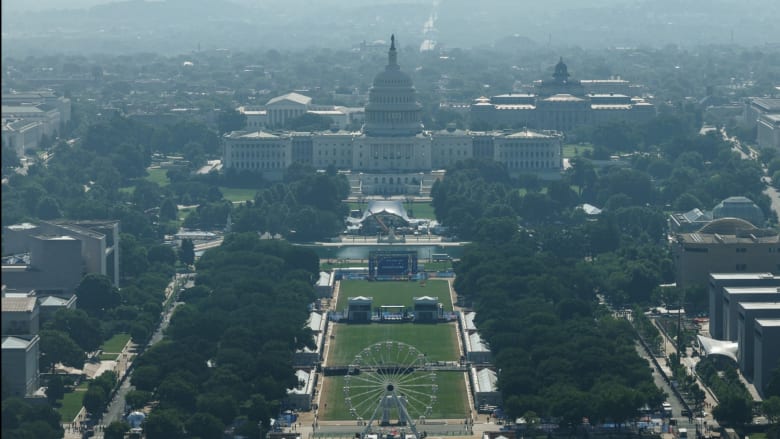
NBC News’ storyline shows that July 4 celebrations in Washington have long stopped being a routine fireworks-and-concert affair. The capital is preparing “Salute to America” as an event under special security conditions: it has been assigned the status of a National Special Security Event—i.e., a “national event of special protection.” This wording is usually used for inaugurations, summits, and major political forums. In other words, Independence Day in its current form is being seen not just as a holiday, but as a potentially vulnerable mass event on the scale of the state. The NBC News report emphasizes that this will allow the Department of Homeland Security to designate the Secret Service as the lead agency for security and to coordinate the work of the FBI, FEMA, and many other services. Even the terminology itself says a lot about the times: a national celebration in the 21st century is at once a demonstration of state power and a system for managing risks.
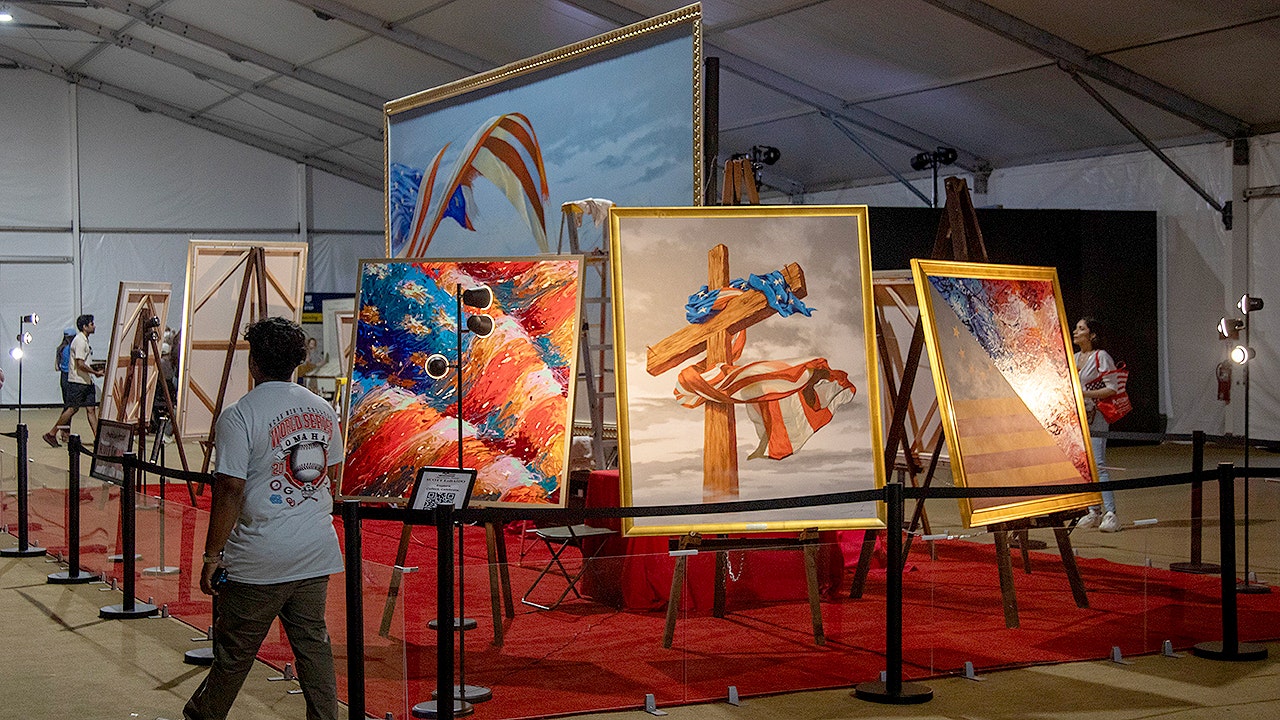
Against this backdrop, the episode involving artist Scott Lobaido from Fox News is especially telling. According to him, he is creating “the biggest oil portrait Old Glory”—that is, the American flag—on a canvas measuring 9 by 17 feet. Lobaido, known as a Trump supporter, insists that his work “doesn’t belong to any one party.” This line matters because it captures the central dispute around American symbolism today: the flag is both a sign shared across the nation and a marker of ideological affiliation at the same time. Lobaido says plainly: “This flag is for everybody.” He also pushes back against those who see the flag as a MAGA symbol—or, conversely, those who turn away from it due to political associations. In his interpretation, the flag is not a tool for division, but a foundation for freedom: “That American flag that men and women still die for is giving you the freedom to be whatever you want, and do whatever you want – protest whatever you want.” This is a very typical logic of American patriotic discourse: the right to protest is not set against state symbols; it is derived from them.
This is where the most interesting contrast between the two festive storylines emerges. In NBC News, the flag, salutes, and fireworks are built into the machinery of government—security, rules, and coordination. In Fox News, the flag becomes an artistic object—almost a religious image—that at the same time claims to be apolitical and carries strong political charge. Lobaido says it is “the greatest work of art”—not his art, but the American flag itself. In doing so, he elevates the symbol to the level of sacred national heritage. His question—“Where better to unveil, create in public, live, this greatest work of art ... at the birthday party of the greatest place in the universe, America?”—is also important: patriotic art here is understood as a public ritual, not as a closed, museum-like statement. It is not just a painting; it is an event.
The third piece, about Kelsey Pfendler, at first seems to stand apart, but in fact it continues the same logic of the American myth of overcoming. Unlike the official holiday and politicized symbolism, here the focus is on a personal feat that turns into a nationally recognizable story. Pfendler became the fastest solo rower to cross the route from California to Hawaii, and, according to KCRA, also set a record as the youngest person to cross the central Pacific Ocean alone. Her route—more than 2,400 miles, 43 days 17 hours 55 minutes—is not just a sporting achievement; it is almost a classic American narrative that discipline, endurance, and psychological resilience can turn a person into a hero of their time.
Her daily video updates are especially striking. They don’t show triumph in a glossy form, but work, pain, doubt, and routine: blisters on her hands, sleepless nights, struggles with wind and currents, tears of despair, fighting fatigue, sleep under a scorching sun, and everyday tasks like washing clothes, preparing food, and cleaning the hull of growths. These details make the record human rather than abstract. Pfendler does not hide vulnerability: “It’s demoralizing to row all day, not to make miles, but just to keep what you worked so hard for.” But that is precisely the point of the story: American success here is not given in advance—it is literally pulled out against the current. When she says, “You are in control of you,” the line sounds like a formula of modern self-help culture, but in an ocean context it takes on an almost existential meaning.
If you connect all three texts into a single line, it becomes clear that they are about different forms of the same American language: the state demonstrates order and security, the artist shows loyalty to a symbol, and the athlete shows a person’s ability to withstand an extreme test. In each case, public visibility is central. The holiday is held on the National Mall, the painting is created in front of an audience, and the record is documented through social media and news coverage. Modern American identity lives not only in institutions, but also in broadcasting the self to an audience. For an event to count as meaningful, it must be seen, shown, and shared with others.
At the same time, tension between unity and polarization is visible across all the materials. The flag that Lobaido declares a common symbol in his own words turns out to be the subject of political conflict: some see it as a MAGA emblem, others as a sign of suppression, while he tries to return it to a space beyond party politics. A state holiday conceived as unifying demands an unprecedented level of security coordination. And Pfendler’s story, despite its generally inspiring tone, is also built around the limits of possibility—physical, psychological, and symbolic. Here, the American dream doesn’t look cloudless; it requires protection, interpretation, and discipline.
There is another important nuance. In these texts, patriotism is not reduced to slogans. It is material: a specific security system, a massive canvas stretched in the capital, and a boat called Lily drifting across the Pacific Ocean. Symbols gain weight only when they are supported by labor, organization, and risk. That’s why Lobaido’s line about the flag being what allows people to protest, and Pfendler’s words that if her story helped at least one person feel stronger, then it already has meaning—sound especially powerful. In both cases, freedom is understood not as an abstract right, but as an lived opportunity to act.
The difficult-to-understand concepts in these texts are mostly tied to the American context. National Special Security Event, or NSSE, is the official designation for special protection for the largest and most sensitive events; it means expanded coordination between federal and local security services. Old Glory is a colloquial, but very enduring poetic name for the American flag. MAGA is the political slogan “Make America Great Again,” associated with Donald Trump and his movement. And “solo row from California to Hawaii” refers to a solo passage across the Pacific without a crew, requiring autonomous control over water, food, navigation, and one’s psychological state. In Pfendler’s case, it also matters that she was not just pursuing a personal record, but a story of overcoming that can be shown and shared with thousands of viewers on social media.
The main takeaway from these pieces is that modern America continues to find itself through big symbolic gestures. It celebrates when it feels threatened, raises the flag as a sign of unity in an era when meanings are fraying, and admires those who can make it through nearly impossible distances alone. NBC News shows a government preparing for the biggest holiday as a high-risk event; Fox News shows an artist trying to restore the flag’s nationwide status; KCRA shows a person whose record turns personal endurance into a public story. Together, these storylines show a country where patriotism remains a powerful resource, but its meaning is constantly being rebuilt between politics, art, and heroic self-testing.