Amazon’s latest announcements point to a common strategy: Alexa is becoming not just a voice assistant, but a hub for everyday digital services and home controls. The company is bringing the assistant to a photo frame, moving its tablets to a more familiar version of Android, and introducing a 3D map of the smart home. In all three cases, the goal is the same: to make Amazon’s technology more accessible and intuitive, so people can interact with it in familiar ways—by voice, touch, or through a visual model of their surroundings.
These products show that Amazon aims to connect devices, content, and home controls in a single ecosystem. But convenience is closely tied to dependence on the company’s services: some features require Amazon Photos, a Prime subscription, or access to Alexa+, while certain smart-home map capabilities will initially be limited to compatible devices.
The most everyday example of this approach is the new Alexa Photo Frame, a digital photo frame with a 10-inch touchscreen designed to look like a conventional frame. Its matte, anti-glare display and automatic brightness adjustment are intended to make images look more like printed photographs. But the device’s main feature is not the display—it is the software that selects the photos. Alexa+ can choose images based on lighting quality, smiles, seasonal themes, and other criteria, while filtering out screenshots and receipts. Users will be able to ask the frame to show, for example, photos from a trip to Italy or recent pictures of their children. Family members and friends will also be able to add images directly to the device. Voice notes for photos are supported, too.
The frame thus becomes more than a passive screen: it serves as a family channel for sharing memories. Automatic syncing is particularly useful when the device is given as a gift: new photos of selected people can appear on a relative’s frame without requiring any action on their part. But this also raises privacy concerns. If the frame is set to receive images from a shared Amazon Photos library, it is important to know in advance what that library contains and who can send new photos. An Engadget article about the Alexa Photo Frame specifically warns that anyone setting up the device as a gift should carefully check the contents of the photo library being synced.
The new photo frame costs $200 in black and $230 in a wood finish. It includes a 90-day trial of Alexa+, after which a Prime subscription will be required for features that depend on the service. This illustrates an important principle behind the entire product line: a device may seem like a standalone product, but its most sophisticated capabilities depend on cloud services and a paid subscription.
Another step toward bringing devices together is Amazon’s decision to drop Fire OS from its new tablets. As BGR reports, tablets under the new Alexa brand are switching to Android, and the Fire OS lineup is being discontinued. This is a significant shift for a company whose tablets have run on its own modified version of Android since 2011. Fire OS gave Amazon control over the software environment, but users have long complained about its limitations and lack of familiar Google apps and services. The move to Android should lower that barrier and make the devices easier to understand for people already using the standard app ecosystem.
At the same time, Amazon is not abandoning its identity so much as changing its foundation: the tablet is becoming more versatile in terms of its software platform, while remaining closely tied to Alexa. In other words, the company is trying to combine the openness of familiar Android with its own services and voice controls. BGR notes that the high-end Alexa Tablet 12 Pro has already drawn criticism, so switching to Android alone does not guarantee success. It addresses a longstanding problem, but device quality, performance, and price will still affect their appeal.
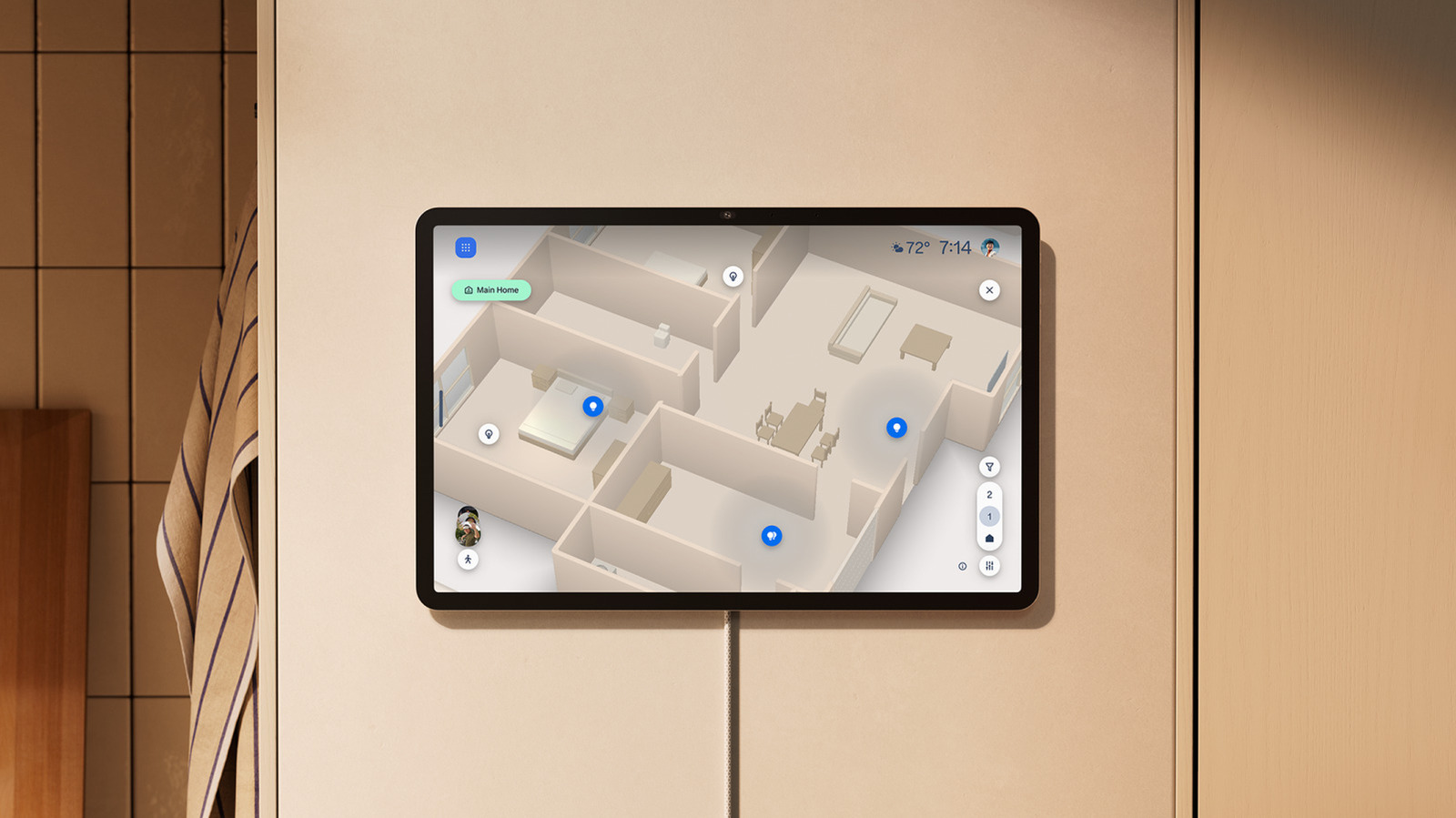
The most ambitious part of the new strategy is Alexa Home Map, an interactive 3D map of the home. Instead of a conventional list of rooms and tiles for devices, users see a digital model of their home, with lights, speakers, and other devices placed roughly where they are in real life. This interface could be more useful than a traditional list if someone remembers where a device is but not its name or which room it is listed under in the app. The map can also show lighting status—its color and brightness—while a speaker that is playing music is marked with an animation of musical notes. Compatible outdoor cameras can show cars and people moving near the home, and weather visualizations—such as rain or snow—make the model feel more like a changing view of the surrounding environment.
To create a map, users will need to enter their address and then scan the interior with a compatible iPhone equipped with a LiDAR sensor. LiDAR is a technology that measures distance using laser pulses, allowing a device to estimate the shape and depth of a space. After scanning, owners will need to manually place their connected devices on the map. That step could prove a practical obstacle: the more devices a home has, the more effort it will take to set up the virtual model and keep it up to date. The feature will initially be available in early access in the Alexa app for iOS, and will also be accessible through the Alexa and Ring apps and some large Echo displays. Android support is expected in early 2027, according to an Engadget article about Alexa Home Map.
What connects the three announcements is not just the presence of Alexa. Amazon is trying to replace disconnected actions with a single, more natural way to interact with technology. On the photo frame, users can search for memories with an ordinary phrase; on the tablet, they get access to a more familiar software platform; and in the smart home, they see devices not as an abstract list but in the context of their surroundings. This marks a shift from controlling individual functions to interacting through meaning and context: instead of “finding the right menu option,” users can ask to see photos, choose a device based on where it is in the home, or open a familiar app.
This approach has clear advantages. Voice search makes it easier to navigate a large photo library, the map could simplify control of numerous devices, and Android makes the tablets less closed off. But at the same time, Amazon’s unified platform takes on a greater role. Convenience depends on how fully users store their photos in Amazon Photos, connect compatible devices, and use Alexa services. Image processing, cloud syncing, and voice features require trust in how the company handles personal data. And because a home map contains information about the layout and location of devices, security concerns become especially important.
The main takeaway is that Amazon is developing Alexa less as a standalone voice assistant than as a universal interface between people, devices, and digital content. The company is betting on personalization and visual clarity, but the value of these new products will depend on two factors: how easy they are to use without complicated setup, and how convincingly Amazon explains what data it collects and which features will remain available without a subscription.