In three seemingly disparate stories — a fatal hit‑and‑run on a highway in Oregon, the departure of Goldman Sachs’s top lawyer over ties to Jeffrey Epstein, and cooling inflation in the United States — a single throughline emerges: how society seeks to impose order on a system of accountability. Accountability to the most vulnerable, accountability of elites for their associations and decisions, and accountability of the state for the economic conditions in which people live. All three stories are about trust in institutions: the justice system, big business, government and regulators. And about how that trust is fragile now and requires not just formal compliance with the law but also ethical standards, transparency and responsiveness to public outrage.
The story from Oregon, described in KTVZ’s account of the tragic crash on Highway 26 in the Warm Springs Reservation, appears very local on the surface: at night, between midnight and 12:25 a.m., a hit‑and‑run occurred at mile 88 and an elderly woman was killed — a tribal elder who suffered from dementia. The FBI, as KTVZ reports, is publicly asking citizens for help via tips.fbi.gov and emphasizes that it is “actively seeking information,” although “we have nothing to add at this time.” Behind these dry formulations lie several sensitive questions. A native elder, a person with dementia, dies on reservation land and the driver flees. This is not only a criminal act but also a blow to a community for whom elders are carriers of memory and cultural identity. The very fact that the case is being handled by a federal bureau and it is appealing directly to the public already reflects a deficit of trust and resources locally: the system must show that the life of an elderly tribal woman is valued no less than anyone else’s, and that the perpetrator will not go unpunished.
Dementia, which the deceased’s family mentions in comments to KTVZ, is a general term for a group of disorders that lead to progressive decline in memory and other cognitive functions. A person with dementia can become disoriented in time and space and poorly judge the danger of a road at night. This raises sharply the issue of collective responsibility: of families, communities and the state to protect people who can no longer fully care for themselves. The driver who struck her did not simply break the law by fleeing; they left without helping someone who was maximally vulnerable physically and cognitively. The FBI’s appeal to the public is an attempt to mobilize the entire social capital for the investigation: witnesses, cameras, rumors, vigilance. Paradoxically, to restore justice for the most defenseless, the state must appeal to civic solidarity.
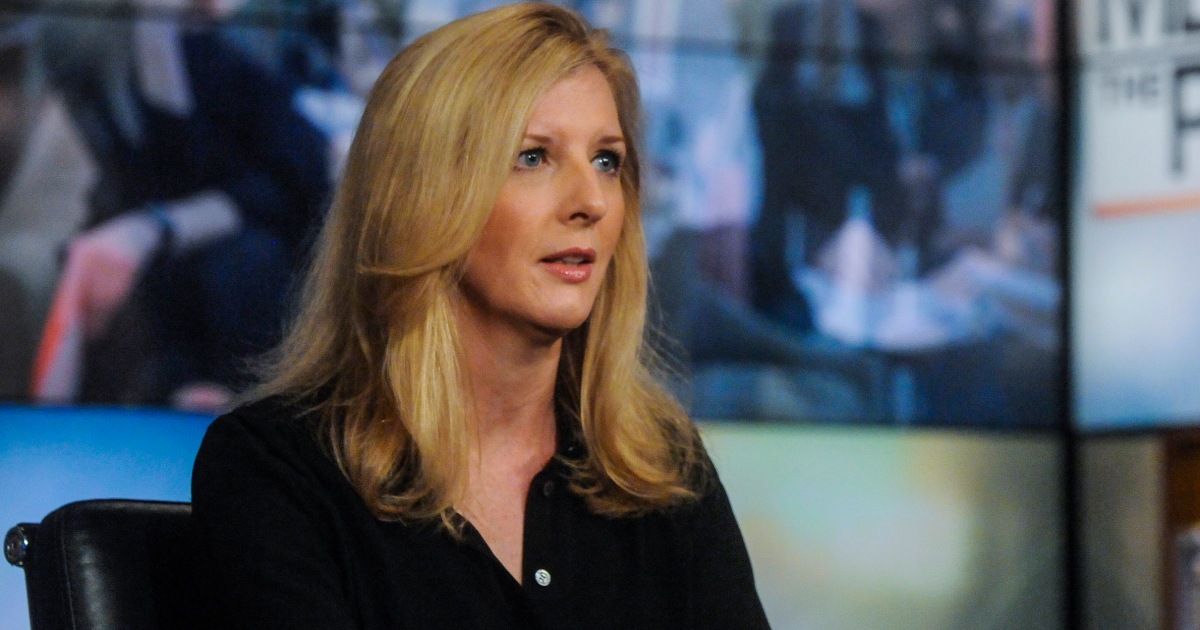
In the second story the dynamics are reversed: it concerns a person with enormous power and resources. Goldman Sachs’s chief lawyer Kathy Ruemmler announced her departure amid publication of correspondence with Jeffrey Epstein, as NBC News reports. Formally, nothing illegal has been proven in those letters, and Goldman itself says she “disclosed her contacts with Epstein” when hired in 2020. But public reaction to the “friendly” letters with terms like “sweetie,” references such as “uncle Jeffrey,” mentions of an Hermès bag gift and even Ruemmler’s inclusion on a list of potential executors of Epstein’s will have turned that connection into a toxic asset.
It’s important to understand who Ruemmler is and why her departure is so telling. Before Goldman Sachs she served as White House counsel in the Obama administration — in other words, someone who knew and shaped legal policy at the highest level. In an interview with the Financial Times, recounted by NBC, she openly admits she decided to step down because media attention on her past work as a defense lawyer had become a “distraction” for the firm. Goldman’s chairman David Solomon, in his official statement, says he accepted her resignation and “respects her decision,” while effusing praise for her professionalism.
On the surface this looks like a polite personnel maneuver, but the point is elsewhere: the corporate world responds not to a court verdict but to the reputational judgment of public opinion. The letters released by the Justice Department as part of the so‑called “Epstein files” — troves of documents about Epstein’s connections to politicians, business elites and lawyers — have cast doubt not only on Ruemmler’s past role as a defense attorney but also on her current role at a major bank whose stability depends heavily on the trust of clients, regulators and partners. Her spokesperson’s argument, cited in the Wall Street Journal and relayed by NBC, boils down to saying the relationship with Epstein was strictly professional and arose because they shared a client. But the tone of the correspondence, the gifts, and the fact that one of the first calls after Epstein’s 2019 arrest was to Ruemmler all undermine confidence in that version.
Her departure is part of a broader wave of fallout from the “Epstein files” publications, noted by NBC News: Paul Weiss chairman Brad Karp is stepping away from his role as chair; Downing Street chief of staff Morgan McSweeney resigned after criticism for recommending Peter Mandelson as ambassador to the U.S., a post Mandelson lost because of mentions in the Epstein materials. A new norm is emerging: formal legal innocence no longer guarantees political or corporate safety. The concept of due diligence — vetting the reliability and reputation of partners — is becoming two‑way: society is vetting elites not only for criminal records but also for the character of their surroundings and the tone of their relations with odious figures.
It is worth clarifying that the Epstein case is not only a criminal case about sexual exploitation of minors but also a symbol of systemic institutional failure to prevent that exploitation: law enforcement, financial regulators, and the political establishment. When, after all these failures, it turns out that leading lawyers and politicians treated him as an “older brother” or “uncle,” whether jokingly or seriously, trust in them collapses regardless of their actual legal responsibility.
Against these stories of individual and moral responsibility, the third article—about inflation—may seem removed from ethical quandaries, but in essence it continues the same line: how the state and economic institutions are accountable for the “affordability of life” for citizens. Spectrum News’s piece on the key inflation gauge falling to nearly a five‑year low reports that year‑over‑year price growth in January was 2.4% versus 2.7% the month before, and core inflation — the measure that excludes volatile food and energy prices — fell to 2.5% year over year, its lowest level since March 2021.
Core inflation is an important term: it excludes categories with sharp swings, such as gasoline and food, to better capture the underlying trend in price changes. It is a guide for the Federal Reserve (the U.S. central bank), which aims to keep inflation around 2% over the long term. Formally, the numbers are close to target, and parts of the market immediately reacted: yields on 10‑year U.S. Treasuries fell on expectations of imminent rate cuts, as Spectrum News notes. Falling yields mean investors are willing to accept a smaller inflation premium and expect a more accommodative monetary policy.
But behind the encouraging figures lies the discomfort of millions of households: consumer prices are still about 25% higher than five years ago. That growth slowing does not erase the fact that a new price “step” has been established as the norm. The piece directly states: despite the index cooling, the question of affordability remains the dominant political issue. This concept is broader than inflation itself: it includes the real relationship between prices and incomes and the subjective feeling of whether someone can afford housing, healthcare, education, transportation. When wages grow more slowly than prices, or stop growing because of a hiring “crash,” as Spectrum News describes, and employers’ market power increases, people lose bargaining power and feel the system is not working in their favor.
It is interesting to trace how economic inflation intertwines with inflation of political responsibility. First, inflation has been the result of political and economic decisions made during the pandemic era: large stimulus packages, supply‑chain disruptions, changes in tariff policy. The article highlights the role of tariffs imposed by Donald Trump, which raised prices on furniture, tools and auto parts, and cites a Federal Reserve Bank of New York study: companies and consumers in the U.S. effectively pay about 90% of the cost of those tariffs. This means political decisions like protectionism act as a hidden tax on ordinary citizens. Economists warn that as businesses pass more of those costs onto consumers, inflation may remain above the Fed’s target.
Second, the debate over Fed rates and sharp criticism of the regulator by Trump, mentioned in Spectrum News, shows that society expects from a formally independent institution not only technical management of the money supply but also politically comfortable outcomes — cheap credit, affordable mortgages, rising markets. When those outcomes do not materialize, trust in the regulator falls, and economic data becomes treated as political ammunition in electoral battles.
Against this backdrop of eroding trust, it is especially notable that publicity becomes the key tool for managing crises in all three stories. The FBI openly asks citizens for help via tips.fbi.gov in the fatal hit‑and‑run; the Justice Department mass‑publishes the “Epstein files,” making visible the structure of elites’ informal ties, which ultimately leads to Ruemmler’s resignation, as described by NBC News; and the Bureau of Labor Statistics and the Fed, through reports like the one covered by Spectrum News, seek to demonstrate that inflation is “under control.” Transparency becomes a response to the crisis of trust — but only if it is followed by real action, not just information campaigns.
If we try to synthesize the key trends, several important conclusions emerge. First, the social demand for justice and protection of the vulnerable is growing. The death of an elderly woman with dementia on the reservation and the FBI’s response is not a single crime chronicle but a symptom: any display of contempt for the life and dignity of those already marginalized provokes increasingly severe condemnation. Second, elites face new standards of accountability. Ties to odious figures, even if not criminal in the past, can cost careers, as in Ruemmler’s case and other figures mentioned in NBC News. Society expects not only technical competence but also ethical purity.
Third, economic stability is no longer perceived as an abstract macro indicator. People judge policy by how it affects their wallets and prospects. Inflation, even when easing to 2.4%, is viewed through the lens of a 25% price rise over five years, tariffs passed into consumer prices, and wage stagnation, as Spectrum News details. This creates a risk of political disillusionment even when the economy formally shows improvement.
Finally, there is another, less obvious but fundamental trend: the blurring of boundaries between legal, moral and political responsibility. The driver who fled the Warm Springs crash undoubtedly broke the law; but the public resonance of the case also concerns the moral dimension — they left to die a person who needed help. Ruemmler and other figures in the “Epstein files” may not be indictable, but their moral responsibility for choosing their circle becomes the subject of public judgment. Politicians who impose tariffs or pressure the Fed to cut rates act within the law, yet they are held accountable for rising prices and the “unaffordability” of life.
In that sense, the three stories examined are different manifestations of the same process: society increasingly demands that power, in whatever form it appears — behind the wheel of a car, in the office of a top executive, or in the boardroom of a central bank — be accompanied not only by privileges but by real, not merely ceremonial, responsibility to people.