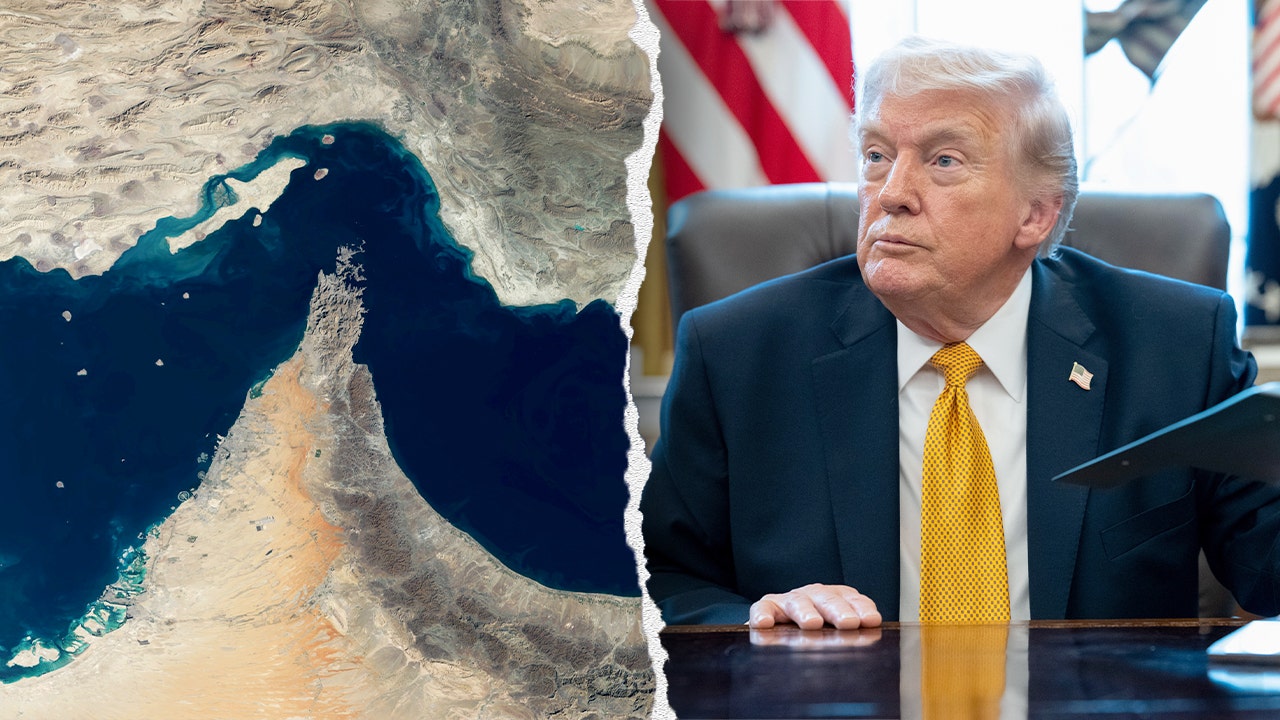
Today’s news feed looks like a chaotic collection of unrelated events: a new war involving the US, Israel and Iran, record heat and wildfires in the US, and another scandal surrounding Tiger Woods. But stepping back from the details reveals a common thread: old systems and familiar “rules of the game” in politics, climate and even private life are ceasing to function. They are being replaced by harsher, riskier and often reactive forms of governance — through pressure, shock and crisis. War is used to reshape the regional balance, climate itself becomes a threat factor, and celebrities like Woods find themselves trapped by biographies and environments that no longer forgive mistakes. It’s all the same story: a world where crises become the main tool for changing systems.
In Tanvi Ratna’s piece for Fox News on Donald Trump’s strategic line in the Middle East, the issue is not simply a war with Iran, but a “system under stress” that is being deliberately reworked through warfare and economic pressure. The author emphasizes that the current US and Israeli campaign against Iranian infrastructure is not “another round” of a typical Middle Eastern conflict but an attempt to break the old architecture of power and build a new regional structure of relations (https://www.foxnews.com/opinion/tanvi-ratna-one-war-trump-breaking-middle-easts-old-power-structure).
To understand how radical this shift is, Ratna describes the previous model that emerged after the Iraq War, the Arab Spring and the fight against ISIS. The region operated under a kind of “managed balance”: three parallel systems of power coexisted without resolving the root contradictions. On one side was Shiite Iran with its “axis of resistance” — a network of allied armed formations and political structures in Lebanon, Syria, Iraq and Yemen. Crucially, these were not merely proxy groups but institutional anchors: militias integrated into state organs, parties controlling budgets and territories. This allowed Tehran to expand influence “below the threshold of war,” meaning it could avoid direct, total confrontation while increasing its levers of pressure.
On the other side, the Sunni world was split into competing camps. Saudi Arabia and the UAE built a centralized, state-oriented order, while Turkey and Qatar bet on Islamist political movements as an alternative source of legitimacy. Their bond was not unity but rivalry — each actor used regional conflicts to expand its own influence without creating a single strategic bloc.
Israel existed separately — militarily dominant but politically isolated. According to Ratna, its main motive was deterrence: to strike as needed but avoid entanglement in the region’s fragile alliances. In this configuration the US acted more as an administrator of the system than as the architect of a new order. The nuclear deal with Iran treated the nuclear program separately from Tehran’s regional policy, and conflicts like the Gaza confrontations followed the familiar “escalation–ceasefire” pattern, where tension was postponed rather than resolved.
Ratna’s key point: Trump deliberately abandoned this approach of “managed instability.” Leaving the nuclear deal in 2018 and imposing sweeping sanctions on Iran — especially on the oil sector and finance — was not merely a dispute over the nuclear program but an attempt to raise the cost of running Iran’s entire regional project. This was accompanied by symbolic and operational blows — designating the Islamic Revolutionary Guard Corps as a terrorist organization in 2019 and the killing of Qasem Soleimani in 2020. What many then saw as escalation for escalation’s sake, Ratna interprets as a coherent strategy: to destroy Tehran’s confidence that it could always operate in the “gray zone” — unpunished, just below the threshold of war.
At the same time, Trump began to reshape the system’s opposite pole — the Sunni states and Israel. The so-called Abraham Accords of 2020 broke a long diplomatic axiom: normalization with Israel had long been seen as impossible without resolving the Palestinian issue. Now the UAE, Bahrain, and later Morocco and Sudan began building ties with Israel based on immediate interests in security, technology and access to the US. Israel, in effect, was integrated into the regional architecture rather than remaining an external military actor.
However, Ratna stresses that this created only a partial new configuration. Saudi Arabia remained cautious, Turkey and Qatar pursued their own agendas, and Iran’s “axis of resistance” network was not dismantled. Then, in the author’s view, Trump’s approach shifted from “realignment” to “coercion”: in the Gaza war after October 7, 2023, the US achieved a phased agreement (by early 2025) in which each step — hostage releases, withdrawal of Israeli forces, humanitarian access — was tightly linked to specific control mechanisms. This embeds conditionality and measurability into the agreements themselves: participation in the system becomes a matter not of symbolic gestures but of concrete, verifiable actions.
Ratna sees the same principle in the 2026 US-Israel framework for reconstruction and governance with regional partners: socio-economic and governance projects are embedded in a logic of security and alliance. Still, despite these changes, old structures have not disappeared entirely. Hence the significance of the current war that began in late February 2026: massive strikes on Iran and Tehran’s retaliatory missile and drone attacks, spikes in oil prices and pressure on key sea routes (for example, transit through the Strait of Hormuz), as discussed in the Fox News piece (https://www.foxnews.com/opinion/tanvi-ratna-one-war-trump-breaking-middle-easts-old-power-structure). Ratna reads this as a tool to coerce all three subsystems — Iran, Sunni states and Israel — into simultaneous strategic reassessment.
The point, in her assessment, is a “compression of time horizons”: rather than gradual evolution and ambiguous positions, actors face the need to make choices now under the combined pressure of military and economic risks. Iran can no longer expand with impunity — every new “node” of influence automatically incurs higher costs and the threat of direct strike. Sunni governments lose the familiar room to maneuver between blocs: “strategic ambiguity” becomes costly, and the benefits of clearly joining a new regional framework rise. Israel becomes not only a military hub but a connected node of shared infrastructure: security, technology and governance.
Thus, the war Ratna describes is not merely a series of combat episodes but, in her view, an attempt to reformat the entire regional order through crisis and forceful pressure. Not to manage instability, but to make maintaining old contradictions too costly. Whether this will work remains an open question, but the author stresses: the rules of the game have already changed, and war has become an instrument of structural reshaping, not just defense or punishment.
Notably, a similar logic of “pressure through extremes” appears in a seemingly different domain — climate news from the US. ABC News’s report on US weather describes not just a hot week but a continuous regime of climatic stress: red flag warnings are in effect over much of the Rocky Mountains, the Great Plains and Western states, while the Southwest is experiencing record March heat (per ABC News: https://abcnews.com/US/fire-danger-weather-continues-great-plains-record-breaking/story?id=131517904).
The authors note that wind gusts on the Great Plains reach 30–60 mph; at such speeds, combined with low humidity and dry vegetation (“dry fuel”), any ignition can rapidly turn into an uncontrolled wildfire. Even in places without official warnings (parts of the Mid-Atlantic and the Northeast), the same combination of factors raises risk. In other words, the natural, climatic system is in a state of sustained tension: a small trigger is enough to push it into a phase of disaster.
Meanwhile the Southwest, according to ABC News (https://abcnews.com/US/fire-danger-weather-continues-great-plains-record-breaking/story?id=131517904), is literally “baking” in unusually severe March heat. Eighteen cities in California, Arizona, Colorado, Wyoming, Nevada and Utah have set or tied temperature records: 102°F (about 39°C) in Yuma, Arizona; 100°F (about 38°C) in Death Valley; 96°F in Phoenix; 92°F in Las Vegas. This matters not only as a weather anomaly but as an indicator of a “shift in normalcy”: what used to be extraordinary is now occurring more frequently.
The text stresses that short-term “relief” will arrive in the Southwest toward midweek, but the strategic picture is grim: the western US faces prolonged dry conditions that worsen existing drought and record-low snowpack. Low snowpack means less water in rivers and reservoirs, water shortages for irrigation, energy and cities, and further growth in summer fire risk. Meanwhile, the East in early April, ABC News forecasts (https://abcnews.com/US/fire-danger-weather-continues-great-plains-record-breaking/story?id=131517904), will live with a paradox: on one hand warmer-than-usual weather, and on the other a “messy” meteorological pattern with frequent rains and storms, some reaching severe levels with gusty winds, hail and localized flooding.
It’s important to explain what the term “fire weather danger” means. It is not a fire itself or even a forecast of a specific ignition, but a combination of meteorological and ground conditions — temperature, wind, humidity, vegetation state — that make rapid, uncontrollable fire spread likely. A red flag warning is not an abstract risk but an official notice from the weather service that in the coming hours or days any open flames could lead to large fires. Effectively, it is a state in which the climatic system is “at the limit” and requires society to change behavior — limits, heightened vigilance and different everyday structures.
Here a parallel with Ratna’s Middle East picture emerges: rather than smoothing and adapting, both authorities and nature act through intensification, accumulation of tension and consequent pressure. There, war and sanctions are used to accelerate political decisions; here, extreme weather events act as de facto regulators — changing land use practices, energy consumption and migration. In both cases reality is reconfigured through a series of crises, not through gradual reform.
At a different level — the level of private life and cultural icons — the same pattern appears in Tiger Woods’s story, reported by NBC News. In its piece on Woods’s recent crash and arrest, NBC reports (https://www.nbcnews.com/news/us-news/tiger-woods-rollover-crash-florida-rcna265516) that the 50-year-old golfer was detained in Florida on charges of driving under the influence after his vehicle rolled over. According to Martin County police, while driving a Land Rover at high speed he caught up to a truck with a trailer, tried at the last moment to avoid a collision, but still clipped the trailer. Woods’s vehicle rolled onto the driver’s side, yet he emerged through a window and, like the truck driver, was uninjured.
At the scene, officers suspected Woods was under the influence of alcohol or drugs: he took a breath test but refused a urine test, and said he had taken medications for old injuries. In addition to the DUI charge, he was charged separately for refusing the test. NBC recalls this is not his first such episode: in 2017 Woods was arrested in Florida on suspicion of driving under the influence of prescription medication and later voluntarily entered rehab. In 2021 he had a serious high-speed crash in California, but police then found no signs of impairment and did not seek a blood warrant, drawing public criticism. Now, per NBC News (https://www.nbcnews.com/news/us-news/tiger-woods-rollover-crash-florida-rcna265516), Woods had just played in the final of the Tomorrow’s Golf League at Jupiter Links Golf Club, and this new incident comes amid efforts by the athlete to remain in the public and professional eye.
Woods’s story is an example of how a personal biography, injuries, dependence on medications and the pressure of fame gradually create a “system under stress” at the individual level. Each new episode does more than add another item to a file — it changes the rules of the game: sobriety checks become a routine part of encounters with law enforcement, each refusal to test is treated as a separate violation, each new headline intensifies public pressure. As in Ratna’s Middle East narrative, the old “management regime” — where a star might expect leniency or softness from the system — is fading. In its place comes a configuration in which unresolved contradictions and unhealed wounds (physical and symbolic) make daily life extremely unstable.
These three stories outline a common trend: the world is functioning less on gradual adaptation and more in a mode of coercion through crisis. In international politics this shows up as a rejection of “managed instability” in favor of sharply changing incentives: rather than separating nuclear issues from regional behavior, the US under Trump, per Tanvi Ratna in Fox News (https://www.foxnews.com/opinion/tanvi-ratna-one-war-trump-breaking-middle-easts-old-power-structure), makes Iran’s entire set of behaviors an object of pressure. In the climate sphere we see extreme events — heat, drought, wind — turning from “anomalies” into a new norm, with the system responding not through deliberate mitigation policy but through increasingly frequent emergency warnings, as ABC News reports (https://abcnews.com/US/fire-danger-weather-continues-great-plains-record-breaking/story?id=131517904). In celebrities’ private lives the feedback loop among past experience, dependency, media and law enforcement makes a return to stability extremely difficult, as Woods’s biography demonstrates per NBC News (https://www.nbcnews.com/news/us-news/tiger-woods-rollover-crash-florida-rcna265516).
Hard-to-grasp concepts — like “forcibly aligning incentives” in international politics — can be explained with a household metaphor. If the regional system used to be like a house whose residents feud but whose owner simply made sure they didn’t kill each other, now that same owner has begun deliberately cutting power, water or access to rooms for those who refuse to change their behavior. In the climate sphere the analogy holds: nature seems to be “raising its voice” — from mild warnings (anomalous heat, drought) to severe sanctions (fires, floods), forcing society to reorganize lifestyles and infrastructure. In private life and for stars, the role of such a “hard regulator” is played by law, media and public opinion: each new crisis becomes a tool of pressure that will either break the system or force it to change.
The key consequences of this trend are ambiguous. On one hand, logic of hard pressure can indeed dismantle entrenched, toxic configurations — whether the regional architecture of the Middle East or irresponsible handling of climatic risks. On the other hand, such approaches operate on the edge: a sudden escalation with Iran could spiral out of control, extreme weather exacerbates social inequality and vulnerability for the poorest, and repeated crises in the lives of public figures sometimes end in tragedy. A world that increasingly changes through compressed timelines and crises requires not only analysis of incentives but conscious choice: to limit oneself to managing the next flare-up or to build new, more resilient systems before they again fall “under stress.”