
The World Cup has gripped not only Seattle — the host city — but many communities across Washington state. In Bellevue, hundreds of people gathered around a big screen to watch the USA vs. Australia match. The atmosphere felt like a neighborhood festival: fans in national team gear, balloons, and chants of “USA.” Organizers say it was an ideal alternative to the huge crowds in downtown Seattle.
In Bellevue, officials tried to recreate the spirit of the World Cup without long waits for the metro and massive crowds. Economic development official Jesse Canedo called it a “community celebration,” where neighbors greet one another and the vibe feels like a block party. The city is one of nine official fan zones, approved by the local organizing committee for Seattle FWC26. The committee handles logistics, safety, and engagement with fans, and the nine fan zones are designed to reach as many residents and visitors as possible across the state — from eastern Washington to the coast. That way, fans can watch matches in a comfortable setting without traveling into crowded Seattle, while at the same time promoting tourism across the region.
The purpose of such venues is twofold: to help local residents feel a sense of unity during the USA team’s goals, and to attract World Cup guests to their cities. Visitors from other countries and from other parts of the U.S. can choose these cities as bases for day trips or excursions. While it’s too early to tally tourism numbers, local fans are showing remarkable enthusiasm.
In Bremerton, 1,500 people watched the USA vs. Paraguay game at Quincy Square. A 20-foot LED screen installed there broadcast the match from California. Kitsap County Council member Kathy Walters said it created “a nice feeling of patriotism and unity, with everyone together chanting ‘USA.’” Bremerton and Kitsap County are among the fan zones, and local ferries are running longer-than-usual hours to bring fans from Seattle. Washington State Ferries are the most direct and reliable way to cross Puget Sound, which separates Seattle and Bremerton: there are no bridges across this stretch of water, and the drive around takes more than an hour and often hits heavy traffic. The ferries connect densely populated Seattle with the Kitsap Peninsula, home to a naval shipyard and residential neighborhoods, making them an essential part of the city’s event-day logistics during the tournament.
Bellevue, which has the second-highest number of hotels in the state, sought to complement the influx of tourists. “We knew that big FIFA parties would be happening downtown in Seattle, Tacoma, and Everett,” Canedo explained. “We wanted to offer an experience for people who want to take part, but without the chaos.” The cities funded the events through federal and local grants, lodging taxes, and their own budgets.
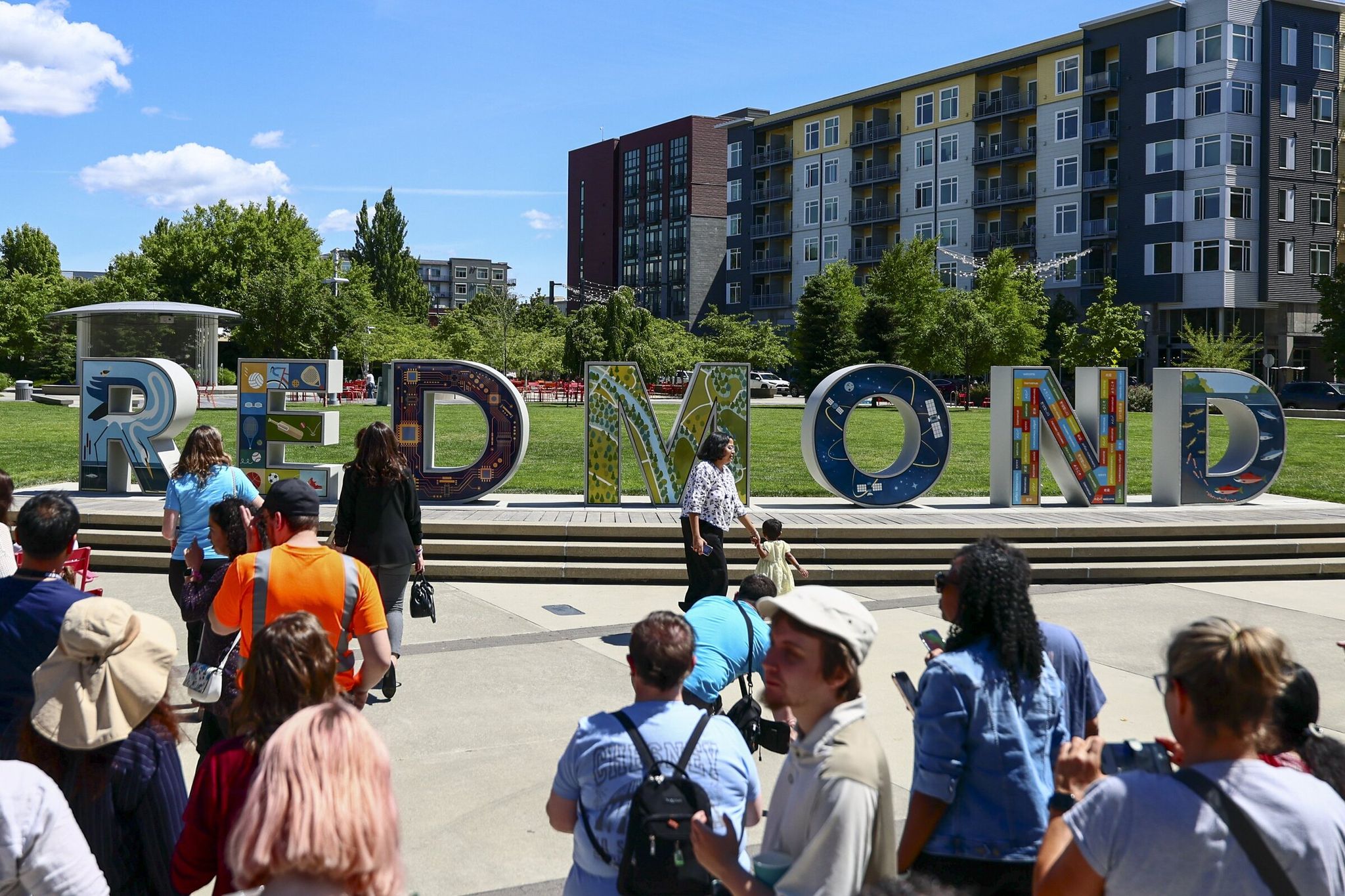
Redmond set aside $2 million for celebrations — part of investments underscoring the city’s close ties to Microsoft, whose global headquarters is located here. For the company, it’s not just an office but a symbol of its roots and innovation; Microsoft is the largest employer, a sponsor of public projects, and a taxpayer, so the city directs funds toward events that draw in residents and tourists. In Redmond, there are match-day parties, a lecture series called “Futball for All” featuring football experts, and a permanent sign made of concrete letters 5 feet tall reading “REDMOND.” Mayor Angela B. Burney said at the unveiling: “This sign keeps the door open after the tournament ends — a standing invitation to everyone who lives here and anyone who wants to drop by.”
In Bellingham, another fan zone, organizers initially planned six big viewing events, but quickly realized it was too expensive. Instead, the city partnered with venues that already had the infrastructure in place. At Kulshan Brewing’s beer garden, 7,000 people showed up, including 1,500 visitors. “We hope they come back, maybe not next year, but they’ll want to spend time in this part of the country and share good impressions,” said Tara Sandin, the community development manager.
Based on: World Cup fever spreads to Washington communities beyond Seattle