
When the world's attention turns to Seattle in June 2026 for the FIFA Men’s World Cup, they will see not only thrilling matches but also the spirit of the city. Organizers emphasize that Seattle is a place where inclusivity, joy and justice form the foundation of the local LGBTQ+ community — a symbolism made all the more meaningful during Pride Month.
The tournament’s timing overlapping with Seattle’s Pride Month did not go unnoticed: organizers have planned special events around the "Pride Match" on June 26, announced a Pride-themed poster contest and launched a social media video campaign called "How We Pride." These activities are intended to showcase the region’s openness and hospitality to the world.
The "Pride Match" — featuring Egypt and Iran, countries where homosexuality is criminalized — drew particular attention. Representatives of the Egyptian federation have said they categorically reject any pro-LGBTQ+ activities during the game, but local organizers confirmed that the planned celebrations outside the stadium will take place regardless. FIFA’s head assured in late April that the match will go ahead as scheduled.
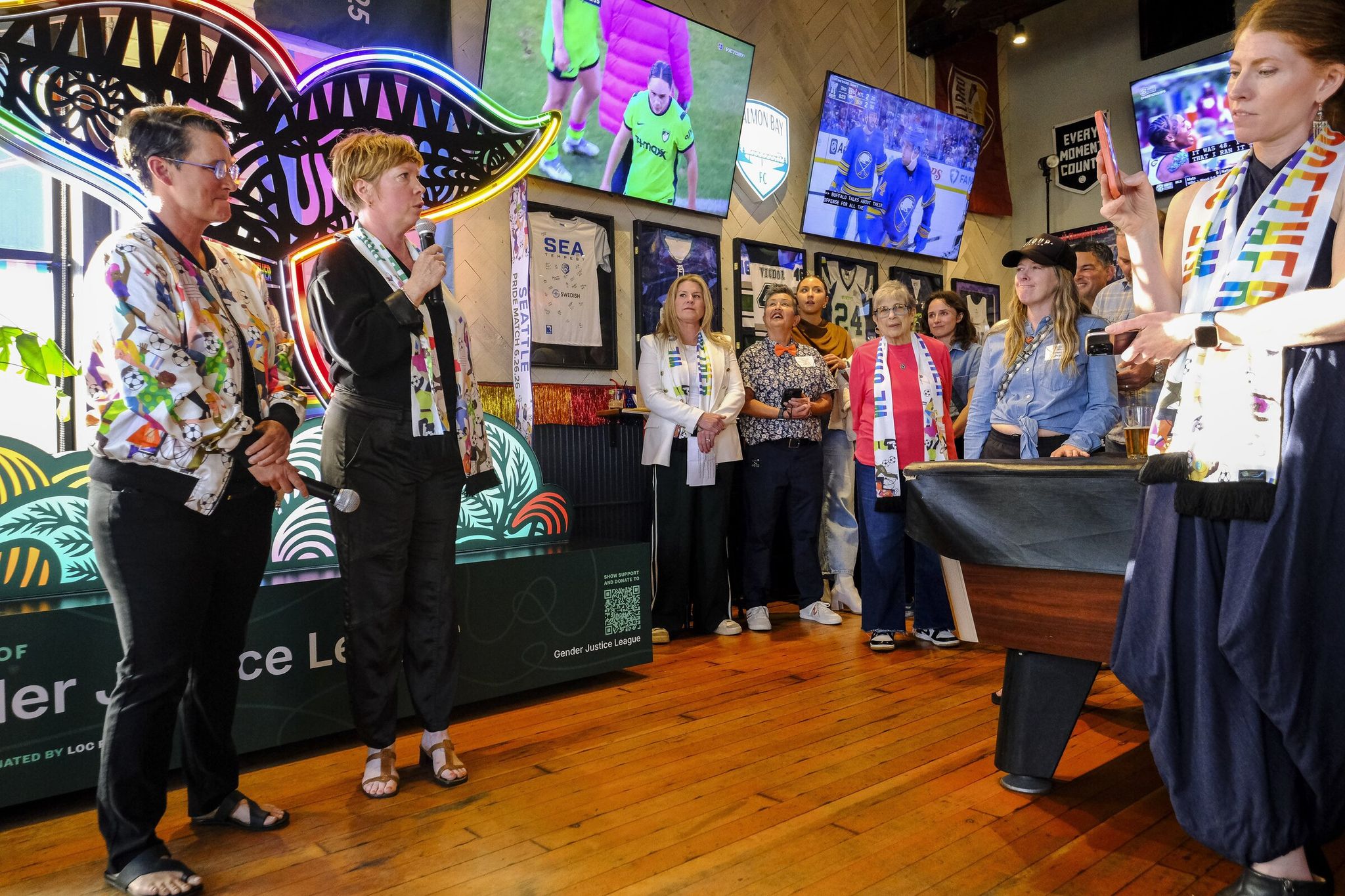
In May, the Rough & Tumble Pub, a women’s sports bar, hosted a celebratory launch for the "Welcome to Seattle: This is How We Pride" campaign. Located in the Ballard neighborhood, this bar is one of the few spaces in Seattle created specifically for queer women, nonbinary and transgender people. Its founders, Faith Dodd and Jennifer Perkins, deliberately moved away from the traditional model of "gay bars" oriented primarily toward cisgender gay men, creating a place where sports and inclusivity intersect. This reflects the evolution of women’s queer spaces in Seattle: from the underground "women’s bars" of the 1970s to visible, community-centered venues where queer women can feel safe while participating in popular sports culture.
More than 50 community leaders, including soccer superstar Megan Rapinoe, former Maine Supreme Court Justice Mary Yu and other activists, appeared in 13 videos. They answered the question "How do you Pride?", and the videos will be shown at fan zones and sporting events.
A special role in the campaign was played by Puyallup tribal council member Annette Bryan. The tribe became, for the first time in US history, an official "host city" of the World Cup alongside Seattle — an unprecedented recognition that they view as an act of sovereignty. Having been effectively displaced from their traditional lands in the 19th century, they now participate as an equal partner in a global sporting event. Politically, this shifts the narrative: Indigenous peoples are no longer seen as "remnants of the past" but as active participants in the modern regional economy and culture. Bryan noted that historically Indigenous peoples honored Two-Spirit people — a pan-Indigenous term used by some Native nations, including the Coast Salish tribes, to describe people who possess both masculine and feminine spiritual qualities. Historically, such people often held respected roles as healers, mediators and keepers of tribal traditions. In contemporary Seattle this concept has become a bridge between Indigenous and LGBTQ+ communities: cross-community events are held in Capitol Hill, and organizations like the Seattle Indian Health Board offer support to Native members of the queer community. The Puyallup tribe plans numerous public actions as part of the tournament.
My long-time friend Bukda Gheisar, director of equity for the Port of Seattle, also took part in the campaign. Of Iranian descent and identifying as queer, she wanted to share her dual identity. Gheisar pointed to a problem: discussions around the "Pride Match" create a false dichotomy between "repressive Iran and progressive Seattle," erasing the real existence of queer people in those countries.
Now, with transgender and LGBTQ+ rights in the US under serious threat (in 2026 some 530 bills targeting them were introduced nationwide), Pride celebration takes on special significance. Gheisar recalls how, over her 40 years as a lesbian, queer events in Seattle have evolved from relatively homogeneous, predominantly white spaces concentrated in Capitol Hill to diverse spaces involving immigrants and people of many races. The HIV/AIDS epidemic prompted massive mobilization but also intensified racial and class divisions. Since the 2000s a transformation has occurred: immigrants from Asia, Latin America and East Africa brought intersecting identities. That has made the community multinational and multiracial — organizations such as Queer the Land and Entre Hermanos were created specifically for LGBTQ+ people of color and immigrants.
"Today we have a very beautiful and diverse community that I feel I belong to," Gheisar says. She stresses that it is important to convey to all World Cup visitors that Seattle is a rich, multifaceted community ready to share the stories and voices of all its residents, regardless of their background or identity.
Based on: FIFA World Cup brings Seattle to global stage during Pride month