
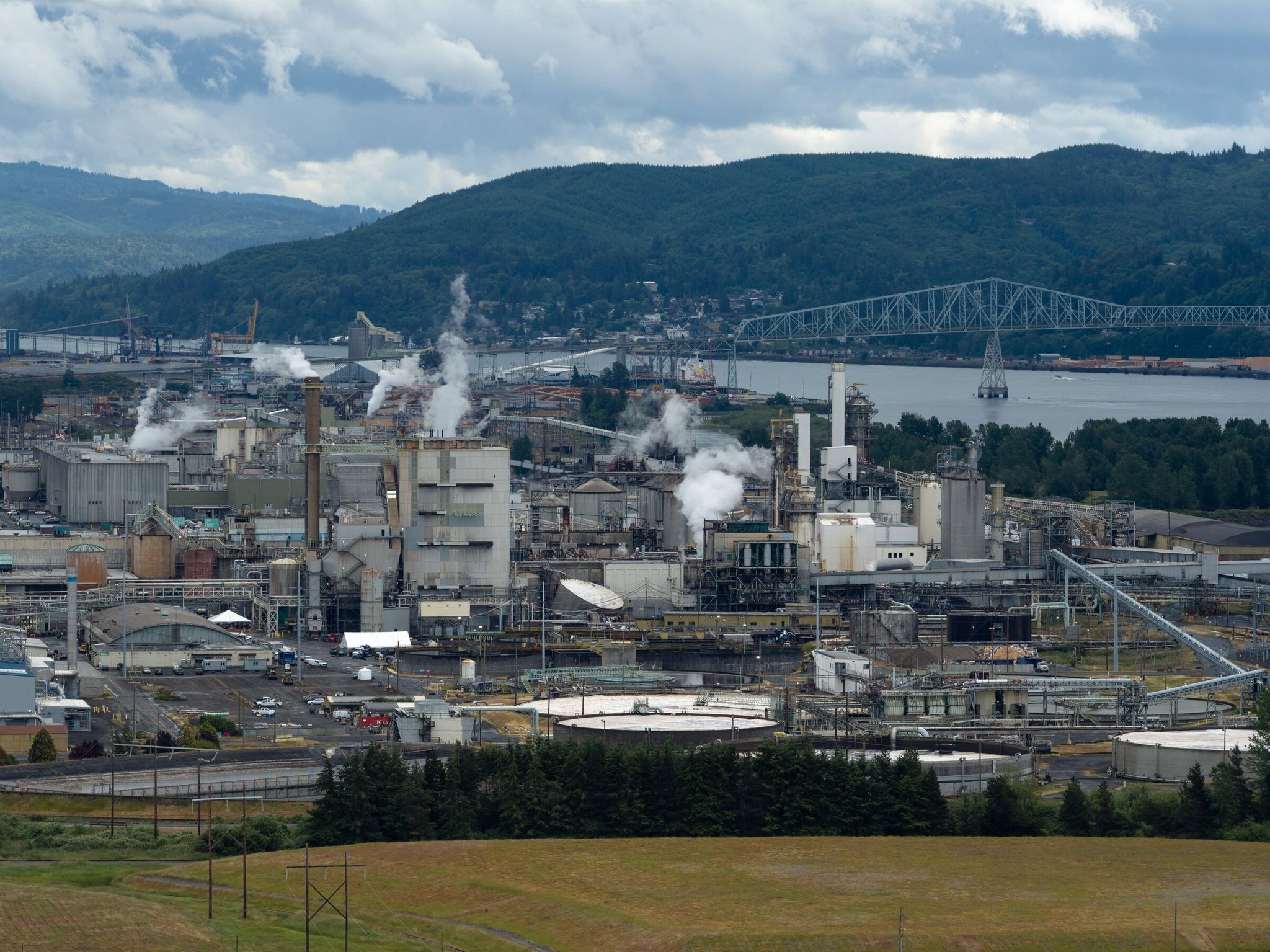
More than two weeks have passed since the accident at the Nippon Dynawave Packaging plant in Longview, Washington, that claimed 11 lives. Most of the more than 500 employees are still awaiting word on restarting operations at the damaged facility, which produced material for paper cups and other packaging. The company, owned by Japan’s Nippon Paper Industries, has confirmed partial resumption of shipments, but full production restart has not been announced.
Company spokesperson Sam Jefferis said current activity at the plant is limited to shipping finished goods that were produced before the May 26 accident. Among the items being shipped is packaging used, in part, for school meal programs. The company has not said how many employees have already returned to work, but union representative Joshua Estes said some workers have resumed duties and others are ready to come back at the first call.
The tragedy has deeply shaken Longview — a city of about 38,000 people that for decades relied on the forest and paper industries. The city’s location at the mouth of the Columbia River played a key role in the industry’s development: it provided access to vast timberlands in both Washington and Oregon and to the Pacific Ocean for maritime transport. Unlike Seattle, located on Puget Sound, Longview had greater opportunities to move logs by river and to build large pulp and paper mills that required extensive land and deepwater ports.
The accident occurred when a storage tank failed, releasing tens of thousands of gallons of caustic “white liquor” — an aggressive chemical solution used to cook wood chips in the kraft pulping process. The mixture, which contains sodium hydroxide and sodium sulfide, breaks down lignin that binds wood fibers. A leak on this scale can have serious environmental and health consequences: chemical burns to skin and airways, soil and groundwater contamination, death of aquatic life due to high alkalinity, and the release of toxic gases such as hydrogen sulfide. The incident is being regarded as one of the deadliest industrial disasters in Washington state history. It can be compared with other major regional accidents, including the chemical-plant explosion in Pasco (1988), the ammonia leak at the Union Gap meatpacking plant (2008), and the pulp-mill fire in Tacoma (2008), which led to increased inspections, tougher requirements for release-prevention plans, and mandatory adoption of safer technologies, including chemical monitoring at facilities.
The 73-year-old plant, which Nippon Paper acquired from Weyerhaeuser in 2016, has long been one of the region’s largest employers. Neighboring Norpac, which produces recycled-paper products, previously purchased about 75,000 tons of kraft pulp a year from Nippon Dynawave and also received steam, water, and wastewater-treatment services from it. Norpac said the accident “initially impacted” its operations, but that it “quickly resumed production.” The company emphasized that it is not dependent on Nippon’s supplies and uses its pulp for only some of its graphic grades.
Timelines for a full restart at Nippon Dynawave remain uncertain. Industry outlet Packaging Dive reported that analysts at Fastmarkets RISI estimate the shutdown could last from several weeks to six months — depending on the extent of damage, findings from investigations, and the ability to source alternative chemicals. Union representative Estes said there are “too many variables to responsibly predict a timeline,” though the union remains hopeful the mill’s capacity will be fully restored.
In an unrelated incident, a worker was injured Wednesday at the neighboring WestRock plant in Longview. The union confirmed the injured worker was taken to a hospital but declined to comment on the nature of the injuries out of respect for the employee and their family. In the wake of these events, Nippon Dynawave stressed in its statement that “safety is fully integrated into our approach.”
Based on: In Longview, some workers back to work at paper mill where 11 died