
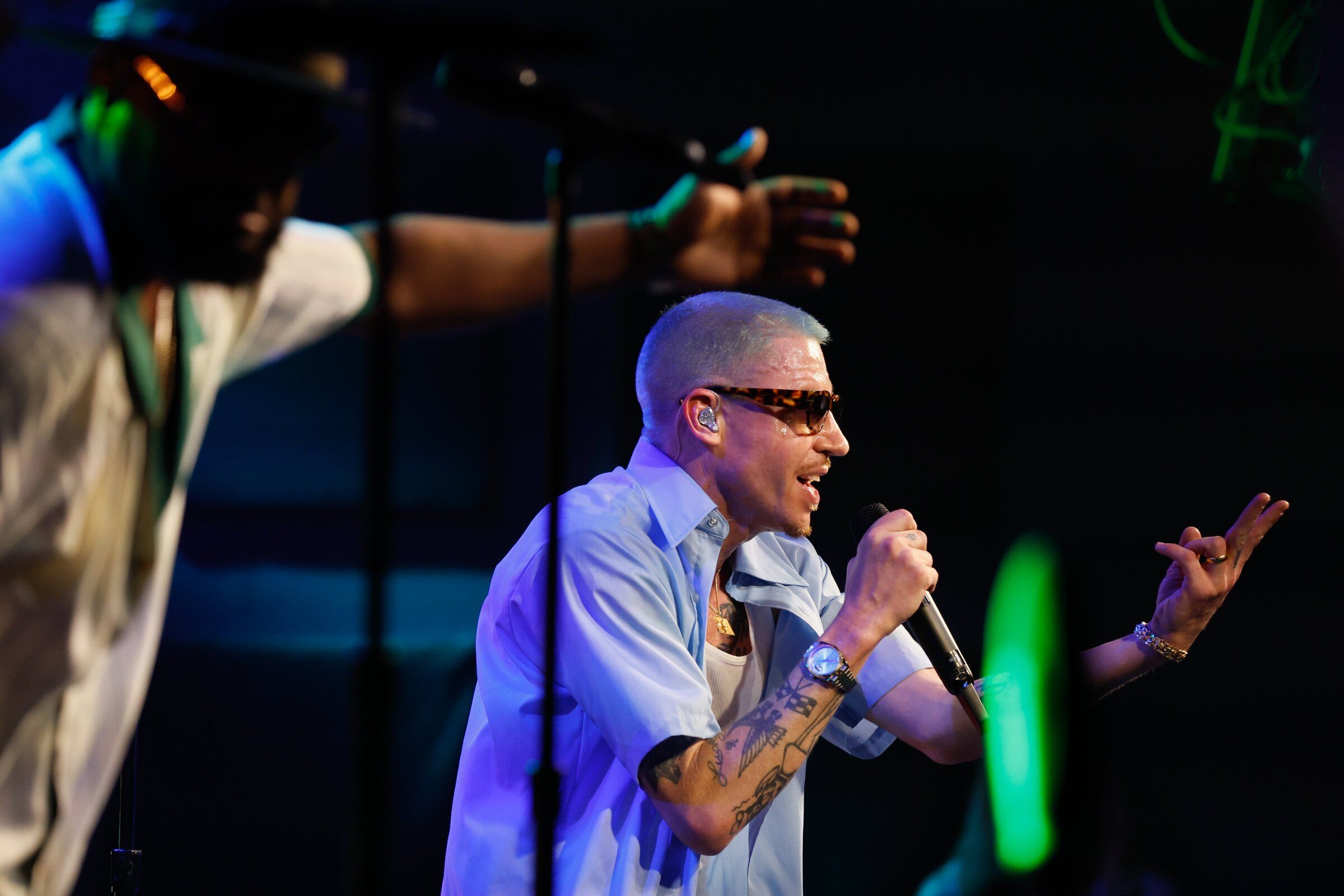
Seattle rapper Macklemore, whose real name is Ben Haggerty, said on November 6 that Climate Pledge Arena was among nine major U.S. venues that had refused to host his Free Palestine benefit tour. The venue, operated by Oak View Group, has not explained its position, saying only that it would not comment for now. Meanwhile, Seattle Mayor Katie Wilson and King County Executive Girmay Zahilay voiced support for a concert intended to raise funds for humanitarian aid to Palestinians. Their statement, however, does not change the fact that decisions about booking dates rest with the arena and its operators.
In a brief Instagram post, Macklemore listed all nine venues, from Madison Square Garden and Barclays Center in New York to Chase Center in San Francisco, Crypto.com Arena in Los Angeles, and Climate Pledge Arena at the foot of Seattle Center. The artist said his team received information in mid-September about available dates through the end of the year, but the offers disappeared once venue managers learned the shows would support Palestine. That claim has not yet been independently confirmed by most of the venues named.
One of them, Madison Square Garden, did offer a different explanation: a company representative said the arena’s schedule was extremely packed and that Macklemore was supposedly not an “arena-level” artist. For a musician whose songs “Thrift Shop,” “Can’t Hold Us” and “Same Love” once made him one of the most recognizable voices in Seattle pop rap, the remark landed especially hard. In his hometown, he has long been more than a touring act: his name is woven into local sports and cultural life, and Climate Pledge Arena has hosted artists capable of drawing crowds of thousands.
The Free Palestine tour was conceived as more than a conventional series of shows. Macklemore announced that ticket proceeds would go to organizations working with Palestinians on medical care, food, education, rights advocacy and support for children. The European leg has already taken place in Dublin, Paris and London; the artist called the shows sold out and described them as acts of solidarity. The U.S. dates, by contrast, never appeared on the schedule.
The latest episode follows a September dispute over Ed Sheeran’s tour. During a performance at MetLife Stadium in New Jersey, Macklemore performed “Hind’s Hall,” a song dedicated to Palestinian girl Hind Rajab, and called for Palestinian freedom from the stage. He soon announced that he would no longer perform at Sheeran’s U.S. shows; the promoter confirmed that several stadiums were unwilling to host shows featuring him. Gillette Stadium owner Robert Kraft explained his position by saying he considered some of the musician’s statements and imagery offensive to the Jewish community. Macklemore rejected the notion that his criticism of Israel amounted to hostility toward Jews.
It is in this tense climate that Wilson and Zahilay’s statement took on significance beyond a routine show of support for a local artist. The city and county leaders said they backed his effort to put on a benefit concert to meet Palestinians’ urgent humanitarian needs. They also stressed that opposing antisemitism, Islamophobia and all forms of hatred is compatible with defending the dignity of Palestinians. That language echoes a position the Seattle City Council took back in November 2023, when it called for a lasting ceasefire, the release of hostages and the delivery of humanitarian aid.
But Climate Pledge Arena is not a city-run venue in the straightforward, traditional sense. The building is located on Seattle Center grounds and is tied to the city through a lease agreement, but day-to-day programming and business decisions are handled by a private operator. City leaders can offer political and moral support, but they cannot book a concert with a single statement. The arena’s silence therefore leaves the central question unanswered: was the decision driven by scheduling, commercial considerations, security concerns or the tour’s political content?
For now, Macklemore has no Seattle date and the venue has offered no public explanation. His story remains one of closed doors, rather than a canceled concert. But for a city that likes to think of music as part of its civic identity, the dispute has already proved revealing. It has once again put two American freedoms side by side: an artist’s right to speak from the stage and a private venue’s right to decide who gets to use it.


Based on: Climate Pledge Arena mum on nixing Macklemore’s ‘Free Palestine’ show