
Gasoline prices in the United States have jumped roughly 50% since the start of the military conflict with Iran on Feb. 28, but the national average masks huge regional differences. According to the American Automobile Association (AAA), the price for a gallon of regular gasoline on Wednesday was $4.54, yet in California it reached $6.16 and in Oklahoma was just $3.96. The disparity is visible not only between states but also between neighboring counties and cities.
More than half of the cost of a gallon of gasoline is directly tied to the price of crude oil, the U.S. Energy Information Administration says. Since the start of U.S. and Israeli strikes on Iran, the international Brent benchmark has risen by more than 50%. But the geography of refineries, fuel-delivery logistics, taxes and competition among gas stations explain why drivers pay very different amounts depending on location.
A substantial portion of American gasoline is produced in just two states — Louisiana and Texas. Delivering fuel to regions far from the Gulf Coast is expensive: first by pipeline to terminals, then by truck to stations. “Proximity to pipelines, the ability to cross mountain ranges, access to ports for imports — these are basic geographic reasons for high costs,” explains Kate Gordon of California Forward.
A separate issue is the Jones Act, which requires that cargo moved between U.S. ports be carried only on ships built in the country and staffed by American crews. That makes coastal shipping extremely costly, so distributors in New Jersey or California often find it cheaper to buy fuel from Africa or Asia than from Texas. In March, President Trump temporarily waived the law to help lower prices.
Gas taxes dedicated to road building and repairs vary nearly eightfold from state to state: from 9 cents per gallon in Alaska to 71 cents in California. Nationwide, states collect just over 33 cents on average, and the federal tax is 18.4 cents per gallon. In 2025, 19 states raised rates, including Washington, where the tax rose by 6 cents under the Move Ahead Washington program adopted in 2022. Revenue from these additional fees is being used to modernize State Route 520 (the bridge across Lake Washington), expand rail lines including the Sound Transit commuter-rail project, repair I-5 around Seattle, and build bike lanes and pedestrian areas. These funds are expected starting in 2025 to accelerate bus electrification projects and replace diesel engines at ports.
California, Oregon and Washington also add to fuel costs through strict environmental rules and programs to transition to electric vehicles and cleaner fuels. Washington has its own Climate Commitment Act (CCA), adopted in 2023, which requires fuel suppliers to buy carbon-emission allowances. California’s similar Low Carbon Fuel Standard (LCFS) has been in place longer and is more mature, but both increase fuel costs. Estimates suggest the CCA adds between 15 and 50 cents per gallon to gasoline prices in Washington, making fuel more expensive compared with states without such rules. Notably, western Washington, including Seattle, often has higher prices than eastern areas: this is tied to higher local taxes in King County, stricter environmental fees and higher population density. In the east, for example in Spokane, transport costs are lower thanks to pipeline access, and fuel carries fewer environmental additives, lowering production costs.
Refineries in Washington, located in Anacortes and Ferndale, process crude imported from Canada and Alaska, reducing transport costs for the local market. However, because of laws like the CCA and limited competition (two refineries control much of the market), prices in Washington still remain higher than in neighboring Oregon and Idaho, where taxes are lower and such strict rules do not apply. In Oregon, for example, Washington refineries cannot fully make up the difference, and some fuel from those refineries is exported to other states, limiting supply within Washington itself.
High prices are not exclusively a feature of “progressive” states. In Alaska, a major oil producer with low taxes and light regulation, gasoline cost $5.19 per gallon — 64 cents more than in liberal New York. In Florida, another conservative state, the price reached $4.46 — 42 cents higher than in Texas. The reason in Florida is that there have been no operating refineries there since the late 1980s. In densely populated areas with many gas stations, prices are usually lower due to competition, whereas in remote locations owners are less likely to cut prices and must cover fixed costs over lower sales volumes.
California remains the clear record-holder for expensive gasoline because of a unique mix of factors. The closure of local refineries reduced supply, and the state uses a special, more costly fuel blend that pollutes less. “Our geography is such that smog lingers in populated areas, like Los Angeles, so we burn cleaner fuel,” Gordon explains. On top of that, each gallon is subject to an additional fee to help shift from the global oil market to more sustainable sources.
Thus, the price of gasoline at any given point in the U.S. is a complex equation of global oil prices, geography, transport infrastructure, local taxes, environmental policy and market competition. Understanding these factors helps explain why one gallon can cost $4 in Texas and more than $6 in California — a difference drivers feel every time they visit the pump.
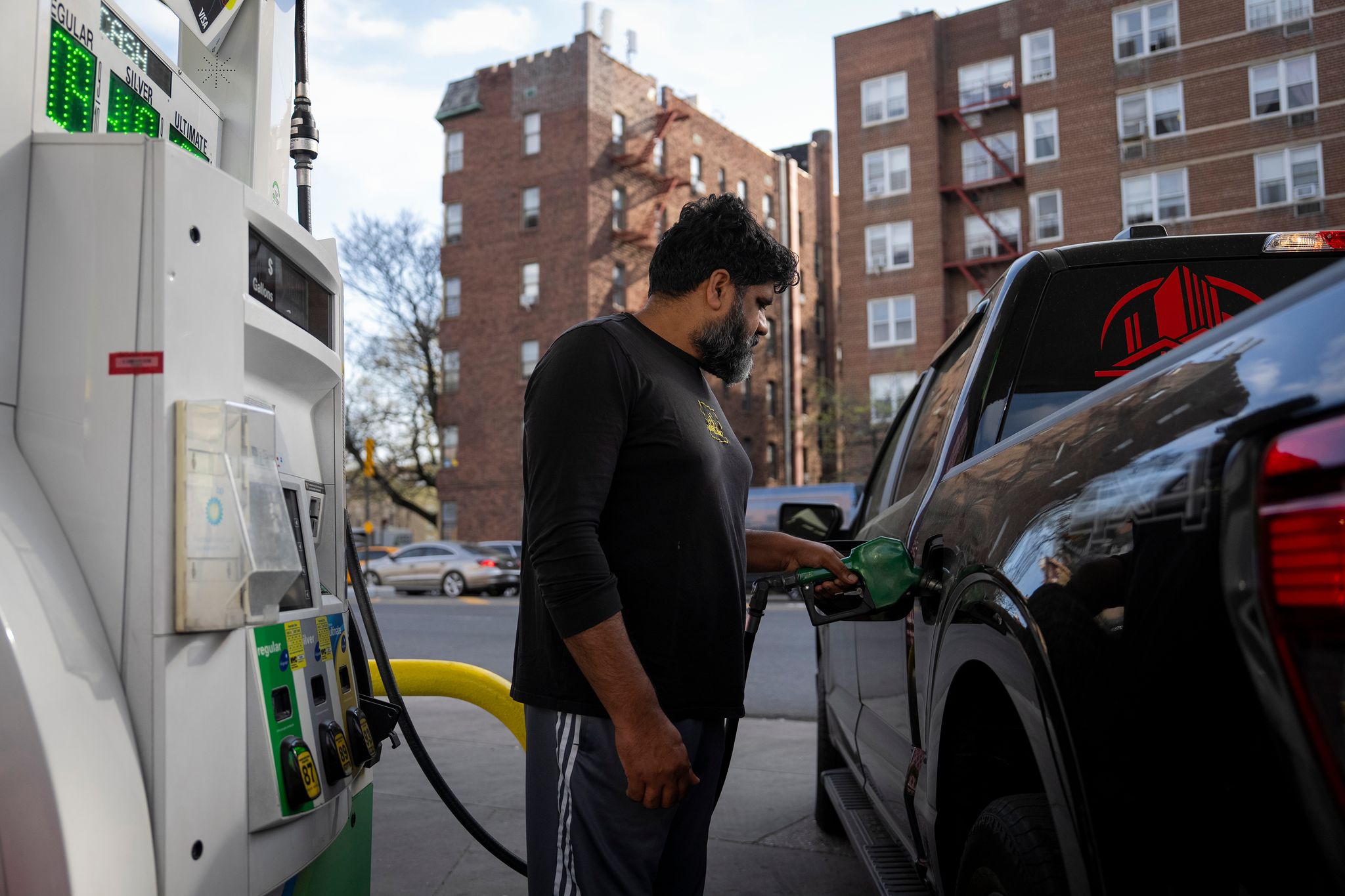
Based on: Why gasoline prices vary so much by state, county and city