
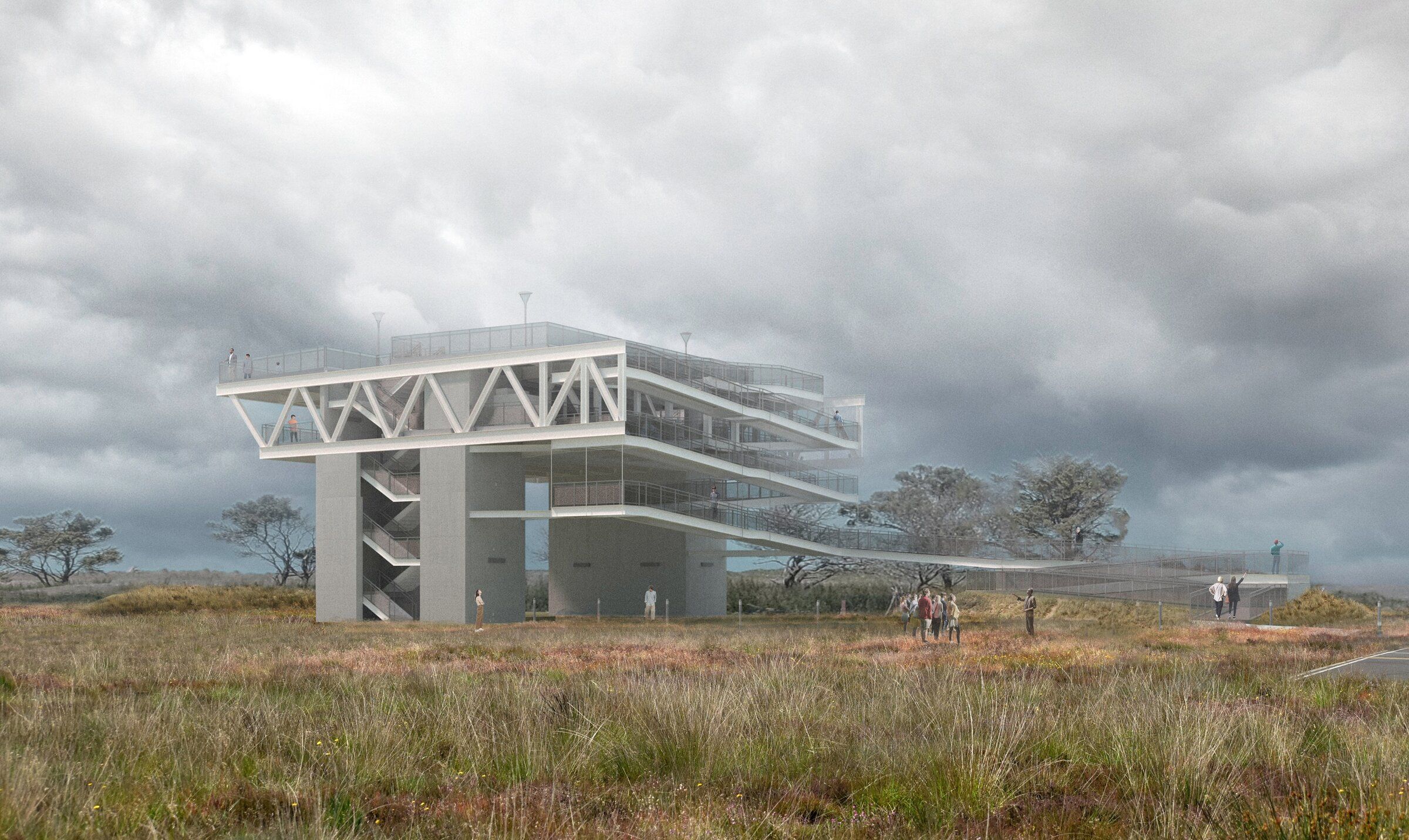
Construction began Oct. 3 in Westport, on Washington state’s Pacific coast, on a vertical tsunami evacuation tower — a structure about 45 feet high designed to accommodate at least 1,000 people. It will be built near the city marina, where an earthquake in the Cascadia Subduction Zone could leave no more than 15 minutes for people to reach safety. After several years of design work, efforts to secure federal funding and an anxious pause in 2025, the city can finally move from plans and calculations to pilings and concrete. Completion is scheduled for late summer 2027.
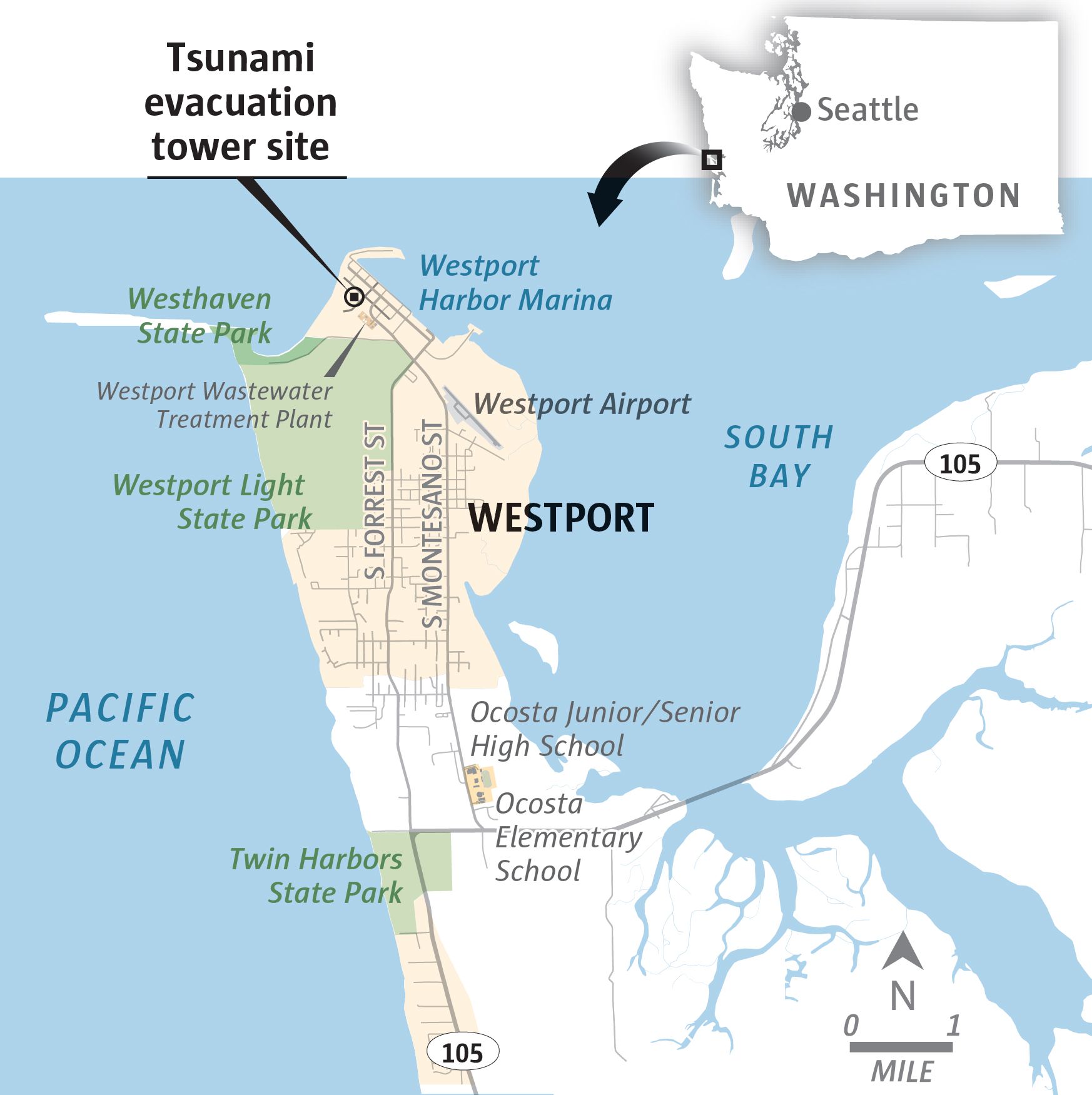
For Westport, the tower is neither an architectural indulgence nor simply a new photo spot overlooking the harbor. The low-lying peninsula where the city stands is separated from safe elevations by a distance that many people would be unable to cross after a powerful earthquake. Roads could be damaged, communications disrupted and the wave generated by the Cascadia fault could reach the shore in roughly 15 minutes, according to experts’ calculations.
The new structure will be built on city-owned land near the intersection of Harms Street and East Harbor Street, several blocks from the marina. The area matters not only to permanent residents: It is the center of Westport’s fishing and tourism economy, where dockworkers, seafood processors and visitors are present on any given day. During an emergency, the tower is intended to serve as an artificial high point — a place people can reach on foot instead of trying to escape the inundation zone by car in the final minutes.
The project calls for massive pilings designed to hold the structure in place during an earthquake, a surge of water and collisions with debris carried by the wave. Absher Construction won the construction contract; the estimated cost of the construction work itself is $11.181 million. The facility was designed by architect Cale Ash and engineers at Degenkolb Engineers, a firm that has already worked on similar shelters along the state’s coast.
Funding the tower became a separate story about how difficult it is to pay for protection against disasters that are rare but capable of changing everything. The city began seeking funds through FEMA’s Building Resilient Infrastructure and Communities program in 2020; federal support was announced in 2023. In spring 2025, the BRIC program was unexpectedly suspended, putting previously promised funding in doubt. For a small city, that created the risk of losing a project it could hardly finance on its own.
Ultimately, the project is now estimated to cost $13.7 million. The city of Westport and the state are each contributing approximately $763,000 in required matching funds, while most of the money is coming through a federal grant. The outcome has not resolved the broader problem: According to the state Emergency Management Division, Washington needs between 58 and more than 80 similar vertical shelters to address the most dangerous gaps along the coast.
The figures included in Westport’s application sound almost implausible for a city with a population of just over 2,000. State modeling based on a magnitude 9.0 earthquake scenario estimates that as many as 6,075 people could be killed by a tsunami in Westport — a figure that includes seasonal visitors and people working in the coastal zone. It shows that a disaster there would never be merely local: The population along this stretch of coast rises significantly in summer, while the harbor remains a vital part of the regional economy.
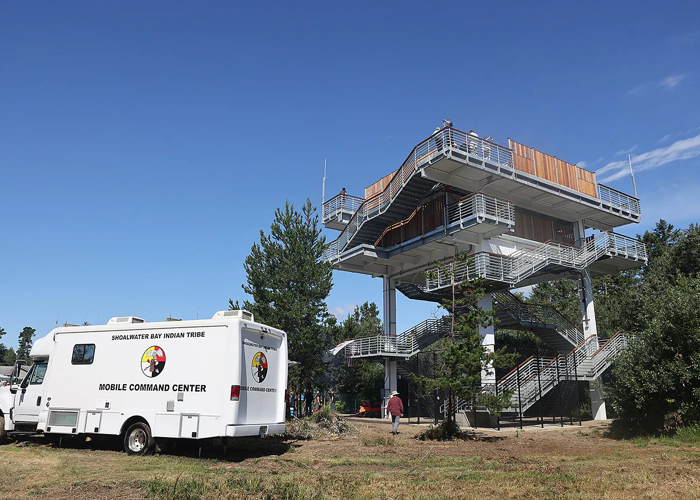
The tower will be the third structure of its kind in the state. North America’s first vertical tsunami refuge was built atop the gymnasium at Ocosta Elementary School near Westport and opened in 2016; in 2022, the Shoalwater Bay Tribe built the freestanding Auntie Lee tower in Tokeland. In ordinary times, Westport’s tower will serve as an observation deck. There is practical value in this dual purpose: A structure that people use and know about is easier to remember when the siren stops being a drill.

Based on: Westport breaks ground on 1,000-person tsunami evacuation tower