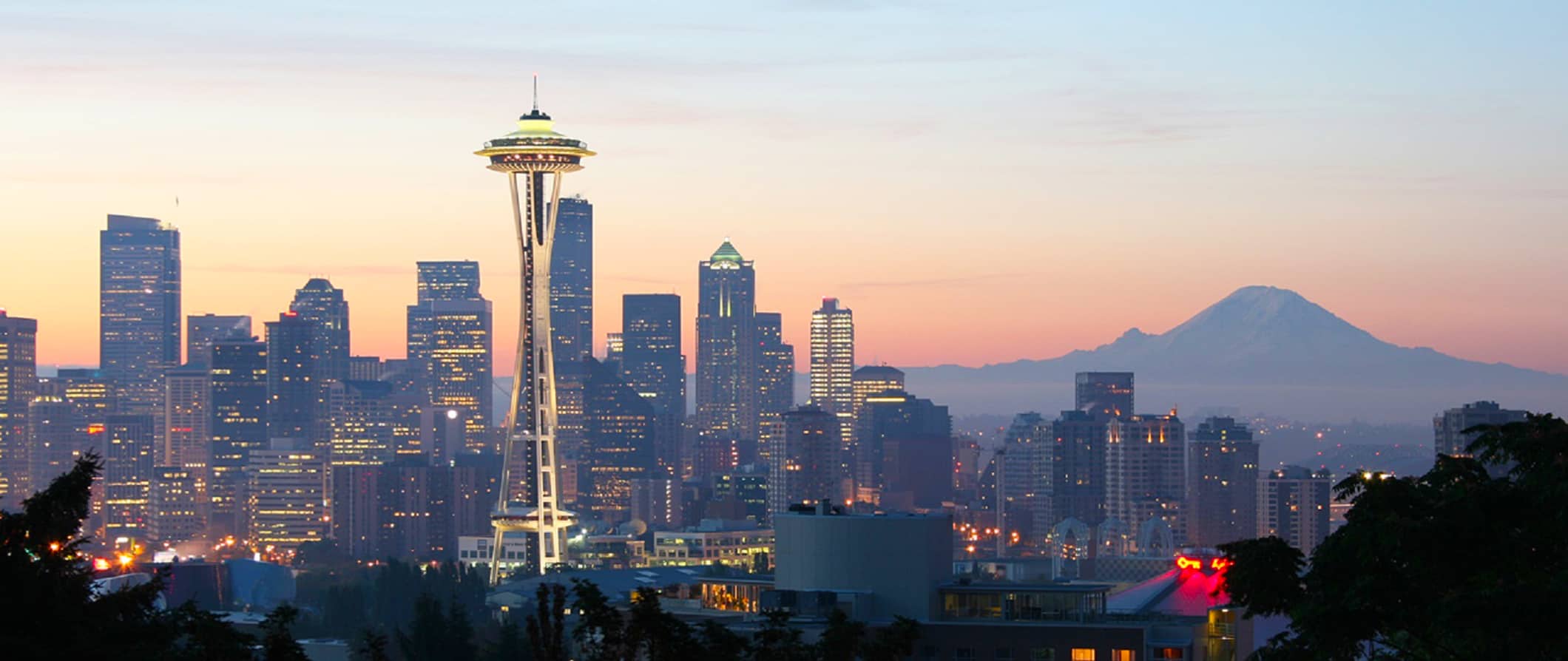
Residents of Seattle’s affluent neighborhoods, who asked in the 1960s to have power lines buried underground for aesthetic reasons, are now demanding that the city pay for a $2 billion replacement of the aging cables. Host Gee Scott called it an example of “privatizing the benefits and socializing the losses,” while co-host Ursula Reutin proposed introducing a special assessment for those responsible for the problem. Meanwhile, the Seattle Mariners are continuing their playoff push thanks to their dominance over Houston, while the Milwaukee Brewers prepare for a series against the desperate Mariners.
“The Bill Has Come Due”: Wealthy Seattle Neighborhoods Ask the City to Pay for Their $2 Billion Problem
More than 60 years ago, residents of Seattle’s most prestigious neighborhoods asked the city to bury power lines so they would not have to look at poles and wires. Now the cables are deteriorating, and replacing them could cost $2 billion. KIRO host Gee Scott sees this as a classic example of private benefits becoming public problems. In his view, decisions made in the 1960s for aesthetic reasons are now hitting the pockets of all the city’s taxpayers, including people who were not even allowed to live in those neighborhoods at the time.
In the 1960s, residents of neighborhoods such as Laurelhurst, Madison Park, Magnolia, and Queen Anne collectively approached the city with a request to bury the electrical lines. The cables were laid directly in Seattle’s damp soil without protective conduits, which seemed like an economical solution at the time. Six decades later, the cables are deteriorating, causing prolonged and recurring power outages. Seattle City Light estimates that replacing all 330 miles of aging underground cable would cost $2 billion, and those expenses will likely fall on all customers through higher rates. According to The Seattle Times, about 8,000 properties in nearly 50 districts received underground lines in less than 10 years after neighbors persuaded one another to participate. Notably, once 50% of residents approved the project, participation became mandatory, which, according to a 1980 analysis, created class divisions between wealthier and less affluent residents within the same neighborhoods.
Gee Scott draws a parallel with bank bailouts, in which profits remain private while losses are socialized. “It’s interesting: when they’re making money, they privatize those benefits, and the wealthy neighborhoods get their advantages—‘We worked hard; all the money goes to us.’ But when something goes wrong, suddenly you want to socialize the assistance,” the host quipped. He added that some of the people now being asked to help pay the bill were once prohibited from living in those neighborhoods. However, Scott does not intend to use the case as an attack, emphasizing that both rich and poor may need help and calling for solidarity, although he plans to keep this story “on the receipt” as a reminder in future debates about social assistance.
His co-host, Ursula Reutin, suggests a simpler solution: if underground cables benefit specific neighborhoods, those neighborhoods should pay for the repairs. “If you live in Laurelhurst, Magnolia, Queen Anne, or Madison Park and enjoy the benefits of buried lines, why not impose a special assessment on your neighborhood to pay for what directly benefits you?” Reutin asks. She notes that home prices in these areas reach into the millions and wonders why residents of South Seattle should subsidize the aesthetic preferences of affluent neighbors.
The issue is not only the technical deterioration of infrastructure but also social equity. A historic decision made half a century ago to improve the appeal of elite neighborhoods and increase property values now requires collective funding—even though the benefits are enjoyed primarily by owners of expensive homes. Seattle’s median home price has already surpassed $900,000, and it is significantly higher in the neighborhoods mentioned above. This creates a precedent in which public resources are directed toward solving problems created by private interests, raising a legitimate question about how the city should distribute the costs of aging infrastructure. The situation also highlights the importance of considering long-term consequences when making decisions about modernizing urban utilities—especially in a wet climate, where the lack of protective conduits proved to be a fatal mistake.
Mariners’ Playoff Hopes Stay Alive Thanks to the Astros
The season has been difficult for the Seattle Mariners, and without two key factors, the team might have abandoned its postseason hopes long ago. Those factors are an impressive eight-game winning streak that began in late May and a phenomenal head-to-head record against its major rival, the Houston Astros. Together, they allow the Seattle club to cling to its playoff chances despite a discouraging overall record.
After Sunday’s 3–2 victory over the Astros in Houston, the Mariners improved their season record against them to an impressive 9–2. And it is not just about the numbers: the team displayed the kind of quality baseball that fans had not seen in months. Aside from a frustrating extra-inning loss on Friday, Seattle completely dominated in Houston. An offense that had been dormant for a long time came alive, averaging 9.64 hits and 6.43 runs per nine innings over the series. Pitchers Emerson Hancock and Bryan Woo delivered brilliant performances, something that cannot be said about the starting rotation as a whole, particularly in recent road games. It was the Mariners’ best baseball since June 29 through July 5, when the team held a one-and-a-half-game lead in its division.
However, between that successful stretch and Saturday’s victory in Houston, the Mariners suffered a complete collapse, winning only 10 of 32 games. As a result, the team’s overall record is now far from impressive: 59–66, seven games below .500. Even so, thanks to a few bright spots—especially their dominance over the Astros—Seattle continues to hang on in the American League playoff picture, which this year is crowded with teams that would barely qualify as contenders in any other season. As of Monday, the Mariners were only 2.5 games behind the third and final wild-card spot, held by the Baltimore Orioles at 61–63. Notably, Seattle is just one of six teams within close range of the Orioles, meaning that seven teams with losing records are involved in the playoff race. The race promises to be extremely complicated and possibly incredibly entertaining.
It is equally surprising that the Mariners are not far from the top of the AL West. Thanks to their series win in Houston, they reduced the gap to four games behind the Astros (63–62). The Texas Rangers (61–64) sit between them, two games behind Houston and two games ahead of Seattle. The Mariners’ success against the Astros this year is merely a continuation of a four-year trend in which Seattle has almost always beaten its main rival head-to-head. That could become a decisive factor late in the season. The team is currently navigating a difficult August stretch, but its September schedule looks much more favorable. The Mariners have 14 games against the league’s three worst teams: three against the Colorado Rockies and seven each against the Oakland Athletics and Los Angeles Angels.
Perhaps even more important is the fact that the Mariners have not finished playing the Astros. The rivals’ final two-game series will take place at the very end of the season, on September 22 and 23 at Seattle’s T-Mobile Park. Since the Mariners have already secured the season-series tiebreaker over Houston, they have a significant advantage: they only need to finish tied with the Astros in wins to move ahead of them in the standings. The current season has certainly been disappointing so far, but it is far from over. Given the situation in the division and throughout the American League, as well as their consistent success against Houston, the Mariners have every chance to leave the unpleasant memories behind and reach the playoffs in consecutive seasons for the first time in a quarter-century. All they have to do is play the remaining 37 games the way they played the series in Houston. A Seattle Sports article emphasizes that the team’s fate is in its own hands.
Milwaukee Brewers vs. Seattle Mariners: A Clash of Ambition and Frustration
In the middle of the August playoff race, the Milwaukee Brewers return home to host the Seattle Mariners in a three-game series that promises to be an intriguing matchup between two teams with completely different fortunes this season. While the Brewers comfortably lead the league with the best win-loss record, the Mariners are desperately clinging to faint wild-card hopes in a weak American League.
The Brewers return home after a challenging road trip along the West Coast, where they showed resilience by recovering from a crushing sweep at the hands of the Padres and winning three of four games against the powerful Dodgers. That speaks to the team’s mental toughness and its refusal to let setbacks derail it. Seattle, meanwhile, has just won its first series since the trade deadline, defeating the Houston Astros on the road. The victory, modest though it was, gave Mariners fans reason for cautious optimism, although the team remains just outside the playoff picture.
The teams’ offensive potential differs dramatically. Milwaukee can boast of Jake Bauers, who is enjoying the best season of his career, posting outstanding numbers and leading the team in home runs. Young, ambitious players such as Jackson Chourio and Brice Turang are also contributing effectively. William Contreras deserves particular attention, as he finally appears to be emerging from a prolonged slump, while Joey Ortiz has become one of the league’s best hitters over the past month or more. Christian Yelich, meanwhile, appears to have been the victim of bad luck, with his batting average failing to reflect the quality of his performance. Overall, the Brewers’ offense looks balanced. It may not be the league’s most powerful home-run hitting unit, but it makes up for that with speed and an ability to manufacture runs.
The Mariners’ offense is in far worse shape. The team ranks second-to-last in overall OPS and last in runs scored. Yes, they have standout performers such as Dominic Canzone, who is enjoying a breakout season, and Julio Rodríguez, but the overall picture is bleak. Cal Raleigh’s performance is particularly disappointing, with his season best described as an outright failure. New additions such as Taylor Ward have yet to meet expectations, creating more headaches for the coaching staff. The only bright spot may be the unexpected speed of Josh Naylor, who leads the team in stolen bases.
As for pitching, the Brewers appear to have the edge. Their team ERA ranks among the league’s top three, while their bullpen has been exceptionally reliable. The Mariners’ starting rotation is also solid, but bullpen problems—particularly from their primary closer Andrés Muñoz, who has blown seven save opportunities—could become the deciding factor in the series.
Interestingly, Kyle Harrison will take part in the game, and his statistics were recently adjusted after an umpiring decision on the field was reviewed. This detail is a reminder of how important even the smallest nuances can be in baseball.
Predicting the outcome of the series, the Brewers look like the more balanced and confident team. Although the Mariners are capable of pulling off a surprise, especially given their desperate situation, Milwaukee appears more likely to win two of the three games. The series is an excellent opportunity for the Brewers to strengthen their position at the top, while for the Mariners it may be their last chance to catch the playoff train.