
PacWave South has begun operating off the Oregon coast as the first large-scale site in the continental United States where companies can test technologies for generating electricity from ocean waves. The facility received the necessary federal approval during Donald Trump’s administration, despite the fact that its broader policies have created serious obstacles to the development of clean energy, particularly offshore wind power.
Oregon State University developed the project. After Trump returned to the White House in 2025, PacWave had to undergo a special “continue or close” review by the Department of Energy, and its launch required approval from the energy secretary. The permit was issued last summer, and the connection to the power grid was completed this summer. However, the site is not yet producing electricity: the testing devices have not arrived because of delays in federal funding.
PacWave South’s location on the open Pacific coast makes it possible to test equipment in conditions similar to those of actual operation. The area regularly experiences powerful, persistent waves, as well as winter storms that create extreme loads for energy converters. At the same time, cold water, strong currents, deep water and a rich marine ecosystem make testing more difficult and require additional safety measures.
Since 2016, the Department of Energy has invested nearly $150 million in designing and building the facility. PacWave South is intended to simplify testing and permitting, which have held back the development of tidal, current and wave energy for decades. Unlike electricity generated from coal, oil and gas, marine energy does not produce carbon dioxide emissions.
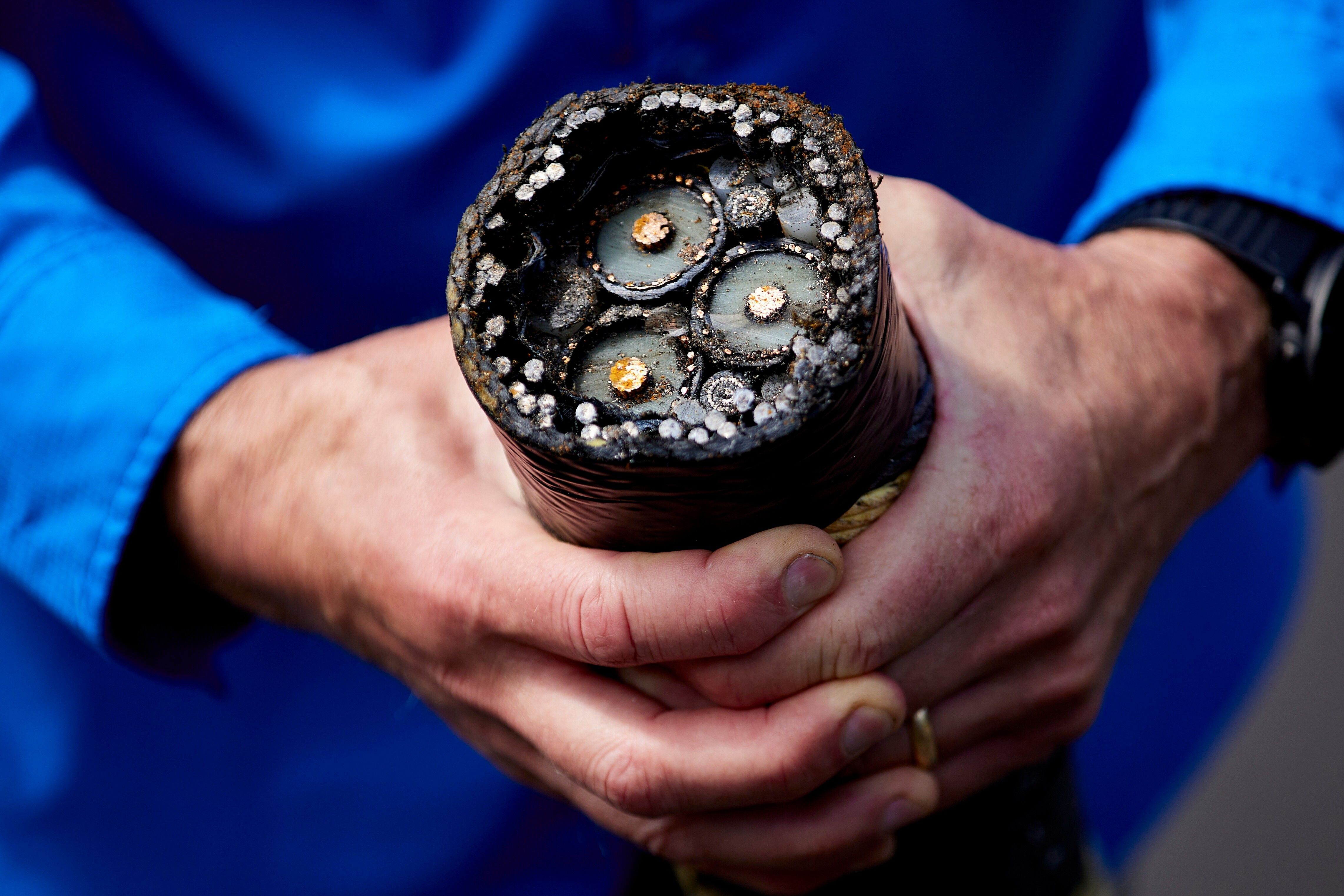
Connecting to the local grid will allow developers to assess not only the amount of electricity generated, but also the devices’ operational stability, power quality, the effectiveness of safety systems and the compatibility of the equipment with Oregon’s power-grid requirements. The energy produced will be carried to shore through underwater cables and then transmitted to the regional grid. PacWave South, however, is intended primarily for testing rather than commercial electricity production.
According to federal estimates, marine energy could theoretically meet about 57% of U.S. electricity needs. Even partial use of that potential could significantly affect the nation’s power system. The administration also emphasizes the importance of wave technologies for national security: they could supply power to remote sensors, autonomous underwater vehicles and military facilities that require reliable and discreet electricity.
PacWave South will be the first such facility connected to the grid in the continental United States; previously, a similar site operated only in Hawaii, where it was owned by the U.S. Navy. In addition, the facility already has the necessary permits, so developers will not have to obtain them independently for every test. This will save time and money and remove one of the main barriers facing the young global industry.
Future tests must comply with U.S. federal laws and Oregon regulations, including rules protecting marine mammals, endangered species, water quality and fisheries. Projects undergo environmental reviews and consultations with regulators, and they also require discussions with fishermen, tribes and other users of marine resources. Such conditions may restrict the timing of operations, vessel routes, noise levels, and the types of anchors and cables used. Animal monitoring may be required during testing, along with suspending operations when animals are present; if significant harm is detected, regulators may change permit conditions or prohibit certain types of work.
Several types of wave-energy converters can be tested at the site. Point absorbers, resembling buoys, rise and fall with the waves, converting that motion into electricity. Oscillating water columns force air through a turbine, while long, floating attenuator devices generate energy by flexing in response to waves. Underwater cables will carry the electricity produced to shore and into the local grid.
Based on: Wave energy testing site opens off Oregon, a green energy milestone in the Trump administration