
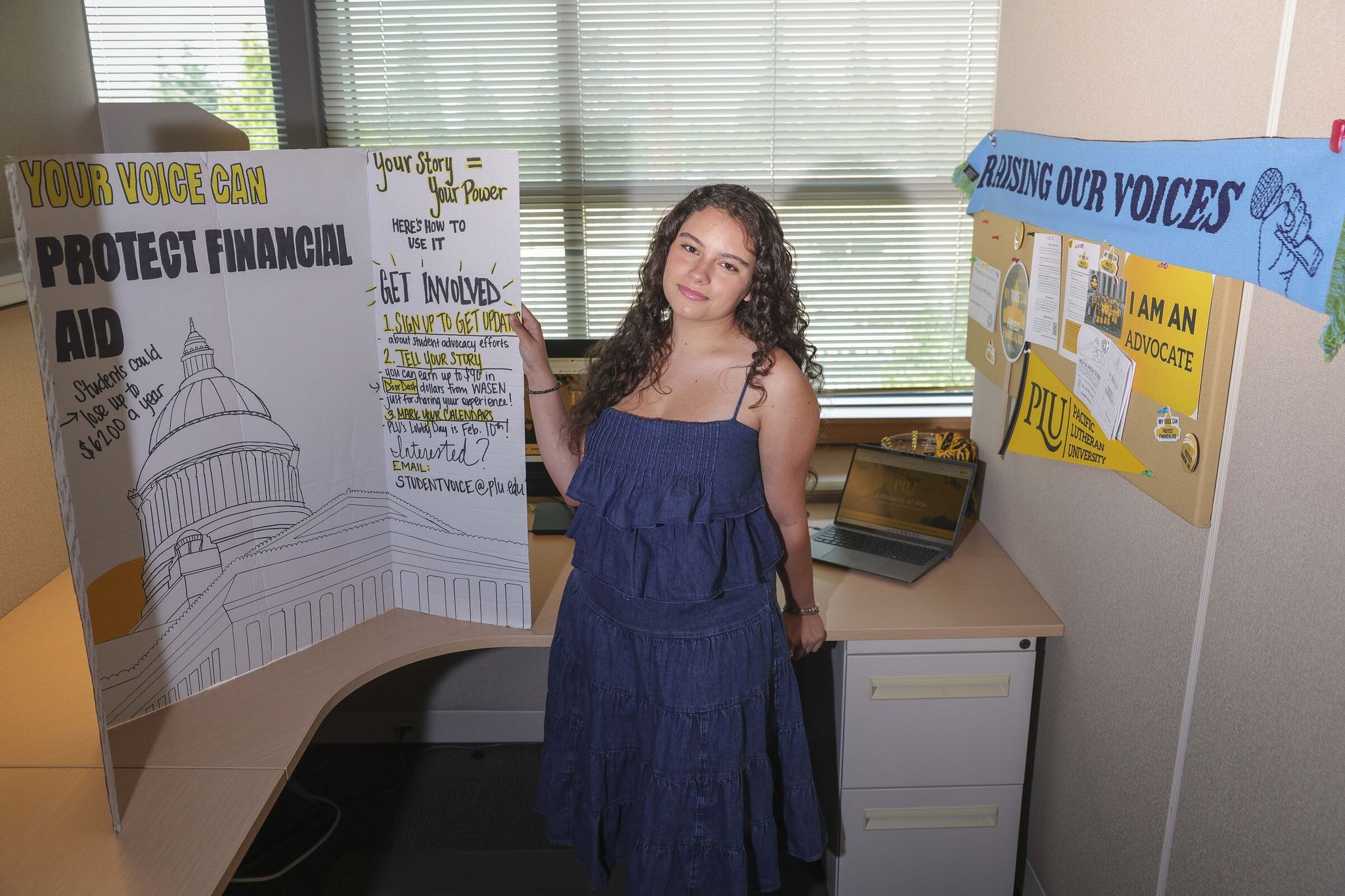
Jilma Dias-Demang, a student at Pacific Lutheran University (PLU), chose a small private college for its personal approach and proximity to home, where her sister, who has epilepsy, lives. A Washington College Grant—state aid for low- and middle-income residents—combined with grants from within the university fully covered her costs until it became clear that large cuts were coming to the state budget. The Washington College Grant is available to all residents regardless of whether they registered in advance, unlike the College Bound program, which requires students from low-income families to sign a commitment to attend college as early as 7th or 8th grade.
Starting in the 2026–2027 school year, the maximum grant amount for students at private colleges will drop from $9,000 to just over $6,000 per year. Lawmakers estimate the cuts will affect about 12,000 students statewide, and those who also receive College Bound will lose part of their funding a year later. The reduction is tied to the fact that private colleges do not receive direct state budget subsidies the way public universities do (such as the University of Washington, UW, or Washington State University, WSU). Instead, grants for their students are calculated using a single formula with lower caps set by law.
Leaders at several Washington private colleges said they would not leave students without support. PLU, the University of Puget Sound, Gonzaga, Seattle University, and Whitman College announced they will set aside millions of dollars from their own funds and endowments to make up for the loss of state money for students who have already enrolled. The schools are spread across the state: PLU and the University of Puget Sound are in Tacoma; Seattle University is in downtown Seattle; Gonzaga is in Spokane; and Whitman College is in Walla Walla. Where the campus is located affects the cost of living and access to internships: Seattle offers more opportunities in technology and business, Spokane in healthcare and industry, while Tacoma and Walla Walla provide a calmer campus atmosphere.
“The state promised them that money, and now it’s breaking its word,” said PLU president Allan Belton. “These are exactly the students we were asked to educate—and now they’re being left behind.” College leaders emphasized that they feel a moral obligation, especially toward low-income students who are the first in their families to attend college.
Although private colleges educate a relatively small share of students in the state, they prepare workers for the most in-demand fields: two-thirds of grant recipients at these schools study medicine, science, and technology. Students also value being close to home, small classes, and specialized programs.
To keep those promises, universities are tightening their belts: PLU has already implemented a hiring freeze and estimates annual losses at nearly $6 million. At the University of Puget Sound, grants went to 214 students, totaling $1.76 million. Gonzaga will invest $4.3 million to support nearly 700 people. But, as Terry Standish-Quinn, president of the Washington Association of Independent Colleges, warned, colleges’ ability to respond isn’t limitless—and not everyone has billions in endowments. An endowment is an investment fund built from donations; larger universities like Seattle can use its investment income to cover shortfalls, while smaller colleges like PLU or Whitman have far smaller reserves and can’t absorb the loss of grants for long without harming their financial stability.
Efforts by lawmakers to restore funding also failed: a bill that would have set aid for students at private colleges to match the average payout at public universities did not pass. Opponents said lawmakers should first help all affected students across the state, not only those enrolled at private colleges.
Meanwhile, once Jilma Dias-Demang learned that PLU would close the gap for her and her friends, she didn’t stop there. She has already traveled to Olympia to testify before lawmakers, and now, during the summer, she is working with a scholarship activist to bring other students into the fight to restore the grants. “Imagine in five or ten years,” she says. “If we don’t get changes, who will be able to attend then?”
Based on: WA private colleges cover students who lost state tuition aid