
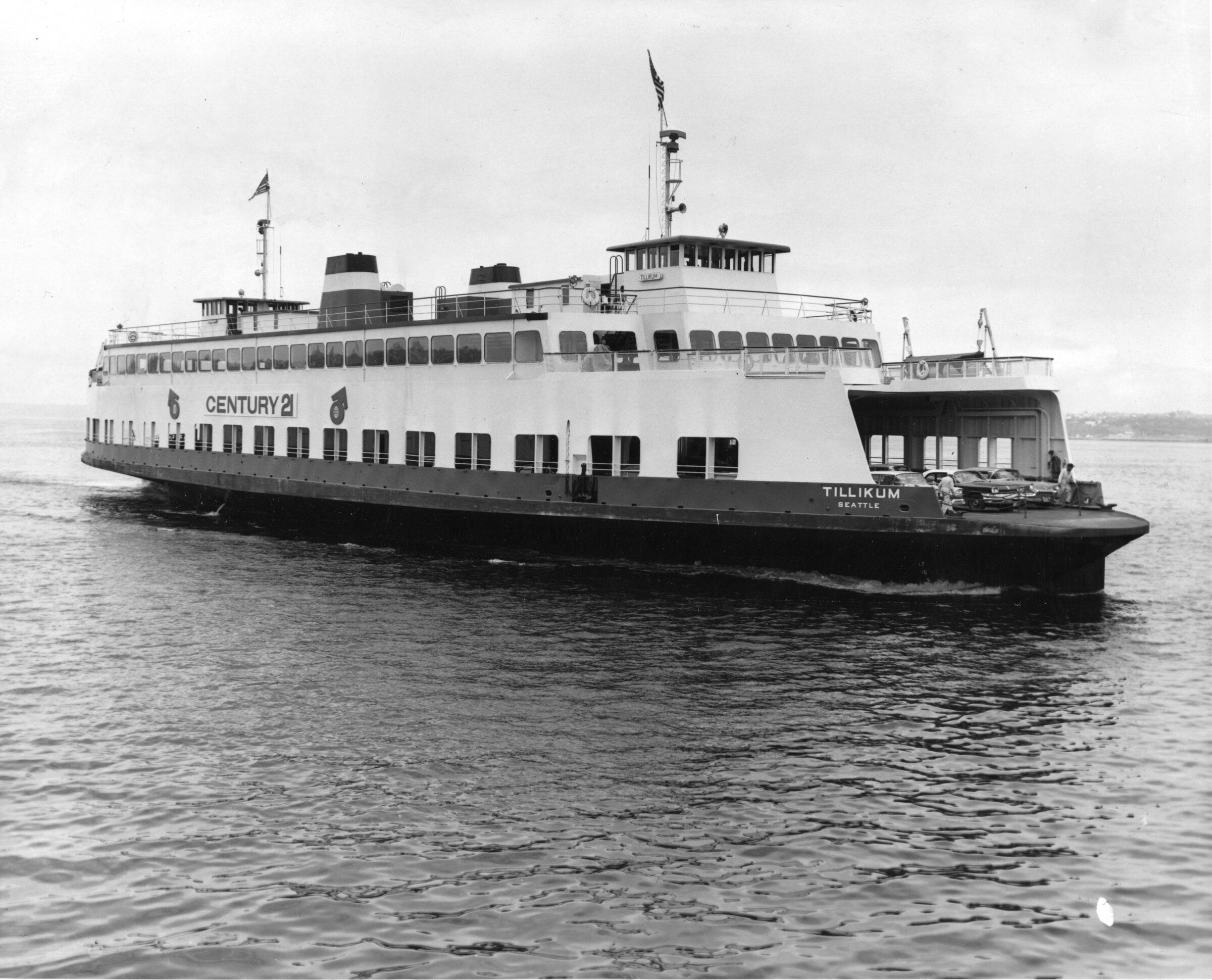
The Tillikum entered service in 1959, when Albert Rosellini was governor of Washington and Dwight Eisenhower was president of the United States. At the time, a car and driver could cross Puget Sound for $1.75, while cars with enormous tail fins reflected the style of the era. Today, the 67-year-old ferry remains one of the state’s most important vessels.
Washington State Ferries plays a crucial role in the lives of the San Juan Islands, carrying residents, workers, tourists, cars, freight and essential goods between the islands and the mainland. The islands are separated by waterways and have no bridge connection to the mainland, making the ferry effectively the region’s primary transportation corridor. A canceled sailing can prevent residents from getting to work, medical appointments or school, while stores and businesses may not receive supplies on time. There is no quick way to replace such a sailing with ground transportation.
Two other ferries of the same class were retired about a decade ago, but the Tillikum is expected to remain in service at least until 2033. Washington State Ferries faces a severe shortage of vessels: Its fleet had 24 ferries in 2015, but now has only 21, even though at least 24 are needed to fully serve current routes. As a result, the system cannot afford to retire even its oldest vessels.
The crew affectionately calls the ferry “Tilly” and considers it relatively reliable because of its simple design. The 308-foot vessel carries up to 87 cars, and its engines were removed from a World War II-era U.S. Navy reserve ship. Some replacement parts must be fabricated in-house or taken from the mothballed sister ferry Klahowya. To protect the aging machinery, captains gradually increase power and avoid maximum loads.
Below the car deck are noisy engines, diesel generators, analog instruments and a complicated network of pipes and valves. The hull, however, remains in good condition, and engineers believe that with sufficient funding for repairs and time in dry dock, the vessel could serve for 80 to 90 years.
The first of three new hybrid-electric ferries on order is not expected until 2030, with the next two arriving in 2031 and 2032. Such a lengthy transition requires not only building the vessels but also modernizing terminals: installing powerful grid connections, charging systems, suitable docks and maintenance equipment. Energy infrastructure is limited in remote island communities, while projects are complicated by permitting, environmental requirements, high costs and construction delays. The new vessels must also maintain their range and reliability amid strong currents, wind and long routes between the islands and the mainland.
Today, the Tillikum serves an interisland route among the San Juan Islands and is the slowest ferry in the fleet. During the first nine months of the year, 275 of 6,463 sailings were canceled; 28% of the cancellations were related to mechanical problems, while the most common cause was a lack of crew. Such disruptions are especially painful for islanders: With a limited number of vessels and seats, the next sailing does not always provide a quick way to reach the desired destination.
Passengers have mixed feelings about “Tilly.” Many admire its historic appearance and cozy 1950s details — brass handrails, wooden benches and old-fashioned interior features — while others are frustrated by delays and cancellations. San Juan County residents value the ferry while also viewing an independent passenger service as a possible supplement or alternative to the state vessels. Smaller boats designed to carry people only could run more frequently and be less dependent on shortages of large car ferries and overcrowded schedules.
Writer Iris Graville, who once participated in the ferry system’s writers-in-residence program, calls “Tilly” her favorite vessel and acknowledges that she will miss it after it is retired. Like many local residents, however, she hopes the ferry will last until modern, environmentally friendly replacements arrive.
Based on: WA needs this old state ferry to keep running and running