
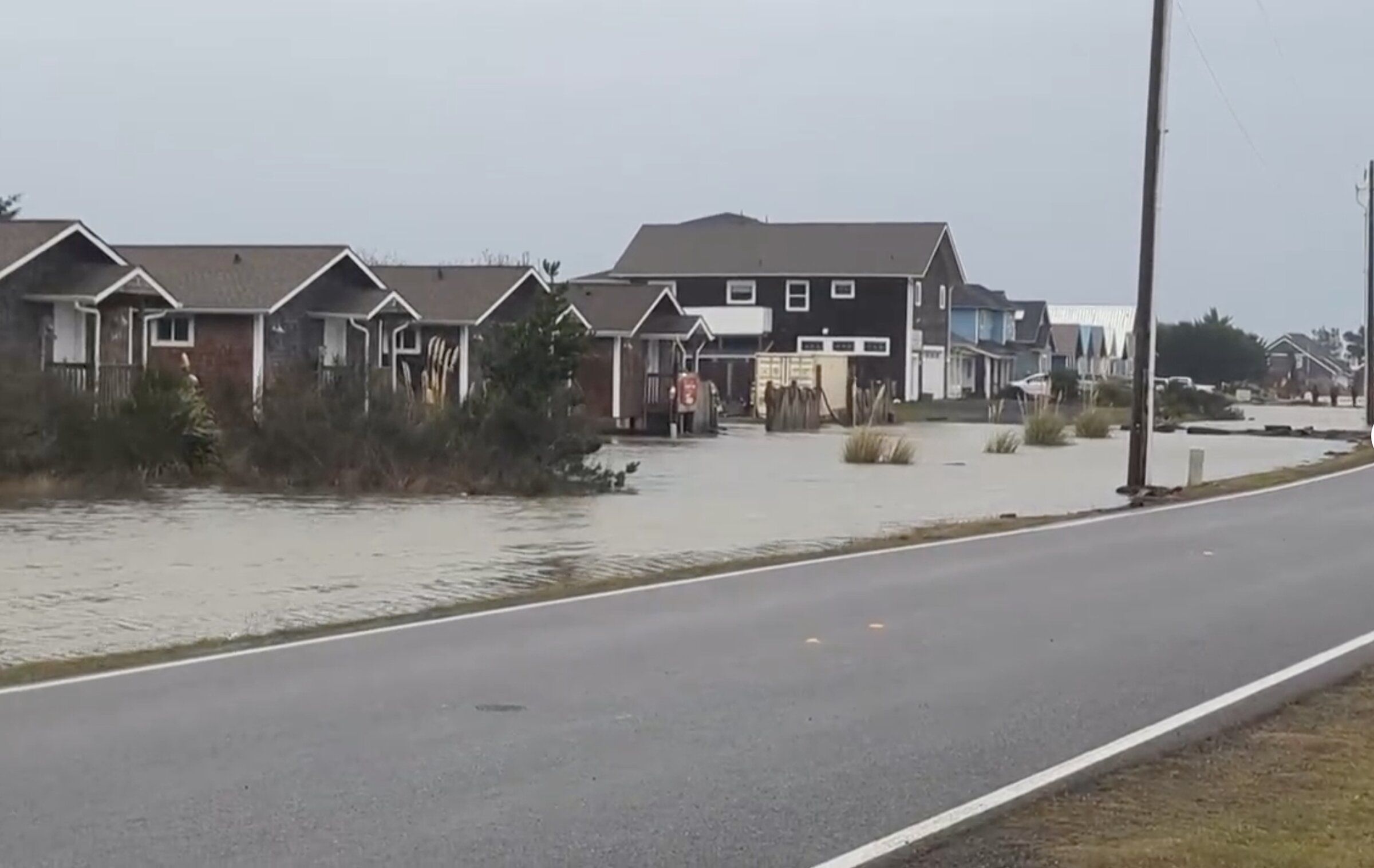
Powerful waves and high tides have flooded parts of Washington’s coastline, especially low-lying communities. The dangerous combination is caused by “king tides”—predictable but unusually high tides associated with the relative positions of Earth, the Moon and the Sun—and a storm system in the Pacific Ocean. Strong winds and low atmospheric pressure push water levels even higher, while waves worsen flooding and erosion.
Rain and strong winds are expected across the state on Thanksgiving, with gusts in the Seattle area reaching 40–45 mph. Low-lying areas along the Pacific coast, including Ocean Shores, as well as waterfront communities along bays and the Strait of Juan de Fuca, are especially vulnerable. Residents face power and transportation disruptions, and some may have to evacuate.
The National Weather Service is warning of risks from the tides and storm. Seattle officials have prepared pumps to remove water from roads and buildings, and shelters have opened in Kitsap County. Some coastal residents have already left for safer areas.
Melanie Bravener, who lives near Terrell Creek in the Birch Bay area, moved to a hotel in Bellingham with her cat. Her apartment has flooded before, so before leaving she moved her belongings to higher ground and arranged flood insurance. A camera at her home showed water reaching the back deck; Bravener fears it will get inside by the holiday.
On the Olympic Peninsula, flooding forced three people to evacuate homes near the water. The federally recognized Lower Elwha Klallam Tribe manages its lands and natural resources through tribal authorities and conservation programs; its powers and rights are also established by treaties with the United States. The tribe is concerned about ancestral burial sites and fisheries: salt water has already entered Bosco Creek and could damage salmon habitat, including eggs and young fish.
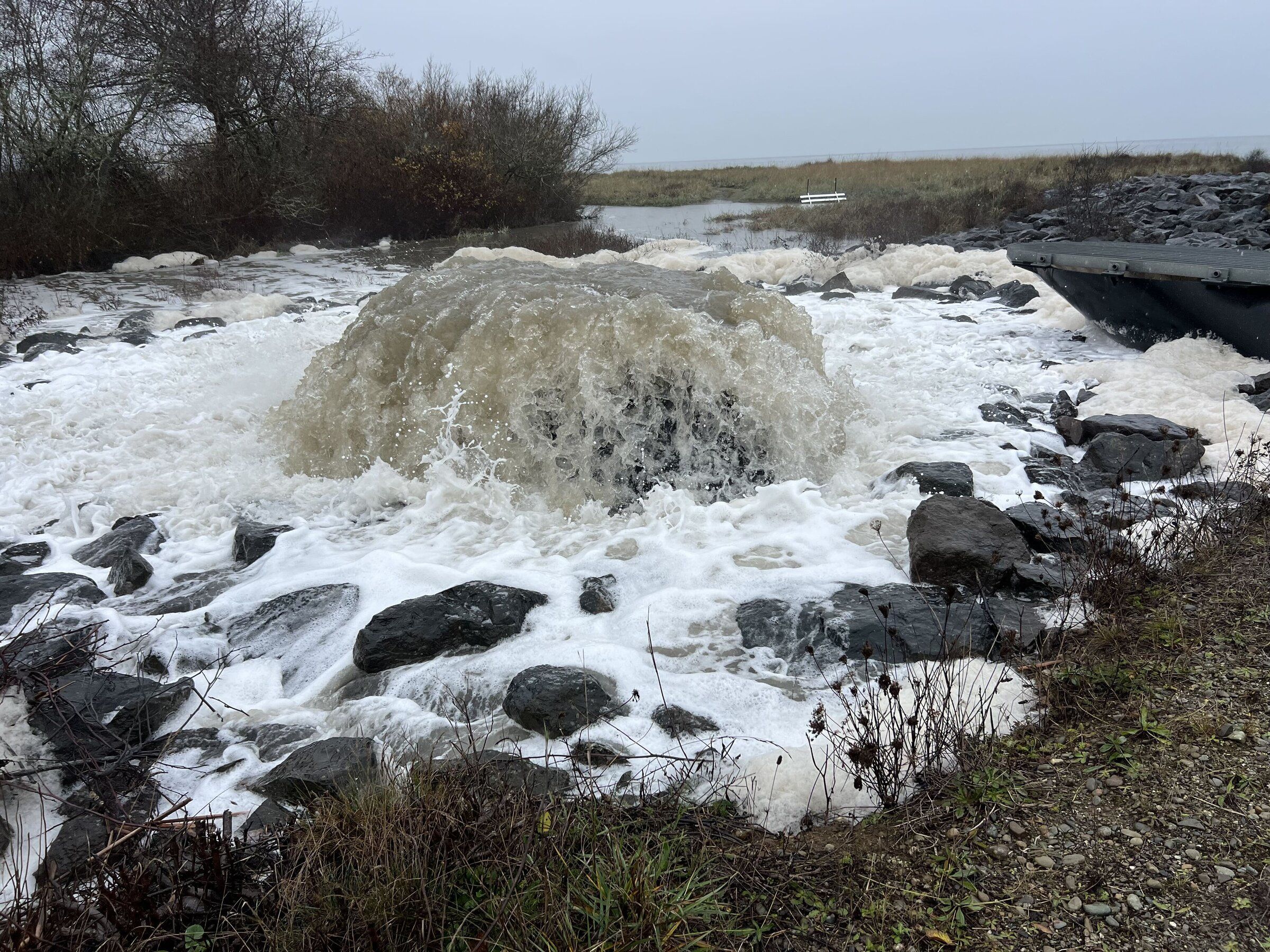
The consequences for the tribe go beyond ecology. Salmon is important to the Lower Elwha Klallam’s traditional diet, ceremonies and identity, and knowledge about salmon is passed down through generations. Pumps and a levee designed to handle flooding from the Elwha River are struggling to cope with tidal water from the Strait.
In Ocean Shores, powerful waves and erosion threaten coastal infrastructure. The city declared an emergency on Nov. 10, and the U.S. Army Corps of Engineers is delivering large rocks to reinforce the seawall and repairing vulnerable areas near Marine View Drive and the marina. Officials are also trying to keep salt water out of freshwater canals connected to the ocean and are considering risks to coastal habitats.
Long-term proposals include reinforcing or relocating protective structures, restoring dunes and beaches, and planning for sea-level rise—including the possible retreat from the most vulnerable areas. But hard structures may hold back water in one place while worsening erosion elsewhere or disrupting natural water flows. Tourists are visiting some areas to watch the high waves, while local businesses are so far reporting only minor disruptions.
The threat to the coast has been growing for years: Damon Point has partly disappeared underwater because of ongoing erosion and is closed to visitors. Sen. Patty Murray said she would seek response resources from FEMA, the Federal Emergency Management Agency, and the Army Corps of Engineers. Ocean Shores’ city administrator believes it is possible to reinforce the shoreline but warns that without long-term measures, the city will continue to lose coastal land.
Based on: Western WA hit by coastal flooding before Thanksgiving