
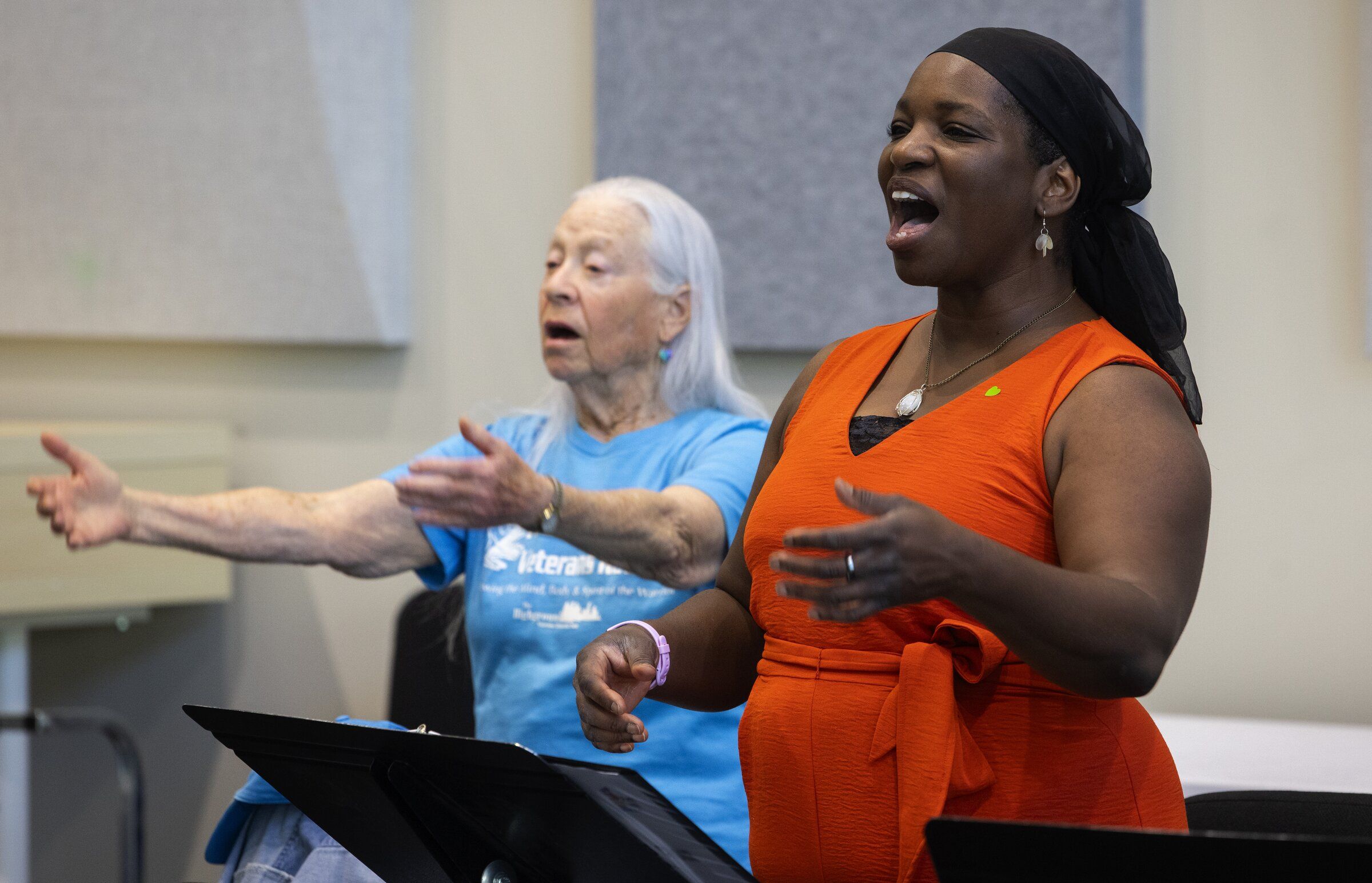
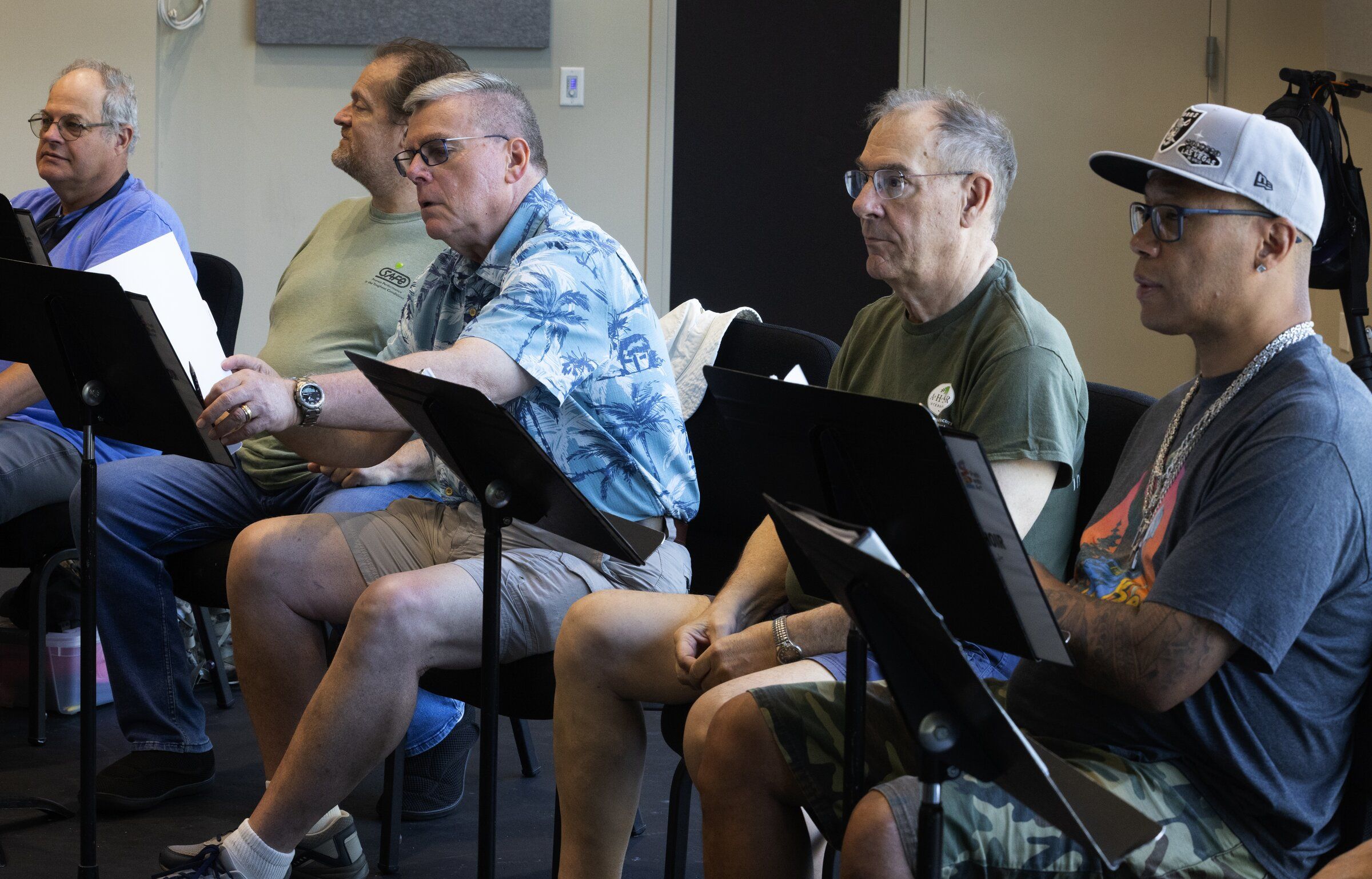
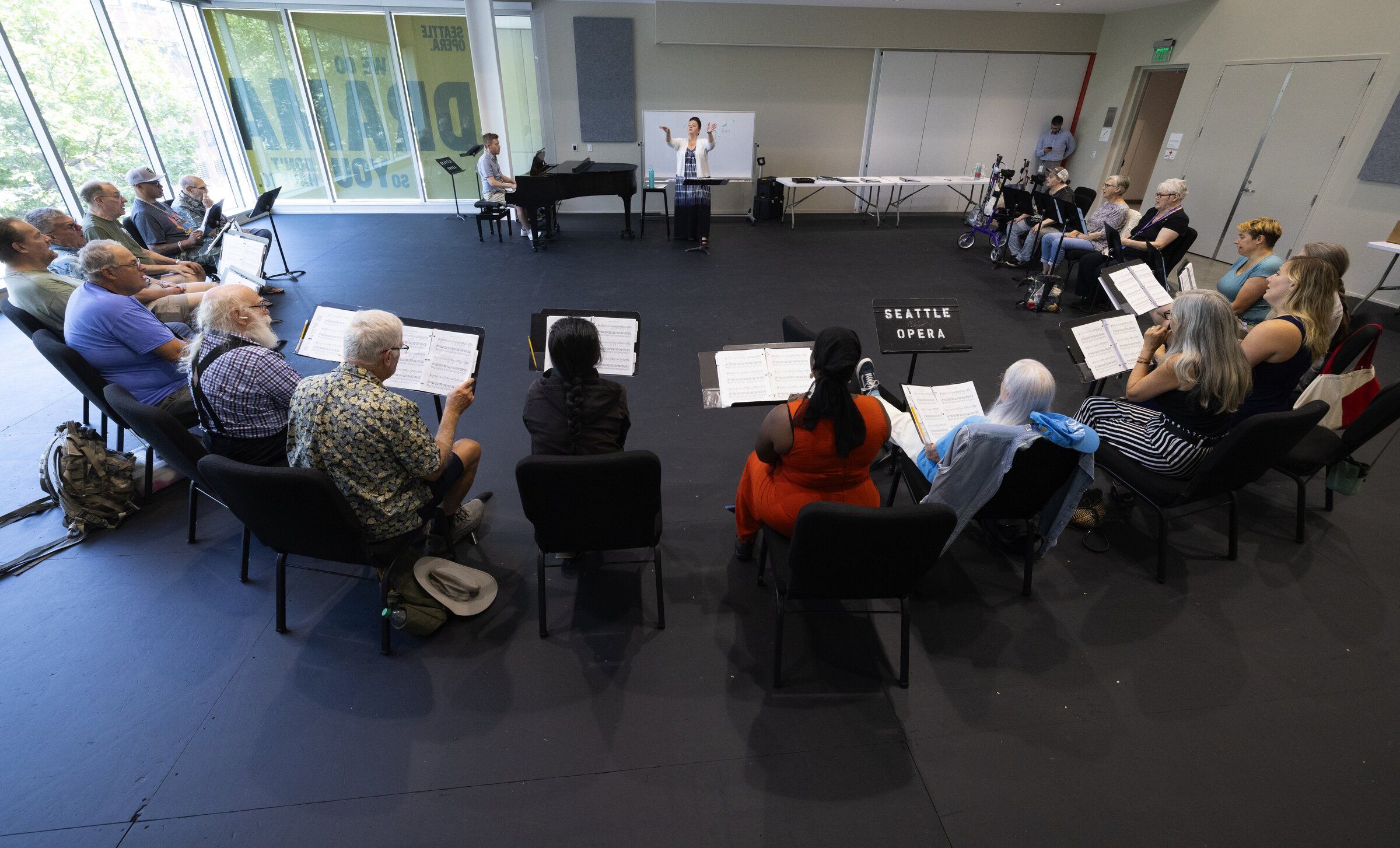
After 24 years of service, veteran Shanda De Anda struggled to return to civilian life in Tacoma. Public places triggered panic reactions and constant hypervigilance. A therapist suggested that she join a choir — an unexpected but effective form of support that helped her feel connected to the world around her again. This approach is known as social prescribing: Health care professionals recommend activities that promote health and well-being rather than clinical treatment.
In July, the Washington State Arts Commission signed a two-year, $250,000 contract with Atlanta-based organization SocialRx. The organization will help develop a social-prescribing system in the state. The pilot project is funded and coordinated by Seattle nonprofit Path with Art, which is also seeking additional sources of support. ArtsWA says state budget funds will not be used; in the future, services could be paid for by insurance companies, government programs, grants, foundations or other payers.
The project is initially planned for King County, home to Seattle and a large network of hospitals, insurers, social-service agencies and cultural organizations. This concentration of infrastructure makes it easier for doctors to coordinate with organizations that provide activities. If successful, the program is expected to expand to other counties across the state. In rural and remote areas, however, large distances, shortages of doctors and social workers, limited transportation and cultural institutions, weak internet access and restricted funding could pose challenges. The needs of tribal communities will also require special consideration.
The modern model of social prescribing emerged in London in the 1980s, when the Bromley by Bow Centre began referring patients to art classes, gardening and other activities. Similar programs spread across the United Kingdom and Europe. In one English project, visits to general practitioners fell by 37% over eight years, while hospitalizations declined by 27%. In the United States, interest in the idea is growing as loneliness and social isolation increasingly become recognized as health risk factors.
According to the National Alliance on Mental Illness, about 1.6 million Washington residents live with mental health conditions. ArtsWA is building a coalition with SocialRx, Path with Art and other organizations to establish operating guidelines with medical institutions and payers. Developing the system will take time, so the first “social prescriptions” will likely not be issued until the contract’s second year.
Under the proposed model, a medical provider would identify a patient’s needs and issue a referral, a social-service or arts organization would provide the activities, and an insurer or government program would pay for approved services. There is no single funding model yet, so grants, foundations and local programs may play a major role during the early stages. Medical providers would need to share only necessary information with participating organizations, with the patient’s consent, while those organizations would have to restrict access to data and comply with confidentiality requirements, including HIPAA rules when handling protected health information.
SocialRx’s model calls for a doctor or other professional to identify loneliness, depression, anxiety or social isolation and refer the patient to a program. A SocialRx staff member contacts the person, learns about their interests — such as ceramics, concerts or dance classes — and helps with transportation, monitoring outcomes and sharing information with the doctor. Participants complete well-being questionnaires when they enroll and after each activity.
In King County, potential project partners, besides Path with Art, could include Seattle Parks and Recreation, Seattle Public Library, King County Library System, Seattle Art Museum, Northwest African American Museum, Pratt Fine Arts Center, UrbanArtWorks, Frye Art Museum and community centers. Accessible facilities, online classes, transportation assistance and adapted programs will be particularly important for people with limited mobility. For participants with low incomes, free places, discounts, scholarships or access through a social-worker referral will be needed.
SocialRx, formerly known as Art Pharmacy, has operated since 2022 and works with organizations in about a dozen states. In 2024, Massachusetts became the first state to enter into a partnership with the company. A 2023–2025 Johns Hopkins University study found that participants reported improved mental health and reduced symptoms of depression, although the study’s authors were hired by SocialRx. The company’s founder, Chris Appleton, has also faced criticism over his previous work at WonderRoot: An independent investigation confirmed instances of unprofessional conduct and financial misconduct. ArtsWA said it reviewed the company’s reputation and continues to have confidence in its infrastructure.
Path with Art has offered similar services in Washington for nearly 20 years, working with about 60 organizations in health care, housing and social services. Its free, trauma-informed arts classes serve about 2,000 people each year — 188% more than in 2020. According to a Johns Hopkins study published in May, more than 80% of participants felt less lonely after eight weeks, while over 90% reported greater confidence in their ability to cope with challenges.
For De Anda, choir sessions marked the beginning of a long recovery. She later attended various creative courses, taught writing and gardening programs based on working with the five senses, and became an ambassador for the nonprofit organization. At one event, she told her husband about her trauma for the first time. De Anda is now studying family therapy at Pacific Lutheran University. Another veteran, Chris Wisdom, says art classes helped her overcome severe social anxiety, and her vivid paintings were later displayed at Seattle’s McCaw Hall.
ArtsWA already connects veterans with creative programs through the Wellness, Arts, and the Military initiative, which it runs jointly with the Department of Veterans Affairs. The U.S. Department of Veterans Affairs system also uses creative and community activities as supplements to medical and psychological care and may refer veterans to outside organizations, including ArtsWA and Path with Art, when partnerships are formally established, services meet program requirements and are available in the relevant area. Such a referral does not automatically mean the service will be paid for: Funding depends on VA rules, local agreements and the veteran’s eligibility for a particular service.
Air Force veteran Kevin Gaines, who served in Iraq, Afghanistan and Central Africa, has twice received a state grant for art projects. He used it to study airbrushing and draw Dungeons & Dragons characters, which helps him manage post-traumatic stress disorder alongside playing guitar and receiving VA therapy. Gaines says that of all the methods he uses, painting provides the strongest support for his mental health. All three veterans said they would be willing to use a social prescription if doctors offered one. The pilot project will now show whether community-based care can become a practical complement to traditional medicine.

Based on: WA plans social prescribing pilot: Could doctors prescribe art?